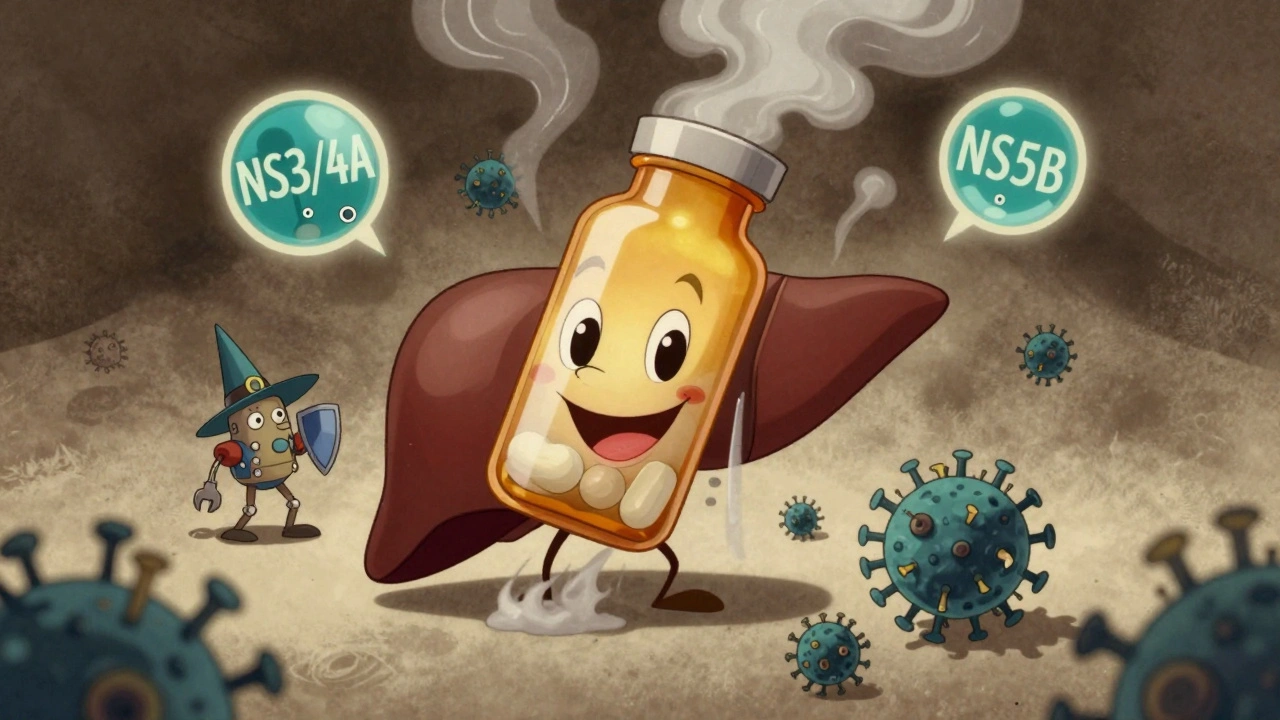
For decades, chronic hepatitis C was a slow-moving crisis. Many people carried the virus for years without symptoms, only to face cirrhosis, liver failure, or cancer later in life. Treatment was brutal: weekly injections of interferon, constant nausea, severe fatigue, and a 50% chance of failure. But everything changed after 2014. Today, a 12-week course of oral pills can cure more than 95% of people with hepatitis C - with few side effects and no needles. This isn’t just progress. It’s a medical revolution.
What Chronic Hepatitis C Does to the Liver
Chronic hepatitis C isn’t just a virus in the blood. It’s a silent attacker on the liver. Over 10 to 30 years, the virus causes ongoing inflammation. Liver cells die. Scar tissue builds up. This scarring, called fibrosis, turns into cirrhosis - a stiff, damaged liver that can’t filter toxins, make proteins, or store energy properly.
Without treatment, about 1 in 5 people with chronic hepatitis C will develop cirrhosis. Of those, 1 in 20 will get liver cancer. The risk doesn’t stop at the liver. Hepatitis C increases the chance of kidney disease, diabetes, and even lymphoma. It’s not just about the virus - it’s about what it does to your body over time.
The good news? Once the virus is gone, the liver can heal. Studies show that after successful treatment, fibrosis stops progressing in 95% of patients. In 70% of cases, scar tissue actually begins to shrink within five years. People who were told they’d need a transplant have gone on to live normal, active lives - no more waiting, no more fear.
The Breakthrough: Direct-Acting Antivirals (DAAs)
The game-changer was the arrival of direct-acting antivirals, or DAAs. These aren’t like old treatments. They don’t boost your immune system. They don’t poison the virus. They go straight to the virus’s machinery and shut it down.
There are three main types of DAAs, each targeting a different part of the hepatitis C virus:
- NS3/4A protease inhibitors - like glecaprevir and voxilaprevir - stop the virus from cutting its proteins into working pieces.
- NS5A inhibitors - like velpatasvir and pibrentasvir - block how the virus assembles new copies of itself.
- NS5B polymerase inhibitors - like sofosbuvir - prevent the virus from copying its RNA.
Modern treatments combine two or three of these drugs into one pill. That’s why you only need to take one or two pills a day. No injections. No hospital visits. Just a short course of pills.
The most common regimens today are:
- Epclusa (sofosbuvir + velpatasvir)
- Mavyret (glecaprevir + pibrentasvir)
- Vosevi (sofosbuvir + velpatasvir + voxilaprevir) - used only if previous treatment failed
These are called pan-genotypic treatments because they work against all six major strains of hepatitis C. You no longer need to know your genotype before starting. That makes testing faster and treatment easier.
How Effective Are DAAs?
The numbers speak for themselves.
Before DAAs, cure rates hovered around 40-80%, depending on your genotype and how advanced your liver damage was. Treatment lasted up to 48 weeks. Side effects were so bad that many people quit.
Today, cure rates are 95-99%. For people with HIV co-infection, the cure rate jumped from 25% with interferon to 95% with DAAs. For those who’ve had a liver transplant, the success rate went from 25% to 94%.
And it’s not just about survival. People report feeling better within weeks. Fatigue lifts. Brain fog clears. The constant worry about infecting others or developing cancer fades.
One patient on Reddit wrote: “Cured in 12 weeks with Epclusa - only side effect was mild fatigue first week.” That’s typical. Over 90% of patients report no serious side effects. The most common? A little tiredness or headache. Nothing compared to the old days.
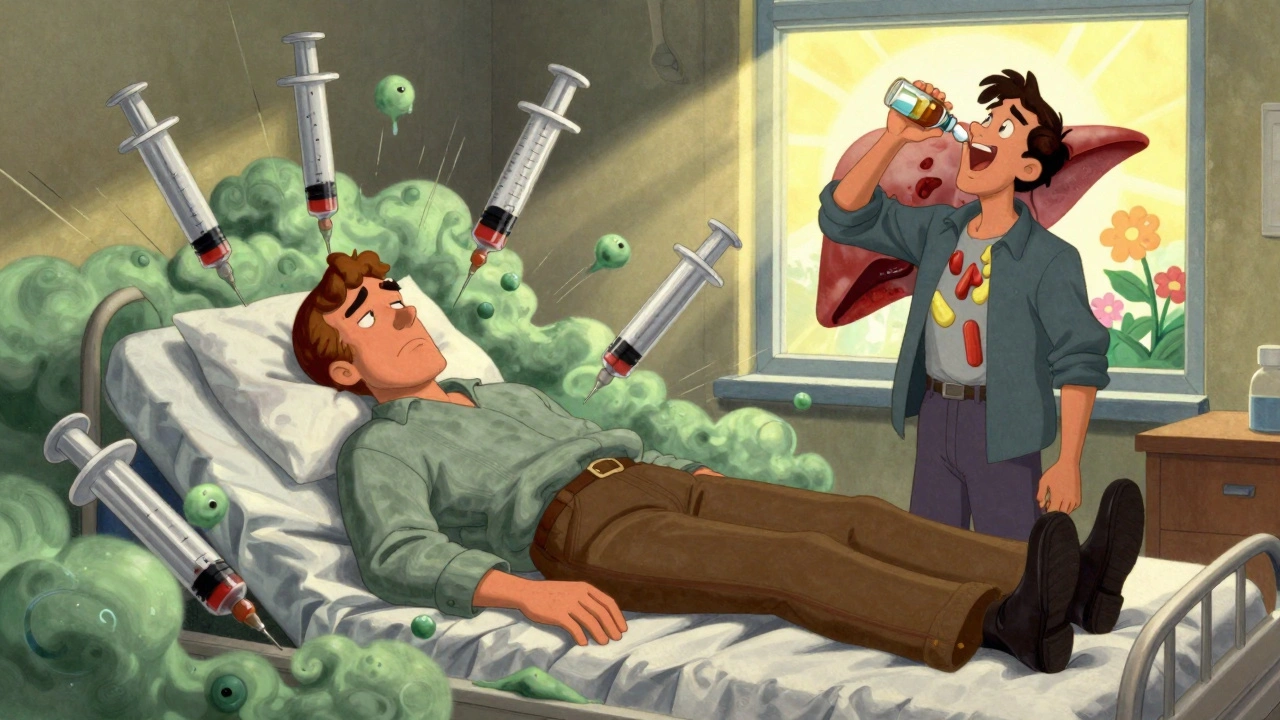
How Liver Protection Works After Treatment
It’s not enough to kill the virus. You need to protect the liver so it can recover.
When the virus is gone, inflammation stops. The liver starts repairing itself. In early-stage fibrosis, the scarring can reverse. Even in cirrhosis, liver function often improves. Studies show that after DAA treatment, the risk of liver cancer drops by 75%. The risk of liver failure drops even more.
One man, after being cured, told his doctor he finally felt safe enough to get married. He had spent 20 years afraid to tell partners he had hepatitis C. After treatment, he didn’t just get healthy - he got his life back.
That’s the real power of DAAs. They don’t just treat disease. They restore hope.
Who Can Get Treated Today?
Almost everyone.
The World Health Organization now recommends DAA treatment for anyone over age 3 with chronic hepatitis C - no matter how advanced their liver damage is. That includes:
- People with cirrhosis
- People with HIV or kidney disease
- People who use drugs
- People who’ve had a liver transplant
- Older adults
Even if you’ve failed treatment before, there’s still hope. Vosevi is designed for those who didn’t respond to earlier DAAs. And for people with advanced liver disease, treatment is even more urgent - because curing the virus reduces their risk of death.
Primary care doctors can now manage most cases. You don’t need a liver specialist. Just a simple blood test to confirm the virus is still active, and you’re eligible.
Cost, Access, and Real-World Barriers
DAAs are a miracle - but they’re not free.
In the U.S., a 12-week course of Mavyret or Epclusa cost around $74,700 in 2023. That’s down from $94,500 for Sovaldi in 2013, but still steep. Many patients face insurance denials. About 28% report having to appeal coverage before getting approved.
But help exists. Manufacturer patient assistance programs cover 70% of uninsured patients. Generic versions are available in low- and middle-income countries for as little as $50 per course. Gilead and other companies have pledged to treat 1 million more people in these regions by 2025.
The bigger problem isn’t the pills - it’s finding the people who need them. Only 20% of people with hepatitis C globally know they’re infected. Many don’t have access to testing. Others are afraid to get tested because of stigma. People who inject drugs, migrants, and homeless populations are especially underserved.
Even in high-income countries, only 60% of diagnosed patients get treated. In low-income ones, it’s just 15%. The goal is to eliminate hepatitis C by 2030. But that won’t happen unless we fix screening and access - not just the drugs.

What Comes Next?
The future of hepatitis C is about elimination, not just treatment.
Global prevalence has dropped from 1% in 2000 to 0.5% in 2022. More than 10 million people have been cured since 2013. But 58 million still live with the virus. The National Academies of Science aim to cut chronic cases by 90% by 2030. That means treating 3.5 million Americans - but we’re only treating about 200,000 a year now.
Reinfection is a growing concern, especially among people who inject drugs. Up to 10% get reinfected within a year. That’s why treatment must be paired with harm reduction - clean needles, opioid treatment, and support services.
And for the 1-5% who fail multiple DAA regimens? Researchers are working on new drugs. The science is moving fast. The tools are here. The only thing missing now is the will to reach everyone.
What You Should Do If You Think You Have Hepatitis C
If you’ve ever had a blood transfusion before 1992, used injected drugs, gotten a tattoo in an unregulated setting, or were born between 1945 and 1965 - get tested.
Testing is simple: a blood test for HCV antibodies, followed by an RNA test to confirm active infection. No fasting. No needles beyond the blood draw.
If you test positive, don’t wait. Treatment is short, safe, and effective. Talk to your doctor. Ask about generic options. Check if you qualify for patient assistance. You don’t need to suffer. You don’t need to wait. You can be cured.
Chronic hepatitis C is no longer a life sentence. It’s a solvable problem. And the solution is already in your hands - one pill, once a day, for 8 to 12 weeks.
Can hepatitis C come back after treatment?
Once you achieve a sustained virologic response (SVR) - meaning the virus is undetectable 12 weeks after finishing treatment - you’re cured. The virus doesn’t hide in the body. However, you can be reinfected if you’re exposed again, especially if you continue injecting drugs. Being cured doesn’t give you immunity. Prevention still matters.
Do I still need liver monitoring after being cured?
Yes, if you had advanced fibrosis or cirrhosis before treatment. Even after cure, the risk of liver cancer remains slightly higher than in someone who never had hepatitis C. Doctors recommend ultrasound scans every 6 months for at least 5 years after treatment. For those with mild or no scarring, routine monitoring usually isn’t needed.
Are DAAs safe for people with kidney disease?
Yes. Mavyret (glecaprevir/pibrentasvir) is approved for people with severe kidney disease, including those on dialysis. Epclusa is also safe for most kidney patients. Some older DAAs are not recommended, but current guidelines provide clear options. Always check with your doctor - your kidney function will be tested before starting.
Can I drink alcohol after being cured?
It’s still best to avoid alcohol. Even after cure, a damaged liver takes years to heal. Alcohol can slow recovery and increase the risk of liver cancer. If you had cirrhosis, even small amounts of alcohol can be dangerous. Talk to your doctor about what’s safe for you.
How long does it take to feel better after starting treatment?
Most people notice improvement within 2-4 weeks. Fatigue fades. Appetite returns. Brain fog lifts. But the real benefit - reduced risk of liver cancer and cirrhosis - takes years to fully show. That’s why it’s important to finish the full course, even if you feel fine.
Can children be treated for hepatitis C?
Yes. Since 2022, the World Health Organization has recommended DAA treatment for children as young as 3 years old. Pediatric formulations are available, and cure rates are just as high as in adults. Early treatment prevents long-term liver damage and gives kids a full, healthy life.
Final Thoughts: A Cure Is Within Reach
Chronic hepatitis C used to be a death sentence disguised as a quiet illness. Now, it’s one of the most treatable chronic conditions in medicine. The pills work. The side effects are minimal. The cure rate is near perfect.
The only thing standing between you and a healthy liver is a blood test and a conversation with your doctor. No more waiting. No more fear. No more shame.
The tools are here. The science is proven. The time to act is now.


Comments
Karandeep Singh
December 1, 2025
daa works but still too expensive for most in india. why cant we make generics cheaper?
Debbie Naquin
December 2, 2025
The NS5A inhibitors fundamentally disrupt viral ribonucleoprotein complex assembly. Without functional NS5A, the virus can't achieve proper RNA replication fidelity. This is why pan-genotypic efficacy is so high - target conservation across clades exceeds 92% in structural domains.
Suzanne Mollaneda Padin
December 4, 2025
I work in a community clinic in rural Ohio. We’ve cured over 40 people in the last two years with Mavyret through patient assistance programs. The biggest barrier isn’t the drug - it’s getting people to trust the system after decades of being ignored. A simple blood test changed their lives.
Alexander Williams
December 5, 2025
Pan-genotypic regimens are overhyped. The real cure rate drops to 87% in genotype 3 with cirrhosis. Most studies exclude active IV drug users or those with non-alcoholic steatohepatitis. The data is cherry-picked to sell pills.
amit kuamr
December 7, 2025
people dont care about liver they just want to feel good again and stop being judged. why make it so complicated
Amber-Lynn Quinata
December 7, 2025
I got cured last year with Epclusa 😊 totally worth it. no more panic attacks when someone asks if I'm 'clean'. now i hug my niece without thinking twice 🤍
James Allen
December 8, 2025
This whole thing is just another Big Pharma scam. Interferon was bad, sure - but now they’re charging $75k for a pill that’s been around since 2013. Meanwhile, the VA and Medicare won’t cover it unless you’re Stage 3 or worse. We’re being played.
elizabeth muzichuk
December 8, 2025
I’m sorry, but if you’re still injecting drugs after being cured, you’re not ‘at risk’ - you’re choosing to be reckless. Why should taxpayers fund your repeated cycles of self-destruction? Prevention isn’t just needles - it’s accountability.
Mary Ngo
December 9, 2025
Let’s be honest - this ‘revolution’ was engineered by a pharmaceutical cartel with deep ties to the FDA. The real reason DAAs work so well is because they were tested on populations with low comorbidities. The data doesn’t reflect the homeless, the incarcerated, or undocumented immigrants. This isn’t medicine. It’s marketing wrapped in science.
Lauryn Smith
December 9, 2025
If you're reading this and you think you might have it - just get tested. It's one needle. One appointment. And if it's positive, your doctor will help you figure out the next step. You don't have to carry this alone. I promise you, it gets better.
Write a comment