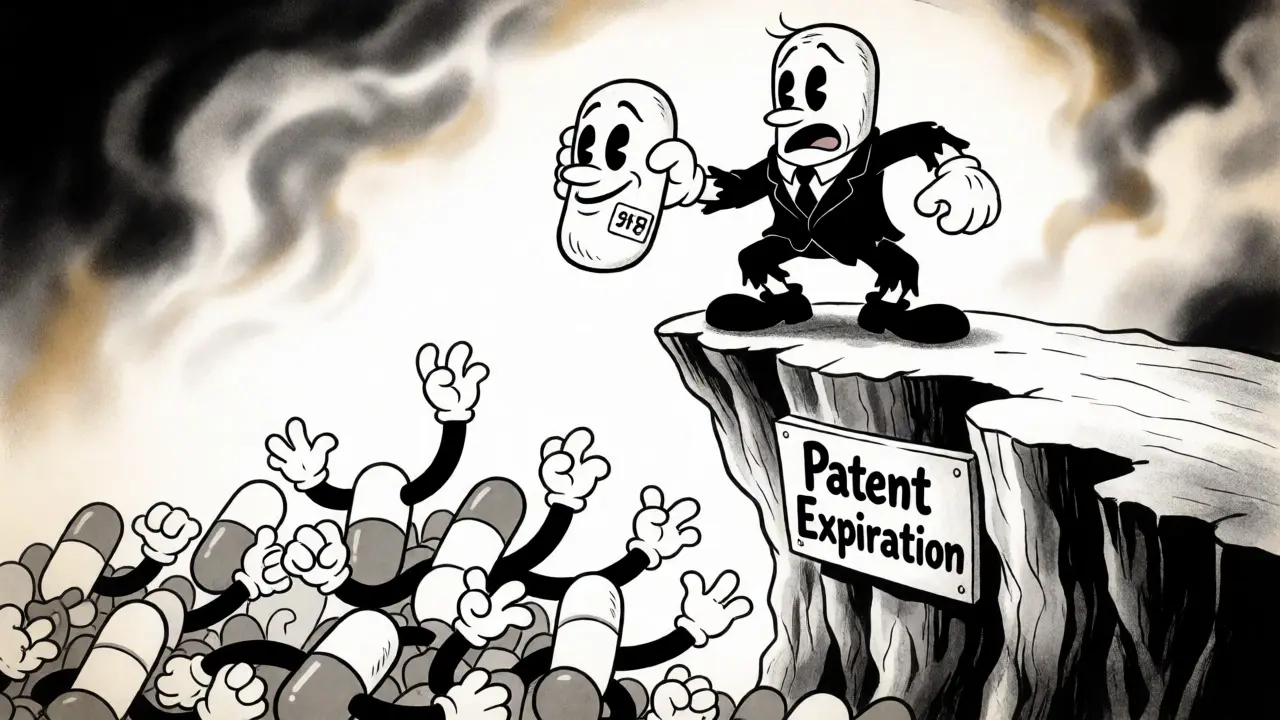
Imagine you are a brand-name pharmaceutical company. Your blockbuster drug’s patent is about to expire. You have two choices: watch competitors flood the market with cheaper versions and lose your revenue stream overnight, or launch your own "generic" version under a different label to keep some cash flowing. This second option is called an authorized generic. It is not a competitor in the traditional sense; it is the brand owner selling its own product at a lower price point after exclusivity ends. As we move through 2026, the role of these products is shifting from a defensive shield to a complex strategic tool. The market is no longer just about delaying competition; it is about navigating new regulatory pressures, domestic manufacturing incentives, and the rise of biosimilars.
What Are Authorized Generics and Why Do They Matter?
An authorized generic is a drug marketed by the brand-name manufacturer under a generic label rather than through independent competitors who file Abbreviated New Drug Applications (ANDAs). Unlike traditional generics, which require separate approval processes, authorized generics can enter the market whenever the brand owner decides. This flexibility allows companies to segment the market. They can sell the branded version to patients willing to pay a premium while capturing price-sensitive consumers with the authorized generic.
The practice gained traction following the Hatch-Waxman Act of 1984, which created the framework for generic drug competition in the United States. By allowing brand owners to list their own generic versions, the system introduced a layer of complexity to pricing and access. Data from Health Affairs shows that between 2010 and 2019, there were 854 authorized generic launches. This wasn't random. Most of these launches happened right when traditional generics entered the market, proving that timing is everything in this game.
The Shifting Strategy: From Delay to Immediate Entry
For years, brand manufacturers used a specific tactic: they would delay launching their authorized generic until after the first traditional generic had already been approved. This allowed them to maintain high prices on their branded drug for as long as possible before cannibalizing their own sales. However, recent data suggests this strategy is fading. Reports from the Regulatory Affairs Professionals Society (RAPS) in June 2025 indicate that the practice of delaying these launches has declined significantly.
Why the change? Several factors are at play. First, regulators are watching closer. Second, the competitive landscape is fiercer. If a brand waits too long, independent generics might capture enough market share to make the authorized generic less profitable. Third, the rise of biosimilars-complex copies of biologic drugs-is changing how companies think about post-patent competition. Companies are learning that holding onto market share requires more aggressive, immediate action rather than passive waiting.
Market Dynamics and Financial Impact
The financial stakes here are massive. The U.S. generic drugs market is projected to reach $196.90 billion by 2034, growing at a compound annual growth rate (CAGR) of 3.6%. But the real story lies in the patent cliffs ahead. Between 2025 and 2030, branded drugs generating over $200 billion in annual sales will lose their exclusivity. This creates a huge opportunity for both traditional generics and authorized generics.
Consider the impact on healthcare costs. In 2024 alone, generic and biosimilar medicines saved the U.S. healthcare system $467 billion. Over the past decade, those savings hit $3.4 trillion. Authorized generics contribute to this by keeping prices lower than branded drugs, even if they don't drop as low as independent generics might. For payers and insurers, having an authorized generic available ensures there is always a lower-cost option, preventing situations where only one expensive brand remains on the shelf.
| Feature | Authorized Generic | Traditional Generic |
|---|---|---|
| Manufacturer | Brand-name company | Independent generic firm |
| Approval Pathway | Same NDA as brand; listed as generic | Abbreviated New Drug Application (ANDA) |
| Timing | Flexible; controlled by brand owner | Determined by ANDA approval date |
| Price Point | Lower than brand, higher than deep-discount generics | Often lowest price due to competition |
| Market Share Goal | Capture price-sensitive segment; retain control | Capture volume through price wars |
Regulatory Headwinds and Domestic Manufacturing
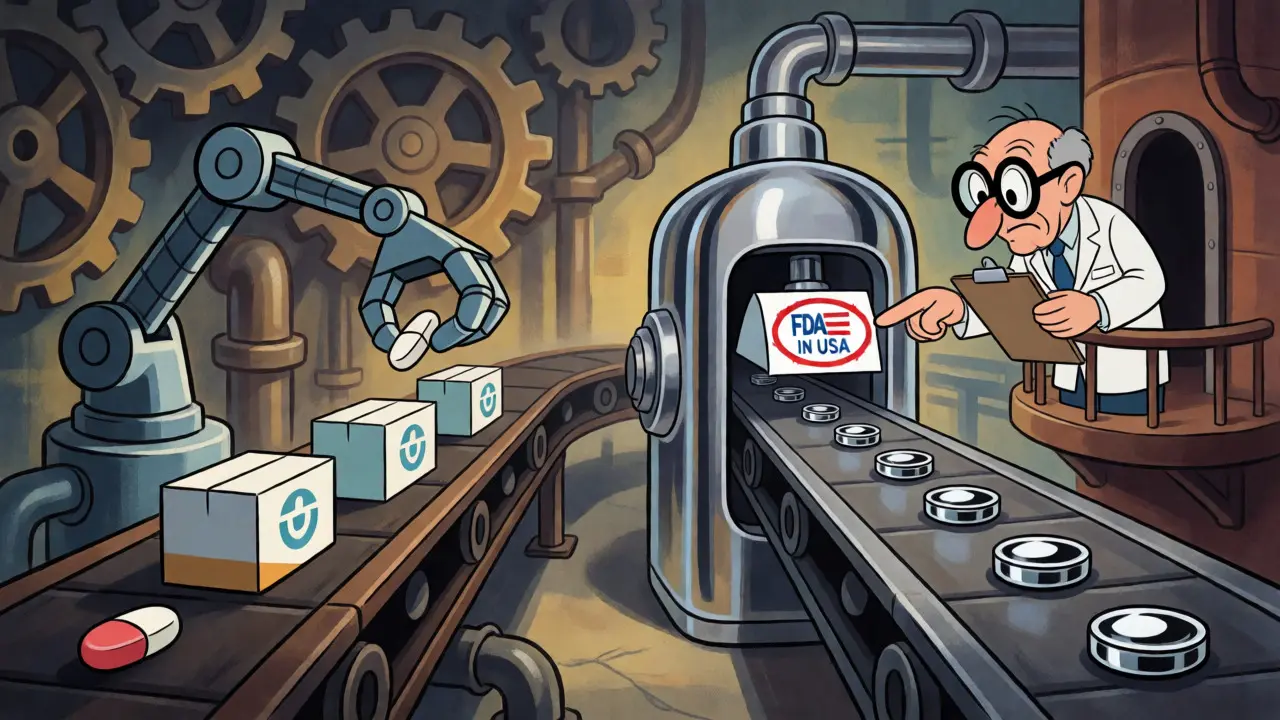
The rules of the game are changing again. In October 2025, the FDA announced a pilot program to prioritize ANDA reviews for generic drugs manufactured and tested entirely within the United States. This move aims to boost domestic production and reduce reliance on foreign supply chains. For authorized generics, this could mean new incentives. If a brand manufacturer produces its authorized generic domestically, it might benefit from faster regulatory processing or preferential status in government procurement.
This shift also affects competition. Independent generic manufacturers who invest in U.S.-based facilities may gain a speed advantage. Brand manufacturers must now weigh the cost of domestic production against the potential benefits of faster market entry. The era of cheap offshore manufacturing dominating the generic space might be ending, forcing all players to rethink their supply chain strategies.
The Biosimilar Factor and Complex Drugs
While small-molecule drugs dominate current authorized generic activity, the future belongs to biologics. High-revenue monoclonal antibodies like ustekinumab and vedolizumab are losing exclusivity starting in 2025. This unlocks a $25 billion opportunity for biosimilars in oncology and immunology by 2029. Currently, most authorized generics are oral solid drugs because they are easier to produce and approve. But as biologics become more common, we will likely see the emergence of "authorized biosimilars."
These products present unique challenges. Biologics are complex, living-cell-derived medicines. Creating an exact copy is harder than copying a chemical pill. Therefore, the concept of an "authorized" version might look different. It could involve the original developer licensing its process to another party or launching a slightly modified version under a new label. This area is ripe for innovation and regulatory experimentation.
Strategic Recommendations for Industry Players
If you are a brand manufacturer, relying solely on delayed authorized generic launches is risky. The declining trend in delays suggests that early entry is becoming the norm. You need to prepare for a multi-tiered pricing strategy from day one of patent expiration. Consider investing in domestic manufacturing capabilities to align with FDA priorities. This not only mitigates supply chain risks but may also offer regulatory advantages.
For independent generic manufacturers, the presence of an authorized generic means you cannot assume you will be the sole low-cost option. Price erosion may happen faster, but the total market size often expands because payers are more willing to cover a drug when multiple options exist. Focus on niches where authorized generics are less likely to appear, such as complex injectables or specialty formulations.
Payers and policymakers should monitor these trends closely. While authorized generics provide a floor for prices, they do not drive prices down as aggressively as intense competition among independent generics. Policies that encourage true competition-such as limiting artificial exclusivity extensions-are crucial. A JAMA Health Forum study estimated that limiting such extensions could save billions in commercial plans and Medicare, highlighting the ongoing tension between corporate strategy and public health goals.
Frequently Asked Questions
How is an authorized generic different from a regular generic?
An authorized generic is produced by the original brand-name manufacturer but sold under a generic label. A regular generic is made by an independent company that files an Abbreviated New Drug Application (ANDA) with the FDA. Authorized generics do not require separate safety and efficacy trials since they are identical to the brand product.
Why do brand companies launch authorized generics?
They launch them to capture market share from price-sensitive customers who would otherwise switch to cheaper independent generics. This allows the brand company to maintain a revenue stream during the transition period after patent expiration, rather than losing all sales immediately to competitors.
Do authorized generics lower drug prices for patients?
Yes, but typically less than independent generics. Authorized generics are priced lower than the branded drug but often higher than the deepest discounts offered by competing independent generics. Their primary effect is ensuring a lower-cost option exists, which prevents monopoly pricing by the brand owner.
How does the FDA's new pilot program affect authorized generics?
The FDA's October 2025 pilot program prioritizes reviews for generics manufactured in the U.S. While this primarily targets independent ANDA filers, it creates pressure on brand manufacturers to consider domestic production for their authorized generics to remain competitive in terms of supply chain reliability and potential regulatory favorability.
Will authorized generics become more common in the future?
The frequency of launches may stabilize or decline slightly as the strategy becomes standard practice rather than a novel tactic. However, their importance will grow as major biologic patents expire. We expect to see more complex forms of authorized competition emerge, particularly in the biosimilar space, though the mechanics will differ from small-molecule drugs.

Comments
Falgun R Patel
September 4, 2026
It is fascinating to see how the narrative shifts from pure competition to strategic segmentation. The core issue here isn't just about revenue preservation but about the ethical implications of market control. When a brand owner dictates the entry of their own generic, they are essentially curating the competitive landscape to ensure that true price erosion never fully materializes. This creates a philosophical dilemma: does consumer access improve if the 'competition' is merely an internal transfer of funds rather than a genuine battle for efficiency? We must consider that while prices drop slightly, the innovation incentive might be dampened because the threat of total obsolescence is mitigated by this safety net. It is a delicate balance between corporate survival and public health economics.
The transition to immediate entry suggests that the old games of delay are no longer sustainable under regulatory scrutiny. However, we should ask ourselves if this immediacy truly serves the patient or if it simply accelerates the consolidation of power among large pharmaceutical entities. The rise of biosimilars adds another layer of complexity, as these complex molecules cannot be easily replicated. If authorized biosimilars become the norm, will we see a stagnation in therapeutic diversity? I believe we need to foster an environment where independent generics can thrive without being overshadowed by branded giants who hold all the cards. Let us hope that policymakers recognize the long-term risks of allowing such dominant players to control both the premium and the budget tiers simultaneously.
Mary Tait
September 4, 2026
This article completely misses the point about national security and supply chain sovereignty. Relying on foreign manufacturing for our essential medicines is a disgrace to American workers and patients alike. The FDA's new pilot program is a step in the right direction, but it is not enough. We need strict mandates that force these companies to produce everything domestically if they want any federal funding or expedited reviews. Foreign competitors undercut us with cheap labor and lax environmental standards, draining our economy. Authorized generics should be required to be made in USA only. Anything else is unpatriotic and dangerous. We have seen what happens when supply chains break; people die. It is time to put America first in healthcare manufacturing. Stop letting big pharma offshore jobs while claiming to care about patient costs. They are making billions overseas while our factories rust. Bring the production home now.
Jim Bisesi
September 5, 2026
ugh... another long read about drug patents. i guess the delays are gone so now its just immediate cannibalization? cool. whatever. i'm tired of reading about billion dollar cliffs. my back hurts just thinking about the paperwork involved in all this. i'll probably just go lie down instead of analyzing CAGR rates. life is too short for spreadsheets.
Louis Tarro
September 6, 2026
I appreciate the nuance here, though I feel some points could be more clearly articulated regarding the emotional toll on smaller firms. The shift from delayed entry to immediate launch creates a frenetic atmosphere that stresses out teams across the board. It is a bit like watching a high-stakes poker game where everyone folds early because they fear the flop. The financial impact is indeed massive, but the human cost of rapid market changes is often overlooked. Payers benefit, sure, but do we really think about the employees whose roles change overnight due to these strategic pivots? The jargon-heavy nature of these reports often obscures the real struggles on the ground. We need to remember that behind every percentage point of growth, there are people trying to keep their heads above water. It is a colorful mess of regulations and dollars, but let us not forget the empathy factor in all this calculation.
Evelyn Reed
September 6, 2026
the authorized generic strategy is basically just vertical integration disguised as competition
it reduces the efficacy of ANDA exclusivity periods which were meant to incentivize independent manufacturers
if brands flood the zone immediately the risk-reward ratio for indie filers gets skewed badly
we might see fewer novel ANDAs filed if the guaranteed monopoly period is eroded by self-competition
domestic manufacturing incentives are good but they also raise COGS which might negate price benefits
need to watch if this leads to oligopolistic pricing structures rather than true free market dynamics
Somnath Thombre
September 6, 2026
hey guys great post! really interesting stuff about the patent cliffs and biosimilars. i think its awesome that things are changing up. gotta stay positive and adapt right? the domestic manufacturing push is super exciting for job creation. lets hope it works out well for everyone involved. peace and love to all the industry folks working hard on this!
Kimberley Odish
September 7, 2026
The analysis provided is superficially accurate but fundamentally flawed in its optimism. You assume that regulators have the teeth to enforce meaningful change, yet history shows otherwise. The 'shift' to immediate entry is not a moral awakening but a desperate attempt to cling to market share before the dam breaks. These corporations view patients as data points, not humans. The $467 billion in savings sounds impressive until you realize the profit margins remain obscene. Do not be fooled by the term 'authorized'; it is a mechanism of control, not generosity. The biosimilar sector will likely suffer from similar anti-competitive practices, stifling true innovation. We are witnessing the calcification of an industry that refuses to evolve beyond rent-seeking behavior. Until we dismantle the artificial barriers to entry, consumers will continue to subsidize executive bonuses through inflated prices. The outlook is bleak for those who value transparency over shareholder value.
Adam Viruet
September 7, 2026
wait wait wait... hold on!!!
this is totally wrong!!!
why are we assuming immediate entry is better???
delayed entry gave investors time to recoup R&D!!!
now its just a race to the bottom!!!
and who pays for that???
us!!!
every single one of us!!!
i mean seriously, look at the data again!!!
it doesn't support your conclusion!!!
you're missing the forest for the trees!!!
again!!!
and again!!!
and AGAIN!!!
Jenn Bell
September 7, 2026
I think it is really encouraging to see that the market is adapting to these new pressures. It seems like there is a lot of movement toward more accessible options for patients, which is a win for everyone. The focus on domestic manufacturing is particularly uplifting because it supports local economies while ensuring supply stability. Even with the challenges, the trend toward lower costs through authorized generics feels like a positive step forward. We should celebrate these small victories in healthcare accessibility. Keep up the good work, industry leaders!
Eric Schultze
September 8, 2026
The narrative presented here conveniently ignores the collusion inherent in this system. Brand manufacturers and major payers have an unspoken agreement to keep prices artificially high even after patent expiration. Authorized generics are merely a tool to prevent the price collapse that true competition would bring. This is not about helping patients; it is about protecting profits. The 'strategic shifts' mentioned are nothing more than defensive maneuvers by entrenched monopolies. We must question why the FDA allows this manipulation of the ANDA process. It smells of regulatory capture. The public deserves to know that they are being charged a premium for drugs that are no longer exclusive. This is a systemic failure of oversight, not a success of market dynamics. Trust nothing.
Jeremy Westcott
September 9, 2026
dude theyre playing 4d chess while we play checkers. authorized generics are just smoke and mirrors to keep the little guys out. its like the mob running protection rackets but with pills. once the biosimilars hit, its gonna get messy real quick. big pharma always finds a way to squeeze the last drop out of the lemon. dont buy the hype about 'saving money'. theyre just shifting the burden around. sneaky bastards.
Amanda SF
September 11, 2026
Actually, the premise of the article is slightly off-base regarding the inevitability of immediate entry. Historical precedent shows that legal loopholes still allow for significant delays despite regulatory pressure. Furthermore, the comparison table oversimplifies the approval pathways, ignoring the nuances of bioequivalence studies for complex drugs. One must also consider that payer formulary placement plays a larger role than mere availability. Without preferred status, an authorized generic may still fail to capture significant market share regardless of timing. The author assumes rational actor models that rarely apply in the chaotic reality of pharmaceutical marketing. More rigorous data analysis is needed before declaring a definitive strategic shift.
Neil Martin
September 12, 2026
The concept of 'authorized generics' is essentially a misnomer that perpetuates confusion in the marketplace. From a pharmacoeconomic perspective, these products function as price-discriminating tools rather than true competitors. They exploit information asymmetry where prescribers and patients lack visibility into the source of the medication. This results in suboptimal resource allocation within the healthcare system. The emergence of biosimilars exacerbates this issue due to higher interchangeability complexities. Stakeholders must advocate for clearer labeling requirements to mitigate this distortion. Otherwise, we risk entrenching inefficiencies that hinder long-term sustainability. The current model favors incumbents at the expense of dynamic market equilibrium.
Kim Pender
September 13, 2026
seems complicated. just make the drugs cheaper already. why do they have to play games with names and labels? makes no sense to me. simple fix would be best.
Neil Sahli
September 13, 2026
Oh, fantastic news! So now we get to watch big corporations pretend to compete with themselves while charging us extra for the privilege? Truly inspiring leadership. I am sure the patients are thrilled to know their 'savings' are actually just a different flavor of the same expensive product. But hey, at least the stock prices stay nice and stable for the shareholders, right? What a wonderful world we live in where 'strategy' means finding new ways to avoid actual competition. Bravo to them for their innovative laziness.
Write a comment