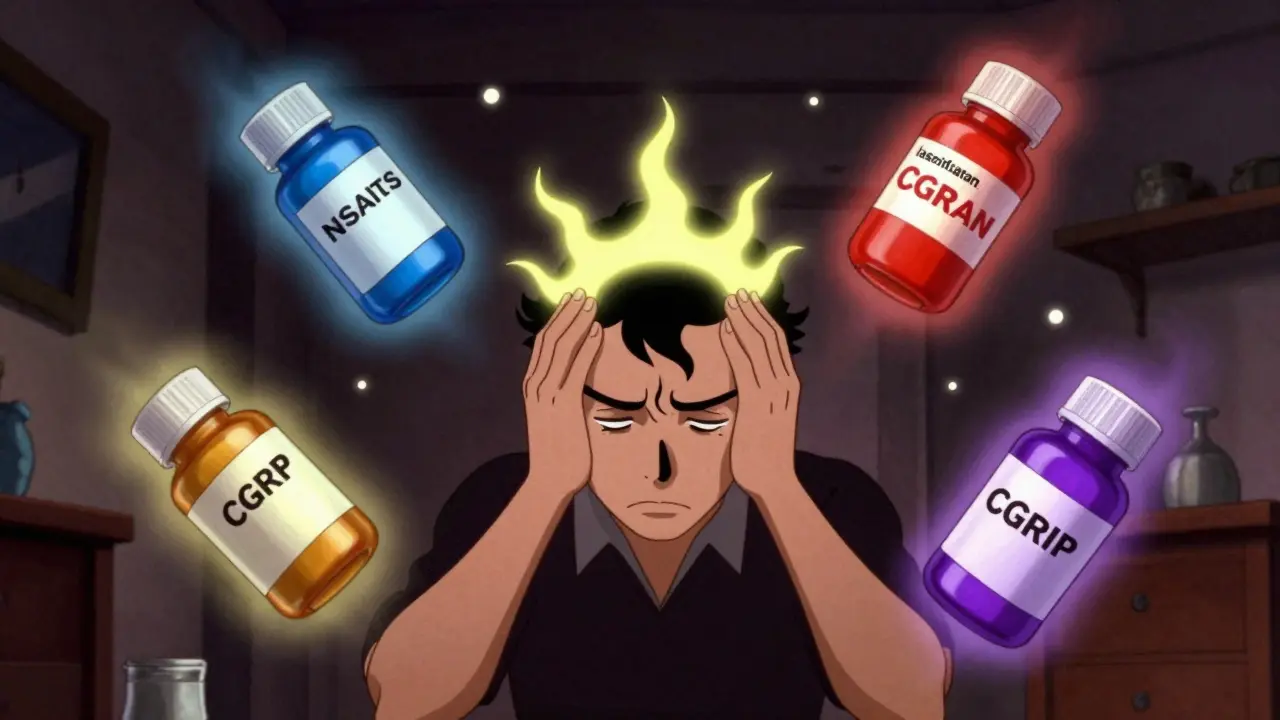
Chronic migraines aren’t just bad headaches. They’re disabling neurological events that can knock you out for hours or days-sometimes with nausea, light sensitivity, and even speech trouble. If you’ve been through this, you know no two attacks are the same. Some come with warning signs, others hit like a truck. And if you’ve tried everything from ibuprofen to resting in a dark room, you’re not alone. About 39 million people in the U.S. alone deal with migraines, and nearly half of them don’t get the right treatment. The good news? We now have clearer, more effective tools than ever to stop attacks and prevent them from coming back.
What’s the Difference Between Abortive and Preventive Medications?
Think of abortive meds as your emergency brake. They’re meant to stop a migraine in progress. Preventive meds are like routine maintenance-they’re taken daily to reduce how often and how badly migraines hit. You don’t take a preventive drug when you feel pain coming on. You take it every day, rain or shine, to lower your overall risk.Abortive treatments work best when used early. Studies show taking them within an hour of the first sign of pain cuts recurrence by nearly half. Waiting until the headache is pounding? That’s when medications lose their edge. Preventive drugs take weeks to build up in your system. Don’t expect instant results. If you stop after a week because you didn’t feel better, you’re not giving them time to work.
Abortive Medications: Stopping the Attack
There are four main classes of abortive drugs, each with different strengths and risks.
NSAIDs and Acetaminophen Combinations
For mild to moderate migraines, over-the-counter options still hold up. Ibuprofen (400mg), naproxen sodium (550mg), and aspirin (900-1000mg) reduce inflammation and pain by blocking COX enzymes. A combo of acetaminophen (250mg), aspirin (250mg), and caffeine (65mg) has been shown to be as effective as some triptans in clinical trials. Caffeine helps by narrowing blood vessels and improving absorption of the other drugs.
But here’s the catch: using these too often-more than 10 days a month-can trigger medication-overuse headaches. That’s when your body gets used to the drug, and headaches come back as soon as it wears off. It’s a vicious cycle.
Triptans: The Gold Standard for Moderate to Severe Migraines
Triptans are the most widely prescribed abortive drugs for moderate to severe attacks. Sumatriptan, rizatriptan, zolmitriptan-they all work by activating serotonin receptors in the brain to calm overactive nerves and reduce inflammation. They’re available as pills, nasal sprays, and injections. The injection form works fastest-often within 10 minutes.
Triptans are effective for about 42-76% of users at the two-hour mark. But they’re not for everyone. If you have heart disease, uncontrolled high blood pressure, or a history of stroke, they’re off-limits. That’s because they cause blood vessels to tighten.
CGRP Antagonists: The New Generation
Ubrogepant (Ubrelvy) and rimegepant (Nurtec ODT) are the first oral CGRP blockers approved for acute treatment. Unlike triptans, they don’t affect blood vessels. That makes them safer for people with cardiovascular risks. In trials, about 20-22% of users were pain-free at two hours-slightly lower than triptans but with fewer side effects.
Rimegepant has another perk: it’s also approved for preventive use. You can take it as needed for attacks, or as a daily preventive. That’s rare. Most drugs are one or the other.
Lasmiditan: For Triptan-Resistant Cases
Lasmiditan (Reyvow) is a serotonin 5-HT1F agonist. It doesn’t constrict blood vessels at all, so it’s safe for people who can’t take triptans. In studies, 200mg of lasmiditan gave 32% of users pain relief at two hours-better than most triptans in resistant cases. But it comes with a warning: it can cause dizziness, sleepiness, and even a feeling of being “drunk.” Don’t drive or operate machinery for at least eight hours after taking it.
IV and Injectable Options in Emergency Settings
In ERs and urgent care, doctors often use IV medications. Acetaminophen (paracetamol) has actually outperformed sumatriptan in recent studies for rapid pain reduction. Magnesium sulfate, haloperidol, and prochlorperazine are also used, especially when nausea is severe. These aren’t for home use, but they’re lifesavers when other treatments fail.
Preventive Medications: Reducing the Frequency
If you have four or more migraine days a month, or if your attacks are severe enough to disrupt your life, preventive treatment is worth considering. You don’t need to wait until you’re in crisis. Prevention isn’t about eliminating all headaches-it’s about reducing the burden.
Beta-Blockers and Anticonvulsants
Propranolol and metoprolol have been used for decades. They’re cheap, well-studied, and effective for about 50% of users. Topiramate (Topamax) is another first-line option. It can cause tingling, weight loss, and brain fog-side effects that make some people quit. Valproate is effective but not safe during pregnancy.
Antidepressants
Amitriptyline, a tricyclic antidepressant, is often used off-label. At low doses (10-50mg), it helps regulate nerve signals and improve sleep-both key in migraine control. It’s especially helpful if you also have tension headaches or insomnia.
CGRP Monoclonal Antibodies: The Game Changer
Erenumab (Aimovig), fremanezumab (Ajovy), and galcanezumab (Emgality) are monthly or quarterly injections. They block the CGRP pathway-a key player in migraine signaling. In trials, they cut migraine days by 50% or more in about half of users. Side effects are mild: injection site reactions, constipation, or muscle cramps.
These drugs are expensive-up to $1,000 per dose-but many insurers cover them if you’ve tried at least two oral preventives first. They’re not a cure, but they’ve changed lives for people who had given up on treatment.
What Works Best Together?
Combining treatments often beats using one alone. For example, taking a triptan with naproxen gives better results than either drug by itself. One study showed 32% of people were pain-free at two hours with the combo, compared to 22% with triptan alone.
For prevention, some people pair a beta-blocker with amitriptyline. Others use a CGRP antibody and avoid triggers like sleep disruption or dehydration. There’s no one-size-fits-all. The key is working with a doctor to find your personal mix.
Why Do So Many People Get the Wrong Treatment?
Here’s the hard truth: 15% of migraine patients are still being prescribed opioids or barbiturates-drugs that are not only ineffective long-term, but dangerous. Narcotics can make migraines worse over time and lead to addiction. Yet, according to national survey data, they’re still given in nearly one in seven visits.
Why? Many doctors aren’t trained in headache medicine. Patients often don’t know what to ask for. And insurance companies make access to newer drugs like CGRP inhibitors difficult through step therapy requirements.
Don’t settle for a treatment that doesn’t work-or makes things worse. If you’re on opioids, talk to your doctor about switching. If you’ve tried three preventives without success, ask about CGRP antibodies. You’re not being difficult. You’re being informed.
Real-Life Tips from People Who Live With Migraines
People with chronic migraines have learned what works beyond pills. Here’s what’s commonly shared in patient communities:
- Take your abortive medication as soon as you feel the aura or warning signs-not when the pain hits full force.
- Use an ice pack on your neck or forehead while taking your pill. Cold helps calm nerve activity.
- Hydrate. Dehydration is a top trigger. Keep water nearby, even if you feel nauseous.
- Try a ginger supplement or anti-nausea suppository if vomiting is a problem. Migraines slow stomach movement-oral meds may not absorb.
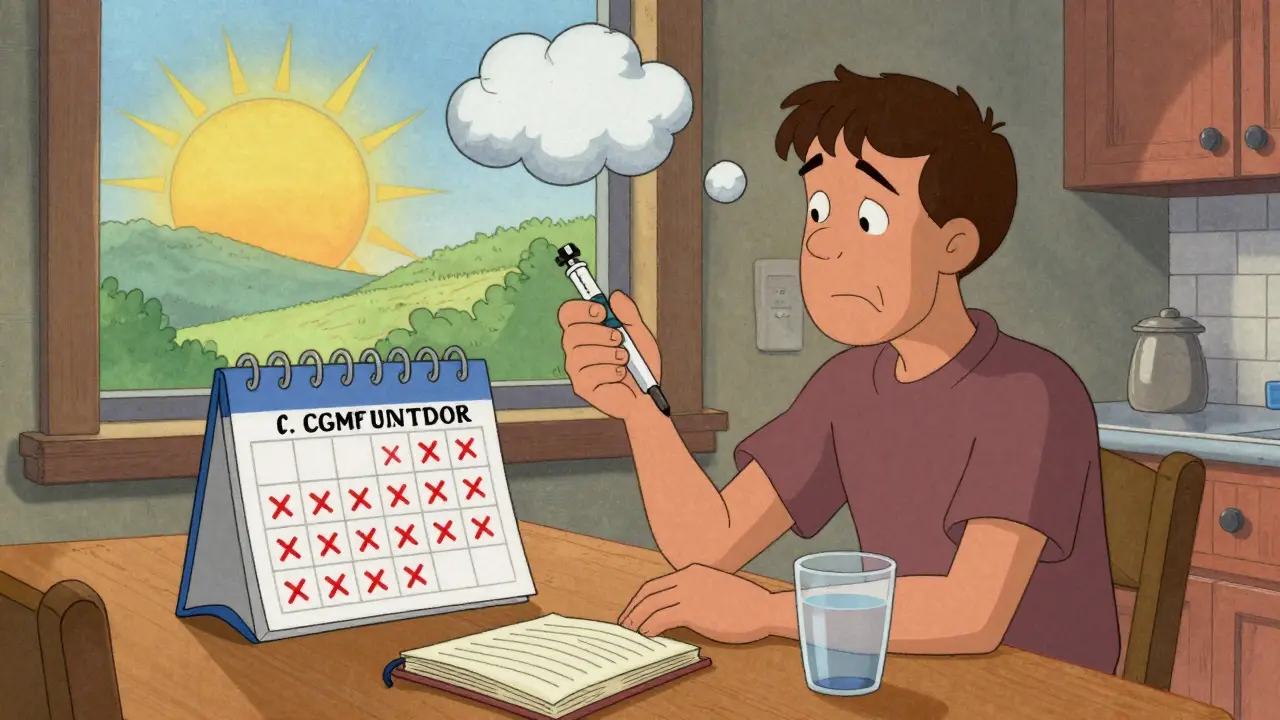
- Keep a headache diary for at least eight weeks. It helps spot triggers like weather changes, skipped meals, or stress patterns.
One user on Reddit said: “I used to think I just had bad luck. Then I tracked my attacks and realized I got migraines every time I slept less than six hours. Now I treat sleep like medicine.”
What’s Coming Next?
The migraine treatment landscape is changing fast. In late 2023, the FDA approved zavegepant (Zavzpret), a nasal spray CGRP blocker. It works in 15 minutes and doesn’t require swallowing a pill-great for people with nausea.
Oral CGRP blockers like atogepant (Qulipta) are now approved for prevention and may soon be used for episodic migraine too. Research is also underway for drugs targeting other pathways, like PACAP and pituitary adenylate cyclase-activating polypeptide.
Doctors are starting to talk about personalized migraine care-matching treatments to genetic markers or biomarkers in blood tests. That’s still years away, but the direction is clear: we’re moving from trial-and-error to precision medicine.
When to See a Specialist
You don’t need to suffer in silence. If you’ve tried two or more preventives without success, or if your migraines are getting worse, it’s time to see a headache specialist. Neurologists who focus on headaches can help you navigate options, adjust doses, and avoid dangerous mistakes like medication overuse.
Most insurance plans cover specialist visits. The National Headache Foundation offers a free nurse hotline with 87% satisfaction rates. Use it. You’re not alone.
Final Thoughts
Migraine treatment isn’t about finding the one magic pill. It’s about building a strategy-combining meds, timing, lifestyle, and support. Abortive drugs save you during an attack. Preventive drugs give you back your life between them. And the newest drugs-CGRP blockers-are offering hope to people who thought they’d never get relief.
You don’t have to accept migraines as your normal. With the right approach, you can reduce them, manage them, and sometimes even stop them before they start.




Comments
Lisa Davies
December 16, 2025
Just wanted to say this post saved my life. I’ve been suffering for 7 years and no doctor ever explained the difference between abortive and preventive meds. I started taking topiramate last month and already feel like I can breathe again. 🙌
RONALD Randolph
December 17, 2025
Stop prescribing opioids? What about American freedom? If someone wants to pop pills to feel numb, let them! Government shouldn’t dictate pain management-this is tyranny dressed as medicine.
Christina Bischof
December 17, 2025
Ice pack on the neck? I never thought of that. I’ve been just lying in the dark and hoping it goes away. Tried it last week and it actually helped. Small wins, right?
Jake Sinatra
December 18, 2025
The distinction between CGRP antagonists and triptans is clinically significant and warrants greater public awareness. The absence of vasoconstrictive effects in newer agents represents a paradigm shift in acute migraine management, particularly for patients with cardiovascular comorbidities. Further longitudinal studies are needed to assess long-term efficacy and safety profiles.
Cassie Henriques
December 20, 2025
Just had my first ubrogepant last week-15 mins later, the aura faded. No dizziness, no nausea, just… quiet. Finally, a drug that doesn’t make me feel like I’ve been hit by a bus *after* the migraine. CGRP blockers are the future. #MigraineWarrior
Michelle M
December 21, 2025
There’s a quiet dignity in learning to live with something that doesn’t have a cure. We’re not broken because we need meds. We’re not weak because we track triggers. We’re just people trying to keep showing up, day after day, even when the world thinks we’re just ‘getting headaches.’ You’re not alone. And you’re not failing. You’re adapting.
Nupur Vimal
December 21, 2025
Everyone in US overmedicates. In India we use ginger tea and rest. Why do you need 5 different pills for headache? You people are too soft. My grandma had migraines since 1950 and never took anything stronger than aspirin
John Samuel
December 22, 2025
The emergence of zavegepant as a nasal spray CGRP antagonist is nothing short of revolutionary-not merely an incremental advancement, but a renaissance in acute intervention. Its rapid onset, non-oral route, and targeted mechanism bypass the gastrointestinal chaos that often renders traditional abortives inert. This is not just medicine-it’s poetry written in pharmacology.
Benjamin Glover
December 23, 2025
Triptans are overrated. I’ve seen better results from a cold shower and a stiff drink. Americans need to stop treating migraines like a disease and start treating them like a lifestyle issue.
Raj Kumar
December 24, 2025
my cousin in delhi uses acupressure and she says it works better than pills. maybe we should try before spending so much money on new drugs? also i think sleep is the real key, not meds
Melissa Taylor
December 24, 2025
I used to think I was lazy because I couldn’t function on migraine days. Then I learned it’s a neurological disorder. Now I don’t apologize for needing quiet, darkness, and 12 hours of sleep. You’re not failing-you’re healing.
Sai Nguyen
December 26, 2025
Why are we letting pharmaceutical companies dictate how we treat pain? This is all just profit-driven nonsense. Real people don’t need all these fancy drugs. Just tough it out like my grandfather did.
Mike Nordby
December 28, 2025
The data on medication-overuse headaches is unequivocal: frequent use of NSAIDs and combination analgesics leads to a significant increase in headache frequency and chronicity. Clinicians must emphasize patient education regarding threshold limits and the importance of structured abortive regimens. This is not merely a pharmacological issue-it is a behavioral health imperative.
Write a comment