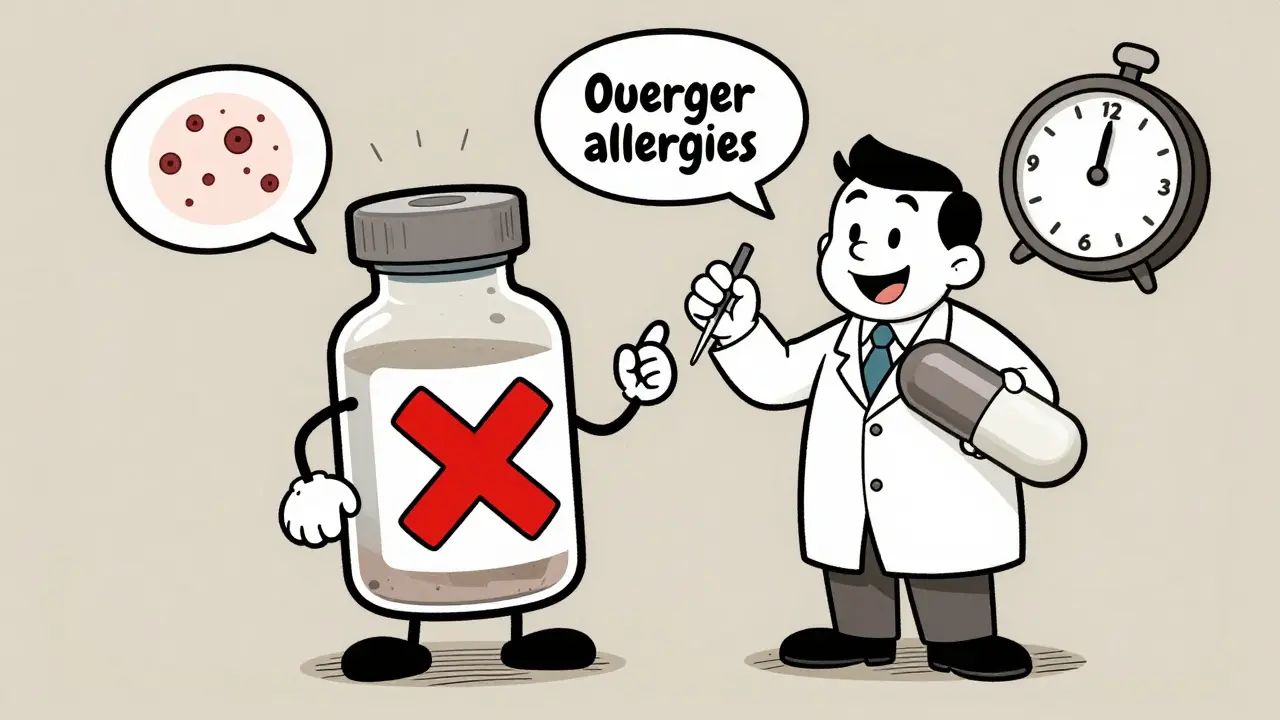
More than 1 in 10 people in the U.S. say they’re allergic to penicillin. But here’s the catch: up to 90% of them aren’t. That’s not a typo. Most people who think they’re allergic to penicillin have either outgrown it, misidentified a side effect as an allergy, or were misdiagnosed years ago. The same goes for NSAIDs like ibuprofen or aspirin-many reactions aren’t true allergies at all. Yet, because of these labels, patients end up on costlier, less effective, and sometimes more dangerous antibiotics. This isn’t just inconvenient-it’s dangerous.
What’s Really Going On With Penicillin Allergies?
Penicillin is one of the most common drugs people claim to be allergic to. But the reality is messy. A skin test for penicillin allergy looks for IgE antibodies that trigger immediate reactions-hives, swelling, trouble breathing, low blood pressure. But here’s the problem: many clinics still use outdated reagents like PPL (Prepared Penicillin Polylysine), which causes false positives in up to 70% of cases. That means someone could test "positive" and still safely take penicillin.The gold standard now? A negative skin test followed by a supervised oral challenge with amoxicillin. If no reaction happens, the allergy label is removed. This isn’t theoretical-it’s done daily in allergy clinics. And when patients get this right, they can go back to using penicillin, which is cheaper, narrower in spectrum, and less likely to cause antibiotic resistance than the alternatives like vancomycin or fluoroquinolones.
One study found that patients labeled penicillin-allergic cost hospitals about $500 more per admission because they’re given broader-spectrum drugs. That adds up to billions nationally. And yet, most people never get retested. Why? Because they assume the allergy is permanent. It’s not. Allergies fade. And if you were told you were allergic decades ago, especially as a child, there’s a very good chance you’re not allergic anymore.
NSAID Allergies Are Different
NSAID reactions-like aspirin, ibuprofen, or naproxen-are not usually IgE-mediated. Instead, they’re often caused by how these drugs block COX-1 enzymes, leading to a buildup of inflammatory chemicals. This can trigger asthma flare-ups, nasal polyps, hives, or even anaphylaxis in sensitive people. This is called aspirin-exacerbated respiratory disease (AERD), and it’s not rare. Up to 10% of adults with asthma have it.Unlike penicillin, you can’t test for NSAID allergy with a skin prick or blood test. Diagnosis is based on history. If someone gets wheezing or hives after taking aspirin, and it’s happened more than once, it’s likely real. But here’s the twist: some people with AERD can tolerate other NSAIDs. Others can’t. And for those who need daily aspirin for heart protection or chronic inflammation, there’s a solution: desensitization.
NSAID desensitization isn’t a one-time fix. It’s a daily routine. Patients start with a tiny dose-like 30 mg of aspirin-and slowly increase it over days or weeks until they reach a therapeutic level. Once they’re desensitized, they must keep taking the drug every day. Skip a dose, and the tolerance can vanish within 24 to 48 hours. That’s why this is mostly used for patients who need long-term aspirin, not occasional pain relief.
What Is Drug Desensitization? (And How Does It Work?)
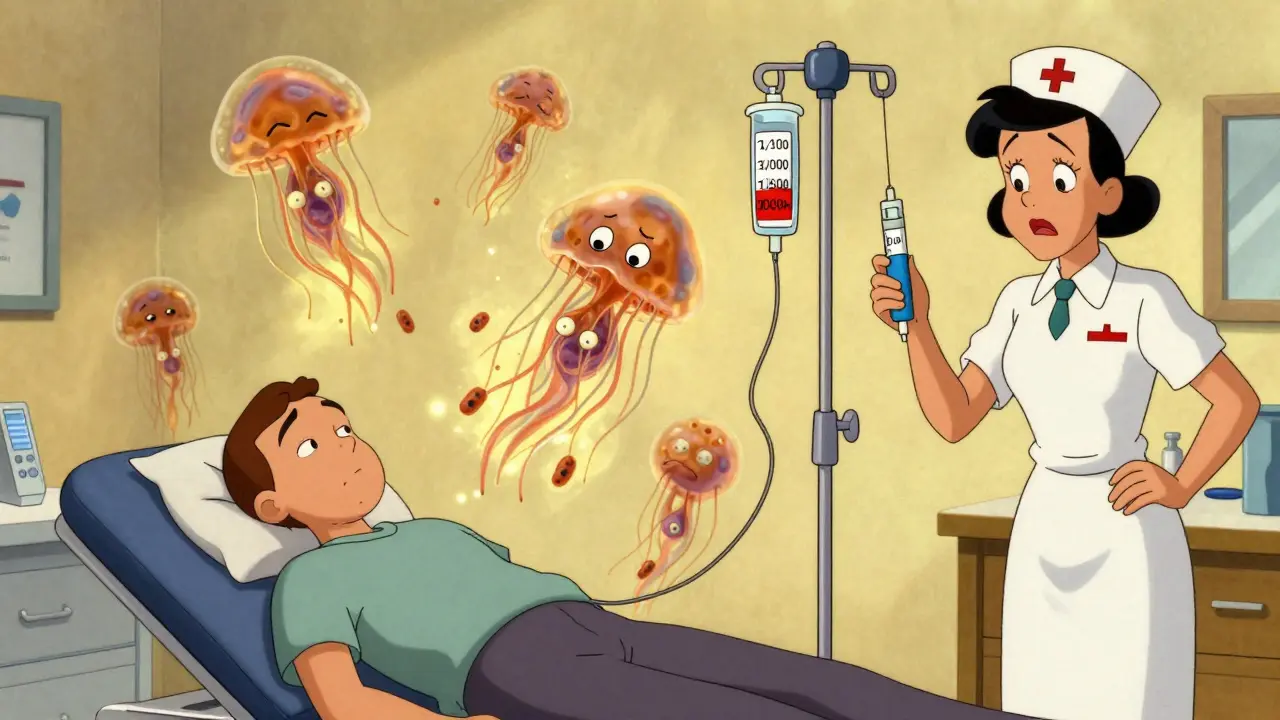
Desensitization isn’t curing the allergy. It’s tricking the immune system-temporarily. By giving tiny, increasing doses of the drug over hours, you flood the system slowly enough that mast cells don’t release histamine in a dangerous way. Think of it like slowly turning up the volume on a speaker until it’s loud, but you don’t get a shock.For penicillin and other beta-lactam antibiotics (like cefazolin or ceftriaxone), the most common protocol is a 12-step IV process. It starts with a dose that’s 1/10,000th of the full therapeutic amount. Every 15 to 20 minutes, the dose doubles. It takes 4 to 8 hours to reach the full dose. Some newer protocols, like the one developed at Brigham and Women’s Hospital, can do it in under 2.5 hours by tripling the dose every 15 minutes. That’s faster, but it’s only for patients with a clean history-no past anaphylaxis or severe reactions.
For oral drugs like fluconazole or itraconazole, the same principle applies. Start with a drop, wait, increase. Some patients even get desensitized to chemotherapy drugs like paclitaxel. One study showed 176 successful desensitizations in 40 patients with taxane allergies. That’s life-saving for cancer patients who have no other options.
But here’s the catch: it only works for the current course. If you need the drug again next month, you have to go through the whole process again. It’s not a cure. It’s a bridge.
Who Gets Desensitized? And Who Doesn’t?
Not everyone is a candidate. Desensitization is only considered when:- You have a confirmed immediate-type reaction (within 1 hour) to the drug
- There are no safe, effective alternatives
- You need the drug for a serious condition-infection, cancer, autoimmune disease
For example, a pregnant woman with syphilis needs penicillin. No other drug works as well. If she’s labeled allergic, she gets doxycycline-except that’s unsafe in pregnancy. Desensitization becomes the only option.
Same with cancer patients. If you’re allergic to carboplatin but have ovarian cancer, you might not survive without it. Desensitization lets you get the drug safely.
But if you just had a rash after taking amoxicillin two years ago, and you’re now getting an ear infection? You probably don’t need desensitization. You need a skin test and a challenge. Most of the time, you’ll be fine.
And children? They’re trickier. Most protocols were designed for adults. Pediatric allergists are starting to adapt them, but there’s still a gap. Kids with chronic infections or cancer are the best candidates. But if your child had a mild rash after amoxicillin, don’t assume they’re allergic. Get it checked.
Where and How Is It Done?
This isn’t something you do at home. Desensitization requires:- An allergy specialist trained in the protocol
- Emergency equipment on hand-epinephrine, oxygen, IV fluids
- A monitored setting-usually a hospital or outpatient allergy clinic
Staff must know how to recognize early signs of reaction: flushing, itching, coughing, throat tightness. If it escalates to low blood pressure or swelling of the airway, they stop immediately. No exceptions. Some reactions can’t be reversed, even with epinephrine.
And yes, it can fail. About 2% of people who’ve been desensitized to penicillin will have a reaction if they get it again later. That’s rare, but it’s why retesting after years is recommended for anyone who had a severe reaction originally.

Why Isn’t This Done More Often?
Because it’s complicated. It takes time. It needs trained staff. It’s expensive to set up. Many hospitals don’t have an allergy department. Primary care doctors don’t know the protocols. Patients don’t know they can get retested.And the biggest barrier? Misinformation. People think "allergy" means forever. It doesn’t. Skin tests are underused. Drug challenges are ignored. Desensitization is seen as a last resort-but it shouldn’t be. It’s a tool. A powerful one.
Look at the data: if just half of the people labeled penicillin-allergic got properly evaluated, we’d cut antibiotic costs, reduce resistance, and save lives. Yet, most still avoid penicillin because they’re scared. They don’t know they’re probably not allergic.
What Should You Do If You Think You’re Allergic?
If you’ve been told you’re allergic to penicillin or an NSAID:- Don’t assume it’s true. Write down exactly what happened-when, what symptoms, how long it lasted.
- Ask your doctor if you can be referred to an allergist for skin testing or a drug challenge.
- If you need the drug for a serious condition and alternatives are limited, ask about desensitization.
- Don’t let a label from 20 years ago limit your care today.
It’s not about being brave. It’s about being informed. Your body changes. Medicine changes. Your allergy label doesn’t have to be permanent.
Can you outgrow a penicillin allergy?
Yes. Up to 80% of people who had a penicillin allergy as a child lose it within 10 years. Even if you had a severe reaction, the risk of it returning is low. Skin testing and a supervised oral challenge are the only reliable ways to confirm if you’re still allergic.
Is NSAID desensitization permanent?
No. Unlike penicillin desensitization-which lasts only for one treatment course-NSAID desensitization requires daily dosing to maintain tolerance. If you stop taking the drug for more than 48 hours, you lose the protection and must restart the process.
Can you desensitize to any drug?
No. Desensitization works best for drugs that cause immediate, IgE-mediated or non-IgE-mediated reactions. It’s been done successfully with penicillins, cephalosporins, chemotherapy agents, monoclonal antibodies, and some NSAIDs. But it’s not used for delayed rashes, liver toxicity, or non-immune side effects like nausea or dizziness.
Is drug desensitization safe?
It’s generally safe when done in the right setting by trained staff. Minor reactions like itching or flushing happen in about 10-20% of cases but are easily treated. Severe reactions are rare-under 5%-and almost always occur early in the process. Emergency equipment must be ready at all times.
What if I had anaphylaxis to penicillin as a child?
You should still be evaluated. Even with a history of anaphylaxis, many people can safely take penicillin again after negative skin testing and a drug challenge. Re-testing is especially important if you’ve never been evaluated since childhood, or if you need the drug for a serious infection or pregnancy.




Comments
jesse chen
December 26, 2025
I had no idea so many people are mislabeled as penicillin-allergic. My mom was told she was allergic in the 70s, and we just assumed it was true-until she got a skin test last year and turned out to be fine. Now she takes amoxicillin like it’s candy. Why isn’t this more common knowledge?!
Joanne Smith
December 27, 2025
Let me get this straight-people are dying because doctors won’t do a 10-minute skin test? We’ve got AI that can predict your Netflix binge, but we can’t fix a 70-year-old diagnostic error? Classic. I’m not even mad, I’m just… disappointed. Also, NSAID desensitization sounds like a daily commitment no one signed up for. You’re not getting your ibuprofen back unless you’re willing to be a pharmaceutical monk.
Prasanthi Kontemukkala
December 27, 2025
This is so important, especially in places like India where antibiotics are often prescribed without proper testing. Many families just avoid penicillin because they heard it’s dangerous-but they don’t know it might be safer than the alternatives. I’ve seen kids get stronger antibiotics with more side effects just because of a label from childhood. We need more community education-maybe even posters in clinics, simple infographics. Everyone deserves to know their body can change.
Alex Ragen
December 28, 2025
It’s fascinating, isn’t it? The human psyche’s pathological attachment to diagnostic permanence-a metaphysical anchor in an ocean of biological flux. We cling to labels like talismans against the terror of uncertainty. Penicillin allergy? A relic of a pre-epigenetic, pre-immunological worldview. The body, in its infinite wisdom, forgets. And yet, we-collectively-refuse to unlearn. This isn’t medicine. It’s mythology dressed in white coats.
Lori Anne Franklin
December 30, 2025
Wait so if you’re allergic to penicillin but it’s not real… does that mean you can just start taking it again? I’m so confused. My cousin had a rash once and now she’s scared of every antibiotic. I think she needs to go get tested but she’s scared. Like… what if it’s still real? 😅
Bryan Woods
December 30, 2025
While the data presented is compelling, the implementation barriers remain substantial. The infrastructure required for safe desensitization is not uniformly available, particularly in rural or under-resourced settings. Until systemic changes occur in medical training and hospital protocol design, patient outcomes will remain unevenly distributed. A well-intentioned guideline is not a substitute for accessible care.
Ryan Cheng
January 1, 2026
My sister had a reaction to penicillin at 6. Now she’s 28 and needs it for a tooth infection. She was terrified. We went to an allergist, did the skin test, then the oral challenge-zero reaction. She cried. Not because she was scared, but because she realized she’d been living with a ghost for 22 years. If you’ve been told you’re allergic, get checked. It’s not a big deal. It’s life-changing.
wendy parrales fong
January 3, 2026
I love this. So many of us carry old labels like baggage. But our bodies grow. Medicine grows. Why are we still stuck in the past? You don’t have to be brave to get retested-you just have to be curious. And curious people live longer, healthier lives. Let’s stop being afraid of our own bodies.
Jeanette Jeffrey
January 4, 2026
Wow. So now we’re supposed to believe that every person who ever had a rash is just being dramatic? What’s next? ‘Oh, you think you’re allergic to peanuts? Nah, you just don’t like the taste.’ This is dangerous oversimplification. Not every reaction is ‘misdiagnosed.’ Some people die. Don’t act like this is a TED Talk when real people are at risk.
Shreyash Gupta
January 6, 2026
But what if you’re allergic to the test? 😅 I mean, what if the skin prick makes you break out? Or the oral challenge gives you a headache? Then what? I’m just saying… maybe we should test the testers first? 🤔
Ellie Stretshberry
January 7, 2026
i had no idea this was a thing. my grandma was allergic to penicillin and now she’s 80 and still avoids it. i think she should get checked. i’m gonna ask my doctor about it. thanks for sharing this!
Zina Constantin
January 9, 2026
As someone who grew up in a household where antibiotics were treated like magic pills, this hits home. My dad had a reaction as a teen and was labeled allergic forever. He never questioned it. Now, after reading this, I’m scheduling his allergy consult. It’s not just about saving money-it’s about giving people back their health. Thank you for writing this. I’m sharing it with my whole family.
Write a comment