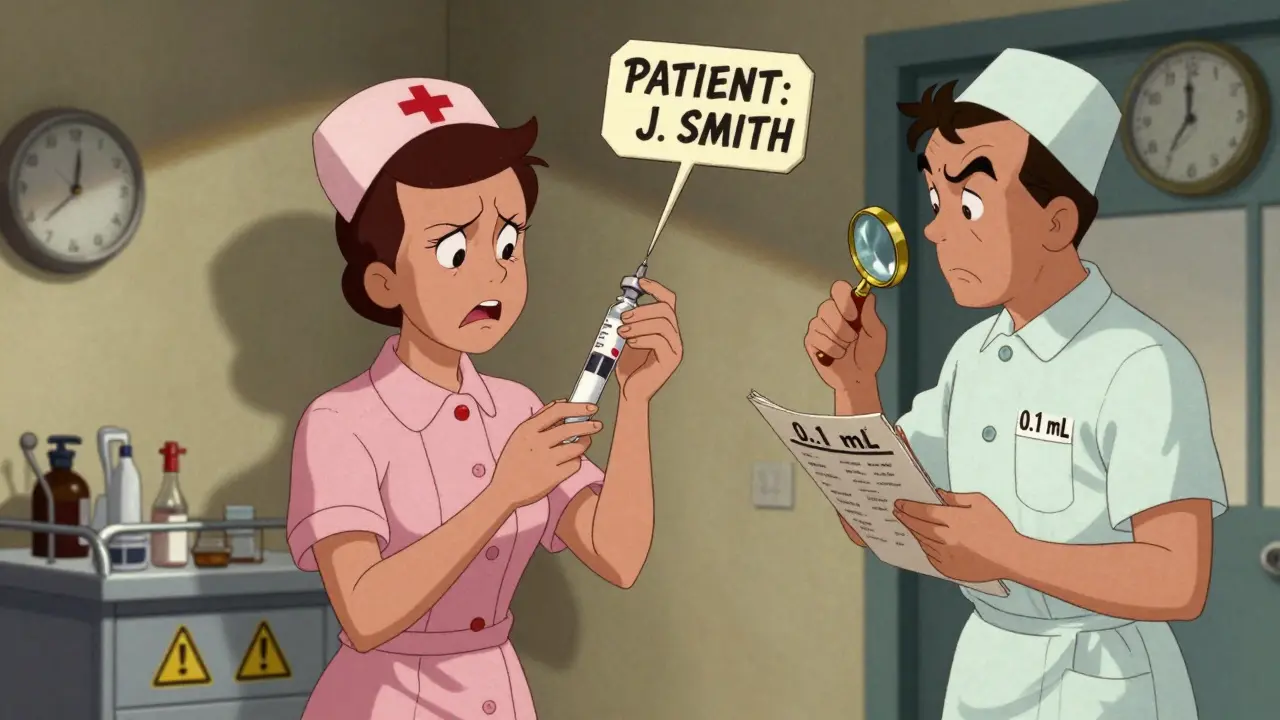
One wrong dose of insulin. One misprogrammed IV pump. One overlooked allergy. These aren’t hypotheticals-they’re real events that happen in hospitals every day. And for certain medications, even a tiny mistake can kill. That’s why high-risk medications demand more than just a quick glance before giving them to a patient. They need a second set of eyes, a second brain, and a second set of hands-completely independent of the first.
What Makes a Medication High-Risk?
Not all drugs are created equal when it comes to danger. A misplaced decimal point in a dose of insulin can send a patient into a coma. A slight overdose of IV heparin can cause uncontrolled bleeding. A chemotherapy drug given at the wrong rate can destroy bone marrow. These aren’t side effects-they’re direct, predictable, and often fatal outcomes from small errors. The Institute for Safe Medication Practices (ISMP) calls these high-alert medications. They’re drugs that carry a high risk of causing serious harm if used incorrectly. It’s not about how powerful they are-it’s about how unforgiving the margin of error is. Even if the mistake is caught later, the damage may already be irreversible. Common examples include:- Insulin (all forms-IV, subcutaneous, even oral)
- IV opioids like morphine or fentanyl
- Heparin (both intravenous and subcutaneous)
- Concentrated potassium chloride
- Chemotherapy agents
- Cardiovascular drugs like IV nitroglycerin, dopamine, or amiodarone
- Total parenteral nutrition (TPN)
How the Double Check Works
The standard is called an independent double check. It’s not two people glancing at the same thing together. It’s two people doing the same verification, separately, without influencing each other. Here’s how it should work:- The first provider prepares the medication and checks the Five Rights: right patient, right drug, right dose, right route, right time.
- The second provider-without seeing the first person’s work-rechecks all of it from scratch.
- Both independently calculate doses, confirm concentrations, inspect vials for labels and expiration dates, and verify the patient’s identity using two identifiers (like name and date of birth).
- Only after both agree, and sign off on the Medication Administration Record (MAR), is the drug given.
- Confirm the patient’s name and medical record number
- Verify the drug name, dose, and infusion rate against the prescription
- Check the physical appearance of the drug-color, clarity, particulates
- Confirm the expiration time and date
- Explain the treatment to the patient and document their understanding
- Both sign the record before administration
Who Can Perform the Check?
Not just anyone can be the second checker. The person must be qualified to understand what they’re verifying. That means:- Registered nurses
- Pharmacists
- Physicians or nurse practitioners
- Physician assistants
Why Double Checks Sometimes Fail
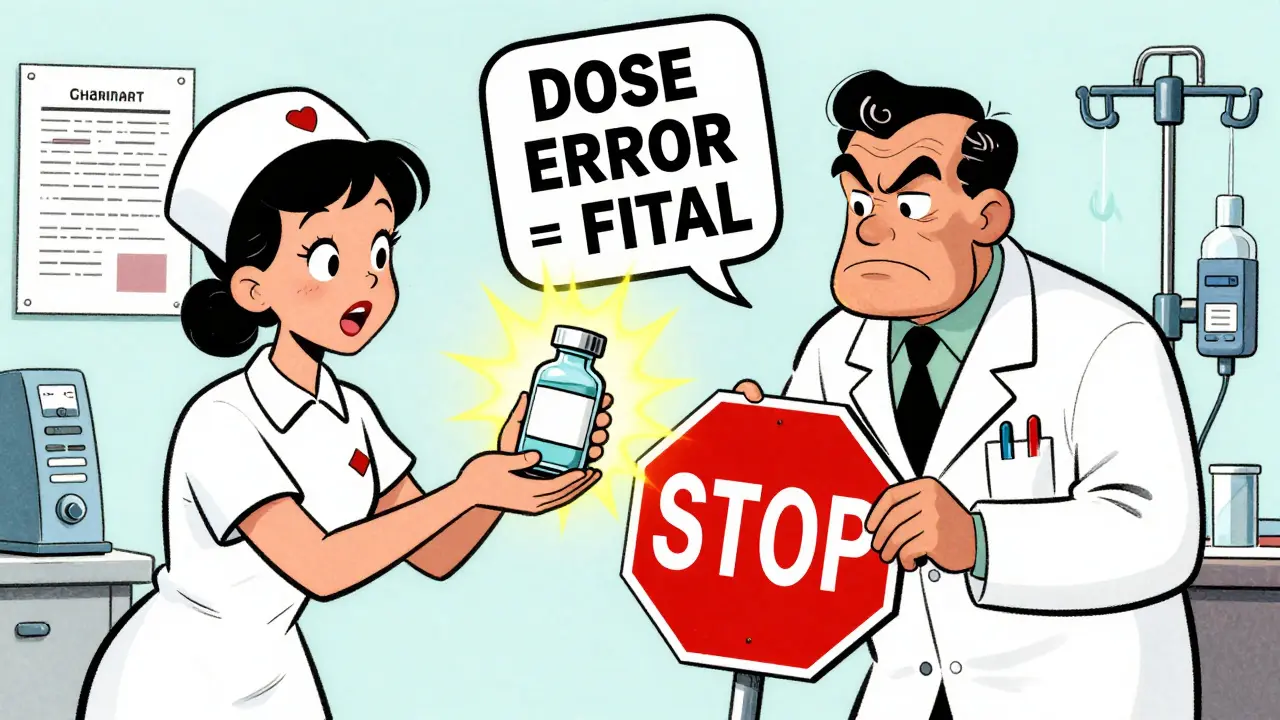
Here’s the uncomfortable truth: double checks don’t always work. A 2022 ISMP survey found that 68% of nurses admitted skipping required double checks during busy shifts. The top reason? No one else was available. Another 42% said they were rushed. And in many cases, the second person didn’t actually check-they just signed off because they trusted the first person. That’s called confirmation bias. It happens when the second checker sees the first person’s work and assumes it’s correct. They don’t recalculate. They don’t re-read the label. They just nod and move on. Independent double checks only work if the second person truly works independently. No peeking. No talking. No assumptions. And even then, studies show that manual double checks catch only about 50% of errors. That’s not good enough.The Shift Toward Technology
Hospitals are starting to realize: human eyes get tired. Machines don’t. Barcode scanning at the bedside is now the gold standard for verifying patient and drug identity. When a nurse scans the patient’s wristband and the medication’s barcode, the system instantly cross-checks the drug, dose, route, and time against the electronic order. If it doesn’t match, the system won’t allow administration. ECRI Institute says this is more reliable than a manual double check. And they’re right. Barcodes don’t get distracted. They don’t miss a decimal point. They don’t skip steps because they’re tired. But technology isn’t perfect. It can’t verify if a vial was mixed wrong in the pharmacy. It can’t catch a mislabeled bag of TPN. It can’t tell if an infusion pump was programmed with the wrong concentration. That’s why the smartest hospitals now use a hybrid approach:- Use barcode scanning for routine verification
- Reserve manual double checks for the highest-risk meds-like IV insulin, heparin, and chemotherapy
- Use automated dispensing cabinets with built-in dose limits
- Implement smart infusion pumps that flag abnormal rates

What You Can Do
If you’re a patient or family member:- Ask: “Is this a high-risk medication?”
- Ask: “Will two people check it before you give it to me?”
- Don’t be afraid to speak up if you see someone skipping steps.
- Never skip the double check-even if you’re rushed.
- Don’t let someone else do your verification for you.
- If you’re the second checker, start from scratch. Don’t rely on the first person’s work.
- Report unsafe workarounds. Silence kills.
The Bottom Line
High-risk medications aren’t dangerous because they’re strong. They’re dangerous because the margin for error is razor-thin. And human memory, attention, and judgment are unreliable under pressure. The solution isn’t more rules. It’s smarter rules. Fewer double checks-but only for the drugs that truly need them. And pairing those checks with technology that doesn’t get tired. The goal isn’t to catch every mistake. The goal is to make sure the mistakes that could kill someone never reach the patient. That’s not just policy. That’s responsibility.What medications require a double check in hospitals?
Medications that require a double check include insulin (all forms), IV opioids like morphine or fentanyl, IV heparin, concentrated potassium chloride, chemotherapy drugs, and certain cardiovascular drugs like dopamine or nitroglycerin. In pediatric and neonatal units, nearly all cardiac medications also require dual verification. Each hospital creates its own list based on ISMP guidelines, internal error data, and patient population risks.
Who can perform a double check?
Only licensed, qualified healthcare professionals can perform a double check. This includes registered nurses, pharmacists, physicians, nurse practitioners, and physician assistants. Pharmacy technicians, students, and unlicensed staff are not permitted to serve as the second checker because they may not recognize subtle errors in concentration, labeling, or dosing.
Is a double check always effective?
No. Studies show manual double checks catch only about half of errors. They often fail when staff are rushed, understaffed, or when the second person doesn’t verify independently-instead, they just confirm what the first person did. This is called confirmation bias. The ISMP warns that too many double checks can create false security and reduce effectiveness.
What’s better than a double check?
Bedside barcode scanning is more reliable than manual double checks for verifying patient identity and drug selection. Smart infusion pumps with dose-error reduction software catch programming mistakes. Automated dispensing cabinets prevent incorrect doses from being pulled. The best systems combine technology with targeted manual checks-only for the highest-risk medications where human judgment is still essential.
Why do nurses skip double checks?
The main reasons are time pressure and lack of staff. A 2022 ISMP survey found 68% of nurses skipped required double checks during busy shifts, and 42% said there was no second person available. Some also skip because they’ve seen colleagues do it without consequences. But when a mistake happens, it’s often too late to fix.
Are double checks required by law?
Yes. The Joint Commission requires all U.S. hospitals to have a written policy identifying high-alert medications and a process for verifying them before administration. This became mandatory under Standard MM.05.01.09 on January 1, 2023. Hospitals must document their list, training procedures, and compliance. Failure to comply can result in loss of accreditation.

Comments
Darren McGuff
January 10, 2026
Let me tell you something about barcode scanning-this isn’t just tech hype. I worked in ICU for 12 years, and I’ve seen nurses miss a decimal point in fentanyl dosing because they were tired. The machine didn’t. It flagged it. No debate. No ‘oh, I thought it was right.’ That’s the difference between hope and safety. Barcodes don’t take lunch breaks.
Kiruthiga Udayakumar
January 11, 2026
Y’all keep talking about double checks like they’re magic. In India, we don’t even have enough nurses to do one check, let alone two. You think a hospital in Mumbai can afford two pharmacists standing around while a kid goes into hypoglycemic shock? Tech isn’t a luxury-it’s survival. Stop romanticizing bureaucracy.
Ashley Kronenwetter
January 12, 2026
As a nurse practitioner, I want to clarify something: the term ‘independent double check’ is often misunderstood. It’s not just two people looking at the same thing. It’s two people performing the verification in isolation, then comparing results. If they discuss it beforehand, it’s not independent. And yes, this is non-negotiable for insulin, heparin, and chemo. The Joint Commission doesn’t joke around.
Heather Wilson
January 12, 2026
Let’s be honest-most double checks are performative. The second person doesn’t verify. They just sign. I’ve seen it. The first nurse says ‘I checked it,’ and the second says ‘cool, I’ll sign.’ No math. No label reading. No patient ID confirmation. It’s theater. And when the patient dies, everyone’s shocked. Surprise. Human nature doesn’t change because you put a checklist on the wall.
Ian Long
January 13, 2026
I get why people skip checks. I’ve been there-12-hour shift, 6 patients, no help, and the med cart’s 300 feet away. But here’s the thing: the system is broken, not the people. We blame nurses for skipping checks, but we don’t fix staffing. We don’t automate the easy stuff. We don’t train people to *see* the risk. We just yell louder. We need better tools, not better guilt.
Micheal Murdoch
January 13, 2026
Here’s what no one talks about: the emotional toll. Nurses who’ve been through a preventable death don’t just feel guilty-they feel betrayed. Betrayed by the system that told them ‘double check’ would save lives, then gave them 8 minutes between med passes. The real issue isn’t compliance-it’s compassion fatigue. We need to stop treating safety like a rulebook and start treating it like a covenant. Between staff. Between patients. Between humanity and hardware.
Technology helps. But if we forget why we’re doing this-because someone’s child might not wake up tomorrow-then we’ve already lost.
Chris Kauwe
January 14, 2026
Let me break this down for the technocrats: you can’t algorithm your way out of human failure. The system doesn’t care if your barcode scanner works. It cares if the person holding the syringe knows the difference between 0.1 mL and 1.0 mL of insulin. That’s not tech-that’s training. That’s culture. That’s discipline. And if your hospital thinks a machine replacing human judgment is progress, you’re not modernizing-you’re outsourcing accountability.
Double checks aren’t about redundancy. They’re about responsibility. And responsibility can’t be scanned.
Matthew Maxwell
January 14, 2026
It is deeply concerning that any healthcare professional would consider bypassing a mandated safety protocol under the guise of ‘time constraints.’ The Joint Commission’s Standard MM.05.01.09 is not optional-it is the minimum ethical threshold. To suggest that staffing shortages justify negligence is not just irresponsible-it is morally indefensible. If you cannot adhere to the most basic safeguards, you should not be handling medications. Period.
Patty Walters
January 14, 2026
my hospital just got smart pumps last month. they beep if you put in 100 units of insulin instead of 10. i used to double check every time. now i just watch the screen. but i still look at the vial. still say the patient’s name out loud. still ask the RN next to me ‘you good?’-because tech helps, but it don’t think for you. and i’d rather be a little slow than dead wrong.
Write a comment