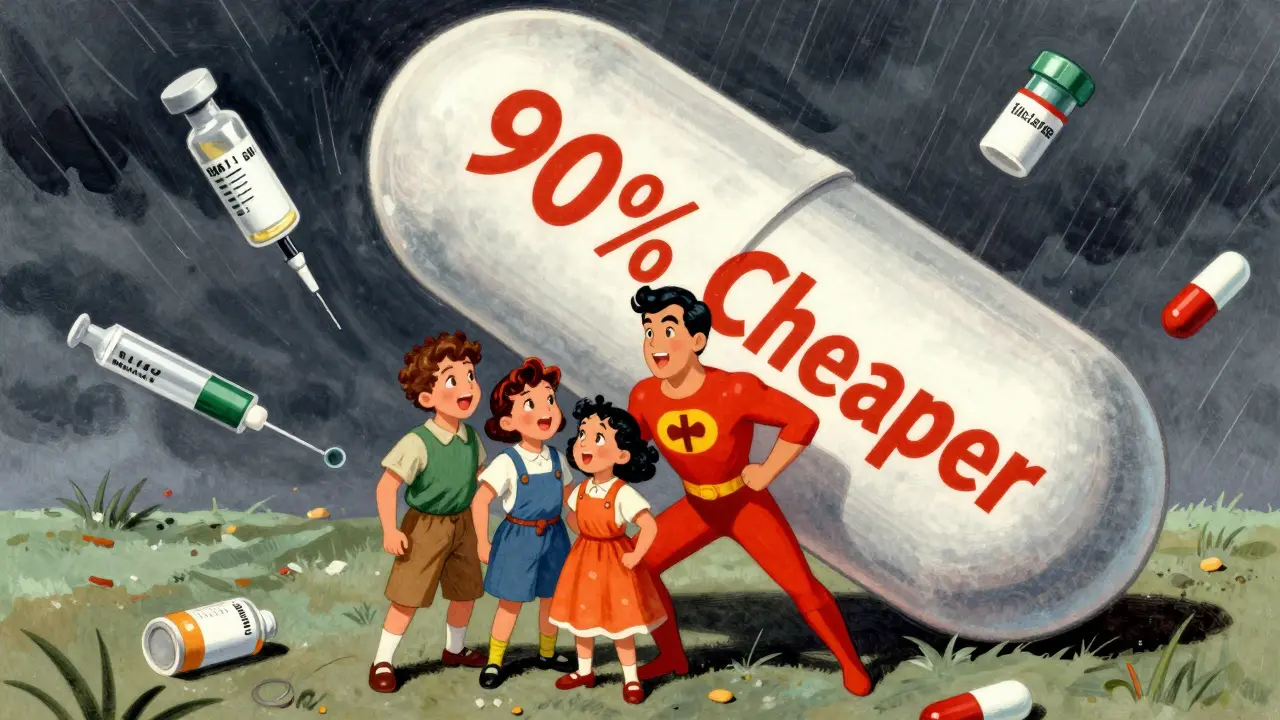
Every year, the world spends more on healthcare. Not just a little more - generics are the quiet force holding back the tide. In 2025, global healthcare spending is expected to hit $10.7 trillion, with prescription drugs alone accounting for nearly $1.6 trillion. That’s more than the GDP of most countries. And yet, in places like Nigeria, Afghanistan, and Armenia, people pay for medicine out of their own pockets - often more than 75% of their total health costs. How is this possible? And why do some countries still manage to keep drug prices under control? The answer lies in generics.
Why Generics Are the Silent Stabilizers
Generics aren’t just cheaper versions of brand-name drugs. They’re the reason millions can afford insulin, blood pressure pills, or antibiotics at all. In the U.S., where drug prices are among the highest in the world, generics make up 90% of all prescriptions filled - but only 16% of total drug spending. That’s because a single generic version of a drug can drop its price by 80-95% compared to the brand. When Lipitor’s patent expired in 2011, its generic version slashed the cost from $120 per month to less than $10. That’s not a small saving - it’s life-changing for people on fixed incomes. In Europe, generics have helped keep public health budgets from collapsing. Germany, France, and the UK all use mandatory generic substitution policies: pharmacists can swap a brand drug for its generic unless the doctor says no. This isn’t just policy - it’s economic survival. Without generics, countries would have to choose between cutting coverage or raising taxes. Neither option is popular.The Real Cost of New Drugs
While generics keep prices low, new drugs are pushing costs higher. In 2024, U.S. drug spending jumped $50 billion, mostly because of new treatments for obesity, diabetes, and cancer. These drugs often cost $100,000 a year. A single course of a new cancer immunotherapy can run over $200,000. And there’s no generic version in sight - not for years, sometimes decades. Biosimilars, the generic version of biologic drugs, are starting to appear. But they’re not simple copies. Biologics are made from living cells, not chemicals. That means biosimilars require massive clinical trials to prove they’re safe and effective. As a result, they’re still expensive - often 15-35% cheaper than the original, not 90%. In the U.S., adoption is slow because insurers and doctors are wary. In Europe, they’re used more widely - but even there, uptake is uneven.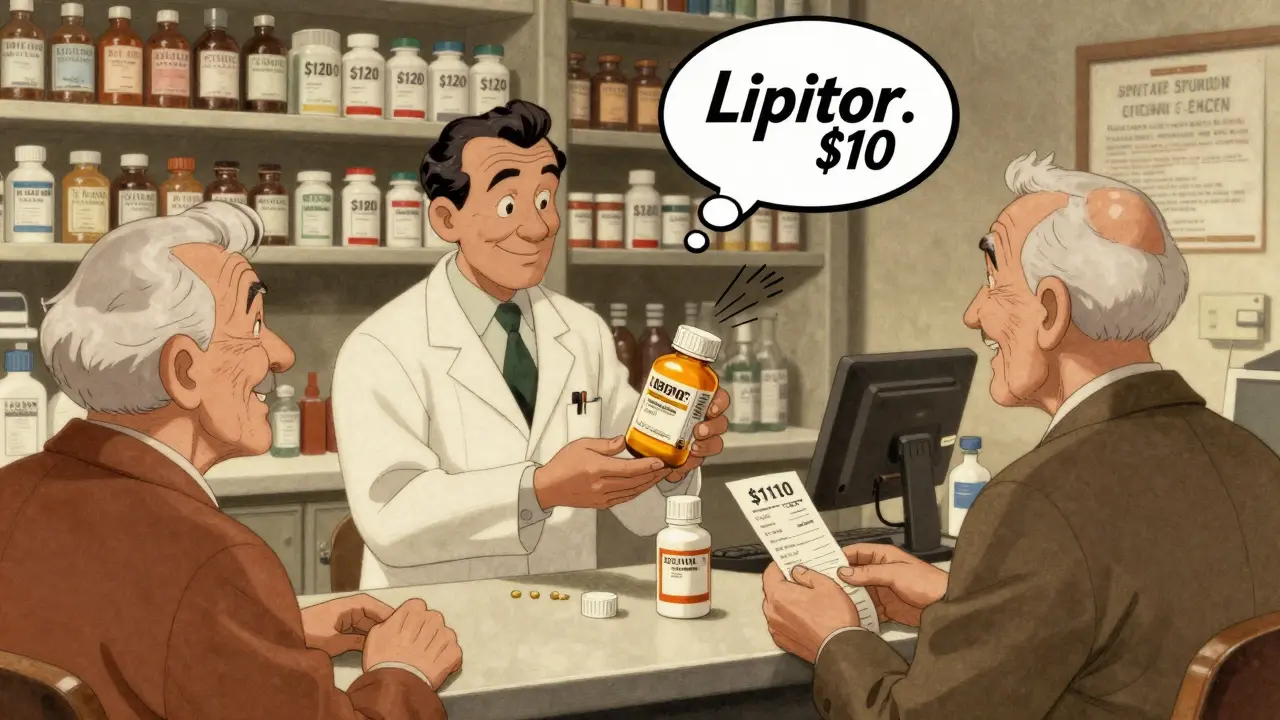
Generics vs. Rich Countries vs. Poor Countries
The story of generics isn’t the same everywhere. In high-income countries, they’re a tool to control costs. In low-income countries, they’re the only tool available. In 2022, only 5.8% of GDP was spent on health in high-income countries. In low-income countries? Just 1.2%. And in 55 countries, people pay for healthcare mostly with cash in hand - no insurance, no safety net. When a child in Malawi gets pneumonia, the family buys antibiotics at the pharmacy. If the brand-name version costs $5, they might go without. If the generic costs $0.20, they buy it. That’s the difference between life and death. China is changing the game. Once a major producer of low-cost generics, it’s now becoming a consumer of expensive new drugs. As incomes rise and healthcare access expands, Chinese patients are demanding newer treatments. That means generics are no longer the only option - but they’re still the most common. In 2025, China will account for nearly 20% of global generic drug sales.Why Some Countries Can’t Use Generics Even When They Want To
It’s not just about money. It’s about systems. In Lebanon, public health spending dropped 71% between 2019 and 2021. Hospitals ran out of medicine. Pharmacists couldn’t get generics because the supply chain broke down. In Malawi, the government can’t afford to import even basic generics because foreign aid has dropped to its lowest level since 2009. Even when generics are available, they’re not always accessible. In many African countries, the problem isn’t price - it’s distribution. A generic antibiotic might cost 20 cents, but if it’s sitting in a warehouse 200 miles away with no roads, no fuel, and no refrigeration, it might as well not exist. And in places with weak regulatory systems, fake generics flood the market. The WHO estimates that 1 in 10 medical products in low- and middle-income countries are substandard or falsified. That’s not just a waste of money - it’s deadly.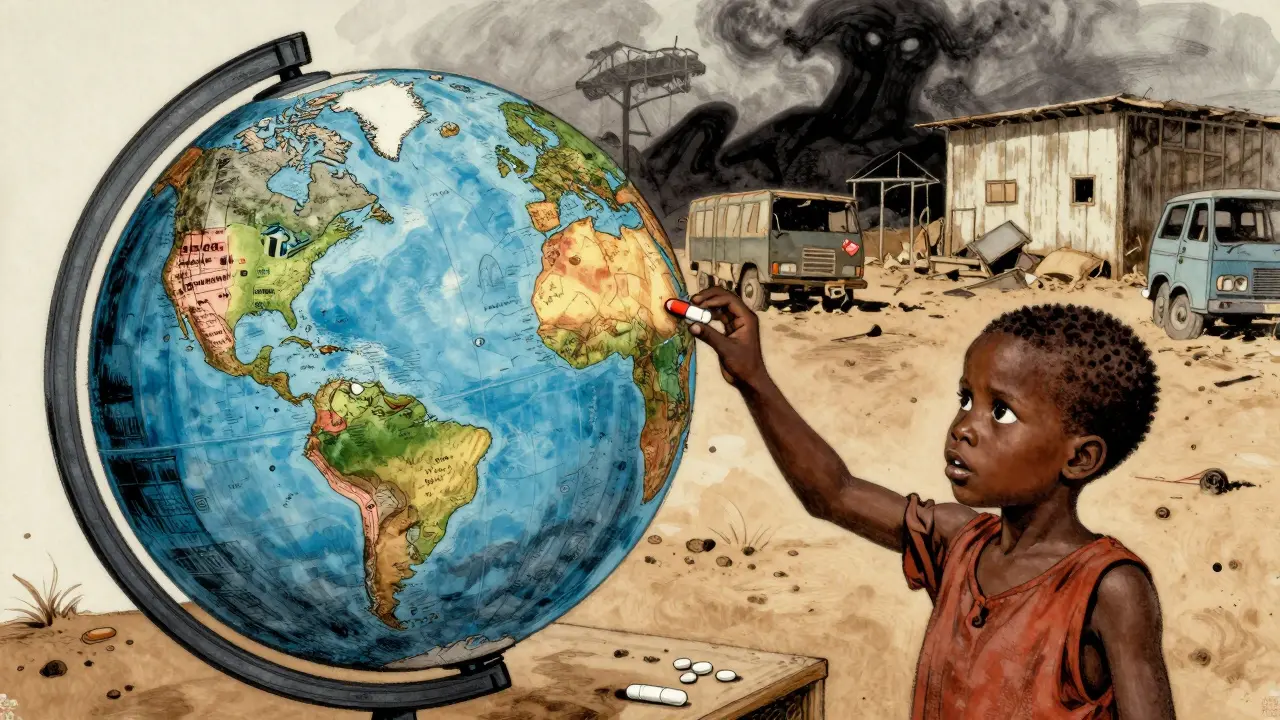
The Future of Generics: More Complex, More Important
The next wave of generics won’t be simple pills. It’ll be complex biosimilars, generic inhalers, and even generic versions of gene therapies. These aren’t easy to copy. They require advanced manufacturing, strict quality control, and regulatory approval that can take years. But they’re coming. In the U.S., new laws are pushing insurers to favor generics. Medicare Part D now requires prior authorization for brand-name drugs when a generic exists - a policy that could save $10 billion a year by 2030. In India, the government is building its own generic drug supply chain to reduce dependence on China. Brazil and South Africa are negotiating bulk purchases to drive down prices. Meanwhile, the global shortage of healthcare workers - especially in rural areas - means people are relying more on self-care and over-the-counter medicines. Generics make that possible. A person with mild depression might skip therapy and buy a $2 generic antidepressant instead. That’s not ideal - but it’s better than nothing.What Happens If Generics Disappear?
Imagine a world without generics. Brand-name drugs dominate. New drugs cost $500,000 a year. Insurance companies drop coverage. Governments can’t afford to pay. Millions stop taking their meds. Chronic diseases run wild. Hospitals overflow. Life expectancy drops. That’s not science fiction. That’s what happens when cost control fails. Generics aren’t perfect. They’re not always available on time. Sometimes they’re poorly made. But they’re the only thing standing between a family and financial ruin - or worse. The global economy doesn’t just need more doctors or better hospitals. It needs more generics. Not as a backup plan - but as a core strategy. Because in the end, healthcare isn’t about innovation alone. It’s about access. And generics are the most powerful tool we have to make sure no one is left behind.Are generics as safe as brand-name drugs?
Yes. In countries with strong regulatory systems - like the U.S., EU, Canada, and Japan - generics must meet the same quality, strength, purity, and performance standards as the brand-name drug. They contain the same active ingredient, work the same way, and have the same risks and benefits. The only differences are in inactive ingredients (like fillers or dyes), which don’t affect how the drug works. The FDA and EMA require bioequivalence testing to prove this.
Why are generics cheaper?
Generics don’t have to repeat the expensive clinical trials that brand-name drugs go through. The original manufacturer spent years and billions developing the drug, testing it in thousands of patients, and getting regulatory approval. Generic companies only need to prove their version works the same way. That cuts development costs by 80-90%. They also face competition - often dozens of generic makers producing the same drug - which drives prices down further.
Do all countries use generics equally?
No. In high-income countries, generics make up 80-90% of prescriptions. In low-income countries, they’re often the only option - but access is limited by supply chains, corruption, and lack of funding. Some countries, like India and Thailand, have strong generic manufacturing industries and export widely. Others, like many in sub-Saharan Africa, struggle to import even basic generics due to logistics and import restrictions.
Can generics cause side effects that brand drugs don’t?
Rarely. Side effects come from the active ingredient, which is identical in both brand and generic. However, differences in inactive ingredients - like dyes, preservatives, or fillers - can cause allergic reactions in sensitive individuals. For example, someone allergic to a dye used in one brand might tolerate a different generic that doesn’t contain it. These cases are uncommon and usually mild. If a patient suspects a reaction, they should consult their doctor - but switching back to the brand isn’t always necessary.
Why don’t all countries have access to affordable generics?
It’s not just about production - it’s about policy and trade. Some countries have weak patent laws and can legally produce generics even before a drug’s patent expires, like India does under WTO rules. Others are pressured by pharmaceutical companies to enforce strict patents, blocking local production. Trade deals, intellectual property rules, and political influence all shape whether a country can make or import low-cost generics. Even when generics exist, poor infrastructure, corruption, and lack of funding can prevent them from reaching patients.
Are biosimilars the same as generics?
No. Biosimilars are generic-like versions of biologic drugs - complex medicines made from living cells, like insulin or rheumatoid arthritis treatments. Unlike traditional generics, which are exact chemical copies, biosimilars are highly similar but not identical. They require more testing and are more expensive to produce. As a result, they’re usually 15-35% cheaper than the original, not 90%. Adoption is slower because doctors and insurers are cautious about switching.

Comments
Lance Long
January 27, 2026
Generics are the unsung heroes of modern medicine. I’ve seen friends choose between rent and their blood pressure meds - until generics came along. One guy switched from $150/month brand-name lisinopril to a $4 generic and started actually taking it. That’s not just savings - that’s survival. And it’s not even close to being discussed enough in the media. We celebrate flashy new cancer drugs but ignore the $0.50 pill that keeps grandma alive. The system’s broken, but generics? They’re the duct tape holding it together.
Lexi Karuzis
January 28, 2026
Wait - you’re seriously praising generics? Have you ever read the FDA’s own reports on bioequivalence failures?!! There are hundreds of cases where generics failed to dissolve properly - and patients died! And don’t even get me started on the Chinese factories! The FDA inspects less than 2% of them! This isn’t medicine - it’s Russian roulette with your kidneys!!!
jonathan soba
January 29, 2026
The data doesn’t lie: in the UK, generic substitution saved the NHS £1.2 billion in 2023 alone. But here’s the catch - the savings aren’t passed on to patients. Pharmacies and insurers pocket the difference. So yes, generics reduce overall spending - but they don’t reduce out-of-pocket costs for the vulnerable. The real problem isn’t the drug price - it’s the entire reimbursement architecture. Fix that, and we might actually see equity.
matthew martin
January 30, 2026
Man, I used to think generics were just cheap knockoffs - until my mom got diagnosed with Type 2. She was on metformin - brand name cost $200 a month. Generic? $3. She cried the first time she bought it. Not because she was sad - because she realized she hadn’t been eating right for years, not because she couldn’t afford the pill. Generics don’t just save money - they save dignity. And that’s the part nobody talks about. It’s not just chemistry - it’s humanity.
Irebami Soyinka
February 1, 2026
Generics? In Nigeria? Hah! We pay $8 for a 30-day supply of amoxicillin that costs 12 cents to make - because the middlemen are all connected to ministers! And the fake ones? They’re everywhere. My cousin’s daughter died from a fake malaria pill - labeled ‘Genuine’ with a fake WHO logo. We don’t need more generics - we need justice. And if the West wants to help, stop pushing patents and start funding real supply chains. Not charity - accountability.
✊ #NaijaStrong
doug b
February 2, 2026
Generics work. Period. My dad’s on three of them - cholesterol, blood pressure, diabetes. He’s 78 and still mows his lawn. No side effects. No drama. Just pills that cost less than a coffee. If you’re still scared of generics, you’re scared of the wrong thing. The real danger is not taking your meds because you can’t afford them. That’s the real tragedy.
Mel MJPS
February 3, 2026
I work in a community clinic. We hand out generics every day. One woman came in last week - she hadn’t taken her antidepressant in six months because the brand was $110. We switched her to the generic - $2. She started crying. Not because she was sad - because she finally felt like someone saw her. That’s what generics do. They don’t just treat illness. They treat invisibility.
Katie Mccreary
February 4, 2026
So you’re saying generics are ‘life-changing’? Cute. But biosimilars are 85% more expensive than generics and still not covered by most plans. And don’t forget - the FDA lets generics use different fillers. Ever heard of lactose intolerance? Or gluten? Some generics have hidden nasties. You think you’re saving money - but you’re just trading one health risk for another. Thanks for the misinformation.
Mindee Coulter
February 4, 2026
My sister’s a pharmacist in Ohio. She told me that 95% of her prescriptions are generics. She says patients are way more likely to refill when it’s $5 instead of $120. It’s not rocket science - affordability = adherence. And adherence = fewer ER visits. Simple math. Why is this even a debate?
Rhiannon Bosse
February 6, 2026
Ohhh so generics are the heroes now? LOL. Let me guess - next you’ll say Big Pharma is the villain? 😂 That’s the whole script, isn’t it? The ‘evil corporations’ vs. the ‘poor people’? Wake up. The same companies that make brand-name drugs ALSO make the generics. They just rebrand and relabel. It’s a monopoly with two faces. And guess who’s funding all those ‘generic access’ NGOs? The same pharma giants. This isn’t altruism - it’s market control. 🤡
Timothy Davis
February 7, 2026
Actually, your entire premise is flawed. The 90% cost reduction claim only applies to a small subset of older drugs. Most new generics - especially complex ones like inhalers or injectables - only save 30-40%. And the FDA’s approval process for generics is notoriously slow - over 70% of applications are rejected on first submission. So no, generics aren’t the magic bullet. They’re a bureaucratic bottleneck with a price tag.
Sue Latham
February 7, 2026
Oh sweetie, you really think a $0.20 generic antibiotic in Malawi is ‘saving lives’? Darling, those pills are often expired, unregulated, and stored in 110°F warehouses. The real issue isn’t cost - it’s that people are dying from poor infrastructure, not poor pricing. If you want to help, fund refrigerated trucks, not more pills. This isn’t a drug problem - it’s a colonial logistics nightmare.
John Rose
February 9, 2026
I’ve spent 20 years working in global health. The most powerful thing I’ve seen? A rural clinic in Kenya switching from $15 brand insulin to $2 generic - and seeing patient compliance jump from 32% to 89%. That’s not luck. That’s policy. Generics aren’t perfect - but they’re the most scalable, evidence-based tool we have. The question isn’t whether they work - it’s why we don’t invest in them more.
Brittany Fiddes
February 9, 2026
Generics are the reason the NHS still exists. But let’s be honest - Britain’s been exploiting this for decades. We’ve been the world’s pharmacy, importing generics from India and selling them cheap to the EU. Meanwhile, the US pays 5x more for the same pills. It’s not innovation - it’s economic colonialism. And now China’s taking over. We’re being outmaneuvered. And nobody’s talking about it.
Write a comment