When you or a loved one is on medication, getting the dose right isn’t just important-it’s life-or-death. But what happens when the doctor, pharmacist, or nurse speaks English, and you don’t? For millions of people with limited English proficiency (LEP), this isn’t a rare problem. It’s daily. And the consequences? Mistakes in medication use. Hospital visits. Even death.
Studies show that families with LEP are twice as likely to experience dangerous medication errors compared to English-speaking families. One 2022 study from the Children’s Hospital of Philadelphia found that 17.7% of children in LEP households had a medication-related adverse event, compared to just 9.6% in English-speaking homes. That’s not a coincidence. It’s a system failure.
Why Language Barriers Lead to Medication Errors
It’s not just about not understanding the word "daily." It’s about not knowing what "dropperful" means, or whether "take with food" means before breakfast or after dinner. Prescription labels are full of medical jargon-even in English. When you’re trying to translate that into another language, without training, things get lost.
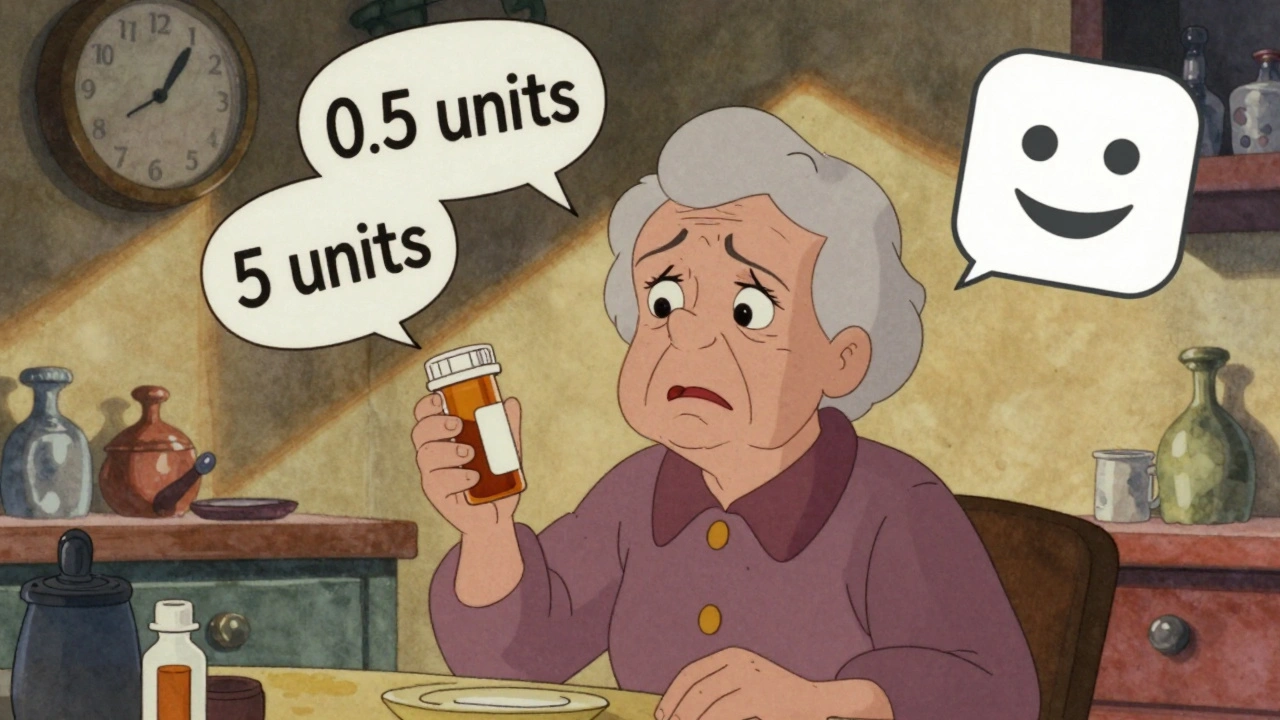
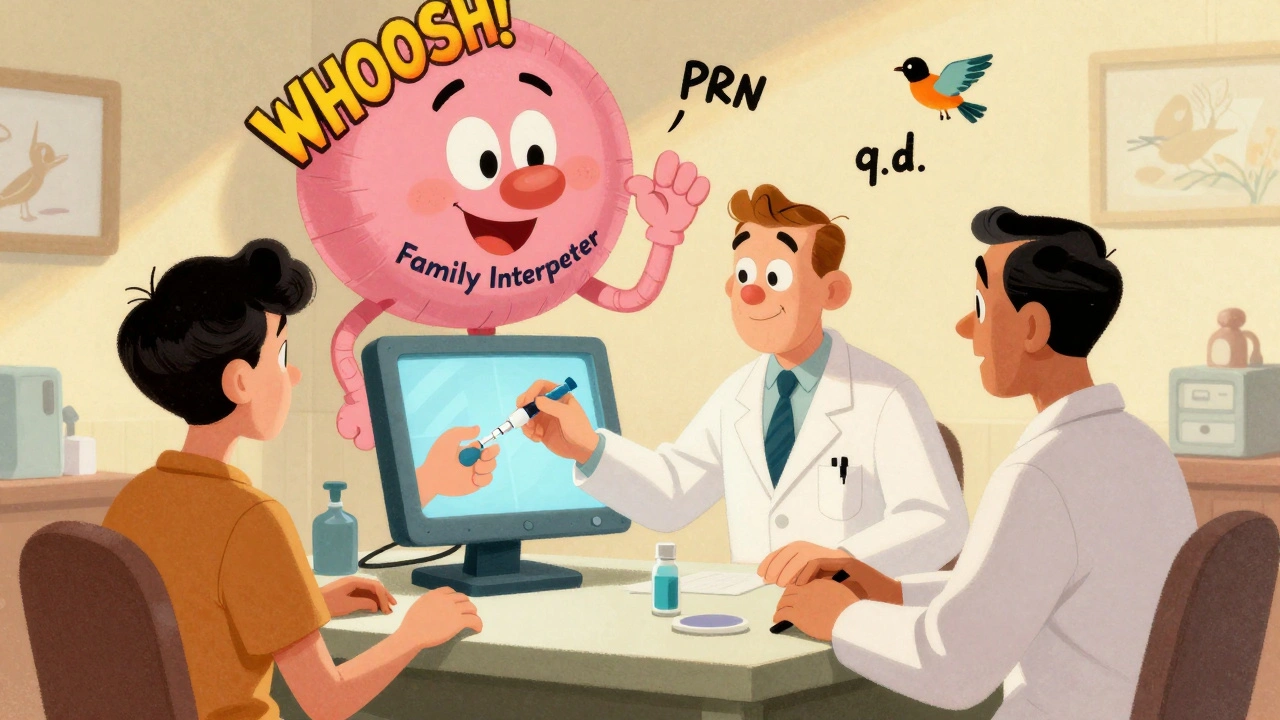
One Reddit user shared how their Spanish-speaking mother was given insulin instructions via Google Translate. The app misread "0.5 units" as "5 units." She ended up in the hospital. That’s not an outlier. A 2020 review found that 34.7% of non-English-speaking patients struggled to understand how to take their meds. And when family members step in to interpret-because no one else is available-nearly one in four translations are wrong. Not because they’re careless. Because they don’t know the difference between "tablet" and "capsule," or what "PRN" really means.
Pharmacies aren’t always equipped to help. In the Bronx, 31% of pharmacies couldn’t print prescription labels in Spanish-even though most of their customers spoke it. In Milwaukee, half of pharmacies admitted they rarely or never provided written instructions in languages other than English. And in many places, staff still rely on bilingual clerks who aren’t trained medical interpreters. That’s like asking a barista to diagnose a heart attack.
What Works: Professional Interpreters and Direct Observation
The fix isn’t complicated. It’s just not used enough.
Professional medical interpreters-whether in person, over the phone, or via video-cut medication errors by up to 50%. That’s not a guess. It’s backed by data from the Agency for Healthcare Research and Quality (AHRQ). These aren’t just translators. They’re trained in medical terminology, cultural context, and patient safety protocols. They know how to say "take on an empty stomach" in Tagalog, Arabic, or Hmong, and they understand why it matters.
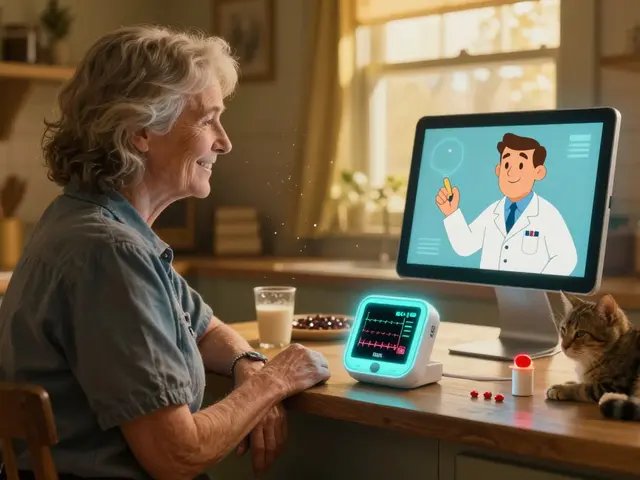
Video interpretation is especially powerful for complex meds like blood thinners or insulin. You can see the pharmacist’s hands as they show you how to use a syringe. You can watch the interpreter repeat the instructions back in your language. And if you’re unsure, you can pause and ask again.
Another proven method? Directly observed dosing. This means a nurse or pharmacist watches you take your pill-right there, in front of them. They confirm you understand the dose, the timing, and the warning signs. It’s simple. It’s slow. But it works. A 2017 study in the Journal of General Internal Medicine showed this method reduced errors even when language was a barrier. For high-risk meds like opioids or chemotherapy, this isn’t optional. It’s essential.
What Doesn’t Work: Family Members, Google Translate, and Assumptions
Too many people assume that because someone speaks "some English," they’re fine. Or that a teenager who’s lived in the U.S. for five years can accurately explain a complex medication schedule. That’s dangerous.
Family members often soften the truth to avoid worrying you. They might say "the doctor said it’s okay" when the real instruction was "call if you feel dizzy." Or they skip parts they don’t understand. One study found that when children interpreted for their parents, they omitted critical safety info in 38% of cases.
Google Translate, Siri, or other apps? They’re not designed for medicine. They don’t know that "q.d." means once daily, or that "bid" is twice a day. They can’t explain side effects like "tinnitus" or "orthostatic hypotension." And they can’t read body language. If you look confused, they can’t pause and ask. That’s why 72% of Spanish-speaking patients in a 2022 survey said they’d trust their provider more if they had a bilingual online portal-not a translation app.
How to Get Help: A Step-by-Step Guide
If you or someone you care for has limited English proficiency, here’s what you can do right now:
- Ask for an interpreter at every visit. You don’t need to wait until something goes wrong. Say: "I need a professional interpreter for this appointment. It’s my right under federal law."
- Request translated materials. Ask for written instructions in your language-especially for new prescriptions. If they say no, ask for a printed version in English and request translation through their service.
- Use the teach-back method. After the provider explains your meds, say: "Can you please show me how you want me to take this?" Then repeat it back in your own words. If you get it wrong, they’ll fix it. If you get it right, you’re safe.
- Ask for directly observed dosing. Especially for insulin, anticoagulants, or seizure meds. Say: "Can you watch me take my first dose so I know I’m doing it right?" Most providers will agree.
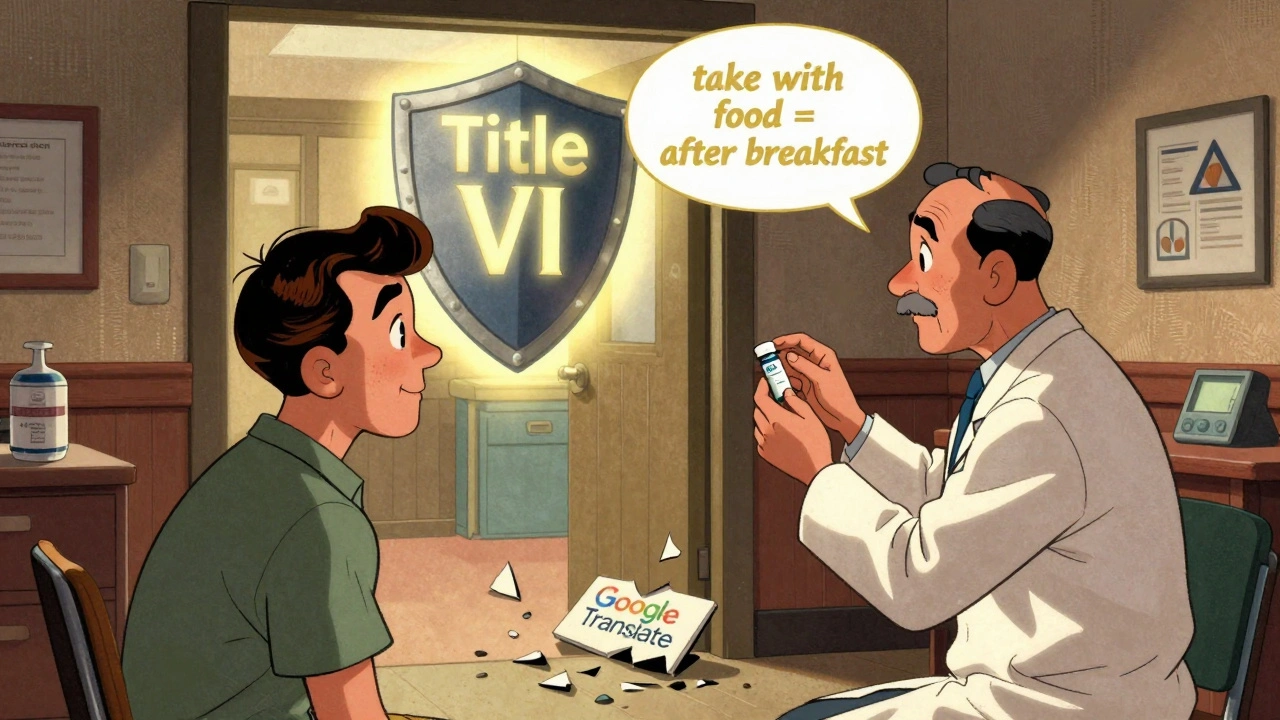
- Know your rights. Under Title VI of the Civil Rights Act, any healthcare provider receiving federal funds (that’s nearly all of them) must provide free interpretation services. You don’t pay for it. You don’t ask nicely. You demand it.
What Providers Should Be Doing
Health systems aren’t doing enough. A 2023 study found 29% of hospitals still don’t offer online language services. Nearly 70% fail to identify LEP patients before they arrive. That’s not an accident. It’s a gap in training and accountability.
Good systems do three things:
- Ask every patient their preferred language at registration-not just once, but every time.
- Contract with certified medical interpreters, not freelance translators.
- Train staff on cultural humility and how to use interpretation tools. No more "I’ll just use my cousin who speaks Spanish." That’s not a solution. It’s a risk.
Some hospitals have cut medication errors by 40% in just one year by making professional interpretation mandatory for all high-risk med prescriptions. That’s not magic. That’s policy.
Where Things Are Heading
Change is coming-but slowly. The FDA is planning new rules in 2024 for multilingual prescription labels. Medicare now pays for remote interpreter services during telehealth visits. Epic and Cerner, the two biggest electronic health record systems, are adding better language preference tools in their 2024 updates.
But technology alone won’t fix this. AI translation tools might help with simple instructions, but they can’t replace human judgment. A patient’s fear, confusion, or hesitation? Only a trained interpreter can pick that up.
The real solution? Making language access part of every healthcare workflow-not an afterthought. Because when you can’t understand your meds, you’re not just at risk. You’re being failed by the system meant to protect you.
Frequently Asked Questions
Can I be charged for an interpreter at my doctor’s office?
No. Under Title VI of the Civil Rights Act, healthcare providers that receive federal funding (including Medicare and Medicaid) must provide free interpretation services. You should never be asked to pay for an interpreter. If someone tries to charge you, ask to speak to a supervisor or file a complaint with the Office for Civil Rights.
What if my language isn’t commonly spoken, like Karen or Somali?
Even for less common languages, professional interpreter services can usually connect you via video or phone within minutes. Most major providers like LanguageLine Solutions or Certified Languages International offer over 200 languages. If your provider says they can’t find one, ask them to use a national hotline. You have the right to an interpreter regardless of your language.
Can I use a family member to interpret if I don’t want to wait for an interpreter?
You can, but it’s not safe. Family members often don’t know medical terms, may leave out scary details, or soften instructions to avoid stress. Studies show up to 25% of interpretations by untrained people are incorrect. If you’re taking a high-risk medication like blood thinners or insulin, insist on a professional. Your life isn’t worth the wait.
How do I know if my prescription label is accurate?
Always ask the pharmacist to explain the label in your language. Even if it’s printed in your language, ask them to confirm the dose, frequency, and what to do if you miss a dose. If you’re unsure, ask for a second explanation. You can also call your provider’s office and ask them to confirm the instructions. Never guess.
Are there apps I can trust for medication instructions?
Some apps offer verified translations, but none replace human interpretation. Apps like Medisafe or MyTherapy can help track doses, but don’t rely on them to explain complex instructions. Always cross-check with a pharmacist or interpreter. The safest app is the one that connects you to a live professional.
What to Do Next
If you’re a patient or caregiver: Write down your language needs. Bring them to your next appointment. Ask for an interpreter before the doctor even walks in. Use the teach-back method. Don’t leave until you’re sure.
If you’re a provider: Start asking every patient their preferred language. Train your staff. Don’t wait for someone to complain. If you’re in a pharmacy, make sure your system can print labels in at least the top five languages in your area. If you can’t, partner with a local interpreter service. It’s not just good practice-it’s the law.
Medication safety isn’t about how smart you are. It’s about how well the system works for you. If you can’t understand your meds, you’re not failing. The system is.

Comments
nikki yamashita
December 13, 2025
Just had to get my abuela’s insulin script translated last week-pharmacy had zero Spanish labels. Asked for an interpreter, got one in 3 minutes. Life saved. Seriously, just ask. It’s your right.
Laura Weemering
December 13, 2025
It’s not merely a linguistic failure-it’s an epistemological collapse of the biomedical hegemony… wherein the commodification of care reduces human vulnerability to a linguistic footnote…
Nathan Fatal
December 15, 2025
Professional interpreters cut errors by half. That’s not theory-it’s AHRQ data. If your clinic doesn’t offer this, escalate. It’s not a favor. It’s compliance. And if they push back, cite Title VI. No excuses.
sandeep sanigarapu
December 16, 2025
My brother in Delhi uses a telehealth app with Hindi interpreter. Works fine. But he says: ‘Better than Google, but still not like talking to a person who knows your mother’s fear.’
Donna Anderson
December 17, 2025
OMG yes!! My cousin’s kid got the wrong asthma dose b/c the nurse just handed her the paper in English… she cried for hours. We demanded an interpreter next time-no more guessing. #SpeakUp
Rob Purvis
December 18, 2025
Wait-so if a pharmacy doesn’t offer translated labels, and they’re federally funded… that’s a civil rights violation? Not just bad service? That’s… wild.
Reshma Sinha
December 19, 2025
As a pharmacist in Mumbai, I’ve seen families use WhatsApp voice notes from doctors to interpret pills. It’s heartbreaking. We need AI + human oversight-not either/or.
Levi Cooper
December 21, 2025
Why are we letting non-English speakers ruin our healthcare system? Just make them learn English. We’re not a translation service. This is America.
Adam Everitt
December 22, 2025
the thing is… we’ve got this weird cultural thing where we think ‘just try harder’ fixes systemic failure… but if your doctor talks like a textbook and you’re exhausted from work… you’re gonna mess up the dose…
wendy b
December 23, 2025
Frankly, the data is statistically insignificant. Most LEP patients are non-compliant due to cultural resistance-not language. This article indulges in performative empathy.
Stacy Foster
December 24, 2025
They’re using this to push open borders. You think this is about medicine? No. It’s about erasing English. They don’t want you to know what’s in your pills. Watch the video.
Lawrence Armstrong
December 26, 2025
Just had a patient today who didn’t know ‘PRN’ meant ‘as needed.’ Showed her the app, then had her repeat it back. She got it. 😊 We need more of this. No tech replaces eye contact.
Ashley Skipp
December 26, 2025
My uncle died from a mixup. They gave him his blood thinner at breakfast instead of bedtime. No interpreter. No one checked. I’m done pretending this is an accident.
Write a comment