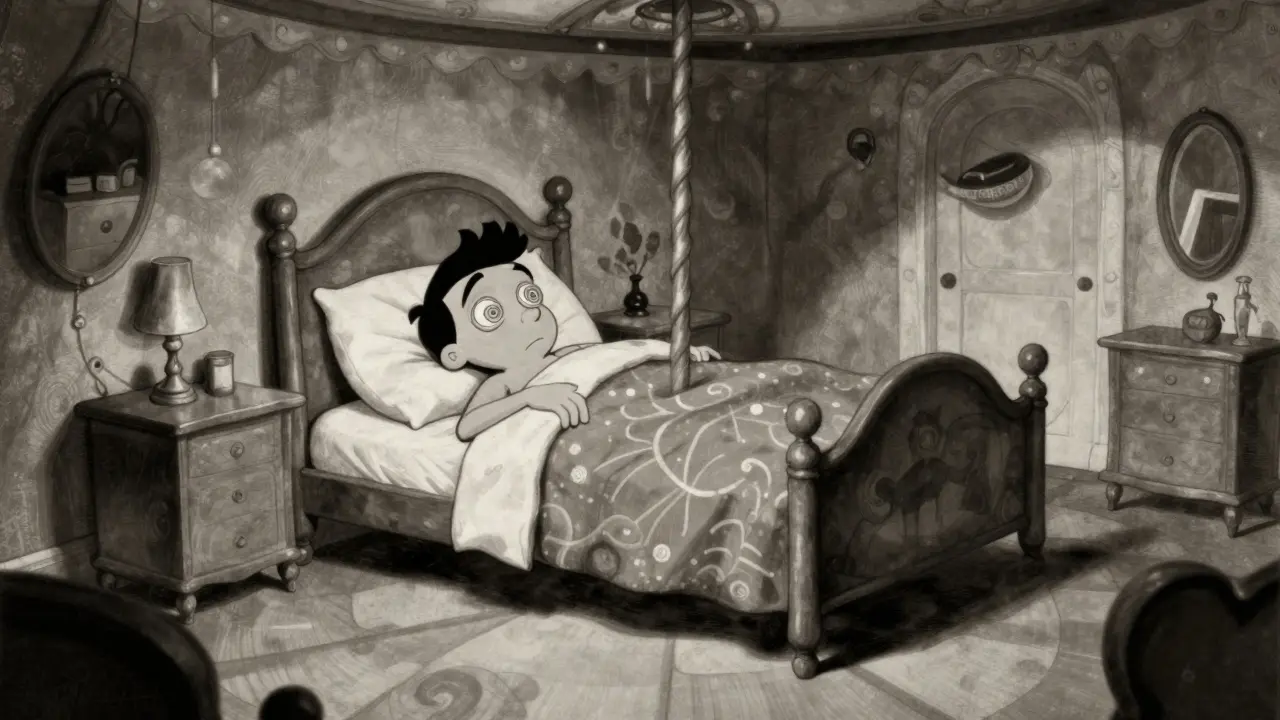
Imagine waking up, rolling over in bed, and suddenly feeling like the entire room is spinning on a carousel. Now imagine a completely different feeling: that light, floaty sensation you get when you stand up too fast, where you feel like you might faint. While we often use the words interchangeably in casual conversation, these are two very different medical experiences. Knowing the difference isn't just about vocabulary; it's about getting the right treatment. If you treat a spinning sensation as general lightheadedness, you might miss a treatable inner ear issue; conversely, ignoring "dizziness" that is actually a neurological warning sign can be dangerous.
The Core Difference: Spinning vs. Swaying
To get a handle on this, we first need to define our terms. Dizziness is a broad term describing a sensation of being lightheaded, off-balance, or unsteady. It is a general feeling of instability. You aren't necessarily seeing the world move; you just don't feel "grounded." According to data from Healthline, about 15-20% of adults deal with some form of dizziness every year.
On the other hand, Vertigo is the specific illusion of movement, usually a spinning or whirling sensation. When you have vertigo, you feel like you are rotating, or the room is rotating around you, even though you are perfectly still. It is not a general feeling of imbalance; it is a spatial distortion. Vertigo accounts for roughly 20-30% of all clinical dizziness presentations.
| Feature | Dizziness (General) | Vertigo (Specific) |
|---|---|---|
| Sensation | Lightheadedness, floating, faintness | Spinning, whirling, rotation |
| Visual Change | None (usually) | Environmental movement illusion |
| Primary Trigger | Blood pressure, sugar, stress | Head movement, inner ear issues |
| Key Indicator | Feeling like you'll pass out | Nystagmus (involuntary eye movement) |
The Vestibular System: Why Things Spin
When we talk about the causes of vertigo, we are usually talking about the Vestibular System, which is the sensory apparatus located in the inner ear responsible for providing our brain with information about balance and spatial orientation. This system uses semicircular canals to detect rotation and otolith organs to detect linear acceleration (like moving in an elevator).
Vertigo happens when there is a "sensory conflict." Normally, your vestibular system sends data to your brain with a latency of only 100-200 milliseconds. If the signals from one ear don't match the other, or if the signal is delayed, your brain thinks you are moving when you aren't. This conflict creates that dizzying spin.
Most vertigo is "peripheral," meaning the problem is in the inner ear. The most common culprit is Benign Paroxysmal Positional Vertigo (BPPV), which occurs when tiny calcium crystals (otoliths) leak into the semicircular canals. When you move your head, these crystals shift, tricking the brain into thinking you're spinning. BPPV affects about 2.4% of the population annually, with a high concentration in adults over 50.

Neurological Causes: When the Brain is the Problem
Not all vertigo comes from the ear. Some originates in the Central Nervous System, specifically the brainstem, cerebellum, or thalamocortical pathways. This is known as "central vertigo." While it's less common than peripheral vertigo, it is often more severe and can be more dangerous.
Neurological causes of vertigo can include:
- Cerebellar Stroke: This accounts for about 2-3% of vertigo cases. It's a critical emergency where blood flow to the cerebellum is interrupted.
- Multiple Sclerosis: In about 0.5-1% of cases, MS lesions in the brainstem can disrupt balance signals.
- Vestibular Migraine: This is a fascinating overlap. Vestibular Migraine is a neurological condition where migraine activity causes vestibular symptoms without necessarily causing a headache. It affects 1% of the general population and is frequently misdiagnosed as anxiety or sinusitis.
A major red flag for neurological vertigo is the presence of other symptoms. If the spinning is accompanied by double vision (diplopia), slurred speech (dysarthria), or sudden weakness on one side of the body, it's likely a central issue rather than a simple ear problem.
Broad Causes of General Dizziness
Unlike vertigo, general dizziness usually isn't about the inner ear. Instead, it's often a symptom of a systemic issue. Cardiovascular problems are the most frequent cause, accounting for 20-30% of cases. A classic example is orthostatic hypotension, where your systolic blood pressure drops by 20 mmHg or more the moment you stand up, leaving your brain momentarily starved of oxygen.
Other common triggers for dizziness include:
- Metabolic Factors: Hypoglycemia (low blood sugar) and anemia are responsible for 15-20% of dizziness cases.
- Psychological Factors: Anxiety and panic disorders can cause a "floaty" or lightheaded feeling in 10-15% of patients.
- Medications: Side effects from antihypertensives or sedatives contribute to about 5-10% of cases.
Diagnostic Tools and the Road to Recovery
Getting the right diagnosis is where many patients struggle. Many people on platforms like Reddit report waiting over eight months for a correct diagnosis of vestibular disorders. However, when the diagnosis is correct, the recovery is often remarkably fast. For instance, BPPV has an 85% resolution rate when diagnosed correctly, compared to only 45% when treated as general dizziness.
Doctors use several tools to pinpoint the source of the problem:
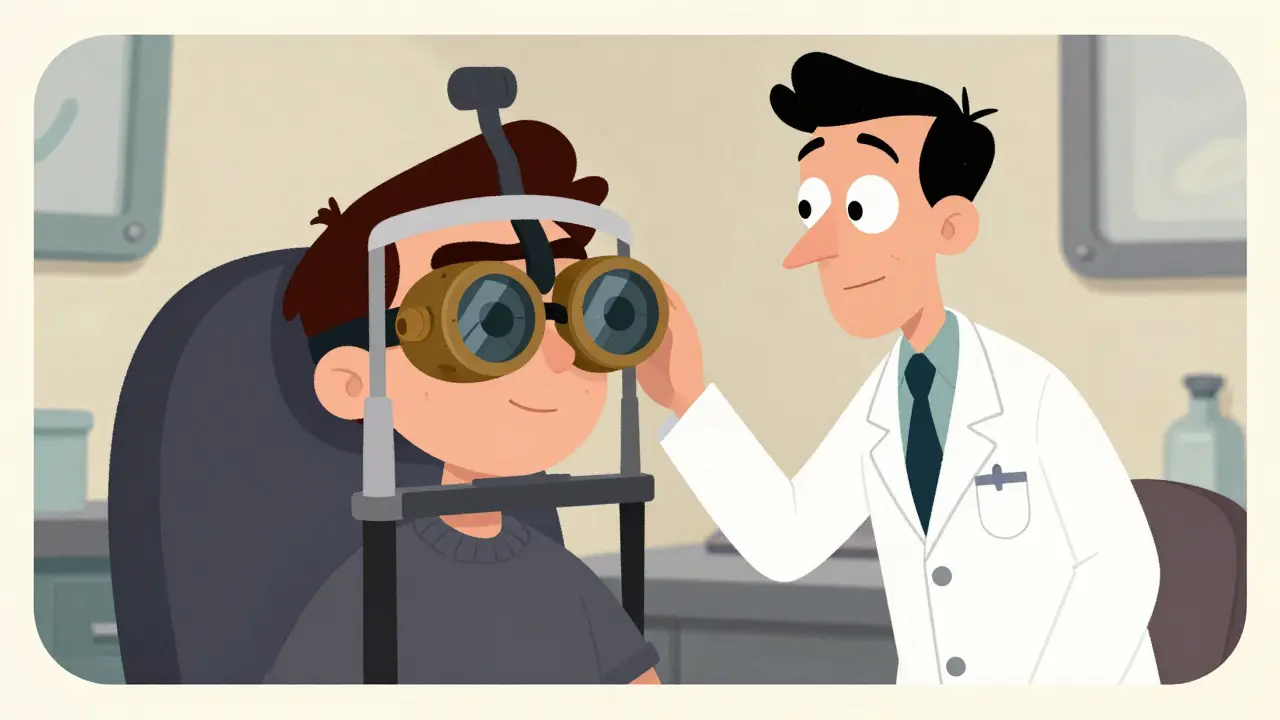
- Videonystagmography (VNG): This test uses specialized goggles to record eye movements. Since the eyes and inner ear are linked, a specific pattern of involuntary eye movement (nystagmus) can tell a doctor exactly which ear canal is malfunctioning.
- Head Impulse Testing: This is used to check for vestibular neuritis, identifying if the vestibular system is reacting correctly to sudden head turns.
- The Epley Maneuver: This isn't just a test; it's a treatment. By moving the head through a specific series of positions, doctors can physically move those loose calcium crystals back where they belong.
For those with longer-term balance issues, Vestibular Rehabilitation Therapy (VRT) is the gold standard. VRT is a specialized form of physical therapy that trains the brain to compensate for vestibular loss. It typically takes 6-8 weeks of customized exercises to see significant improvement.
Can anxiety cause vertigo?
Anxiety typically causes general dizziness or lightheadedness, not true rotational vertigo. However, there is a complex relationship where vertigo can *trigger* anxiety, or certain anxiety disorders can coexist with vestibular migraines. If you feel a spinning sensation, it is rarely "just anxiety" and usually warrants a vestibular exam.
How can I tell if my vertigo is a medical emergency?
You should seek immediate emergency care if vertigo is accompanied by "red flag" symptoms: a sudden, severe headache, double vision, slurred speech, numbness in the face or limbs, or a sudden inability to walk or coordinate movement (ataxia). These can be signs of a cerebellar stroke.
What is the Epley Maneuver and does it work?
The Epley maneuver is a series of head movements designed to reposition calcium crystals in the inner ear. It is highly effective for Benign Paroxysmal Positional Vertigo (BPPV), with clinical data showing an 80-90% success rate, often resolving the spinning in just one to three sessions.
Why do some people feel dizzy when they stand up?
This is often caused by orthostatic hypotension. When you stand, gravity pulls blood toward your legs, and if your body doesn't compensate quickly enough, blood pressure in the brain drops momentarily. This causes lightheadedness, but not the spinning sensation associated with vertigo.
Is vestibular migraine different from a regular migraine?
Yes. While a traditional migraine is characterized by a severe headache and light sensitivity, a vestibular migraine primarily affects balance. You may experience vertigo, nausea, and unsteadiness without ever having a painful headache during the episode.
Next Steps: Finding the Right Path
If you're struggling with these symptoms, the first step is a detailed symptom diary. Note exactly what you feel: Is it a spin? A float? Does it happen only when you tilt your head, or does it happen even when you're lying still? This data is gold for your doctor.
If you have rotational spinning, request a referral to an ENT (Ear, Nose, and Throat specialist) or a neuro-otologist for VNG testing. If you have general lightheadedness, start with your primary care physician to check your blood pressure, iron levels, and glucose.
For those already diagnosed with a vestibular disorder, don't settle for "just live with it." Look for therapists certified through the Vestibular Disorders Association (VEDA) to ensure you're getting an evidence-based rehabilitation program rather than general physical therapy.





Comments
Betty Kawira
April 27, 2026
VRT is honestly a game changer. I've seen so many people just suffer for years because they think their brain is 'broken' when really they just need to retrain their balance system. If you're doing those exercises, consistency is everything-doing them once a week does nothing, you gotta hit it daily to actually see that neuroplasticity kick in.
prince king
April 27, 2026
This is such a great breakdown! 🌟 It really makes you think about how our bodies are just these complex machines trying to make sense of the world. Love the clarity here! ✨
Dale Kensok
April 29, 2026
The reductionist approach here is almost quaint. One fails to account for the phenomenological intersection of proprioceptive dissonance and the cognitive overlay of vestibular dysfunction. It's not merely a 'sensory conflict' but a profound systemic failure of the somatic-perceptual loop. The nomenclature used is far too pedestrian for a truly rigorous analysis of cerebellar ataxia versus peripheral vertigo. Quite simplistic, really.
Sharon Mathew
April 30, 2026
Absolutely NOT! I've had 'spinning' sensations for years and my doctor insisted it was just stress and anxiety! It is an absolute travesty that women's physical symptoms are constantly brushed off as psychological nonsense! I'm still waiting for a real answer!
Nigel Gosling
May 1, 2026
Imagine thinking a few head tilts are the peak of medical science. It's almost comical how we trust these 'maneuvers' without questioning the deeper existential horror of losing one's grip on physical reality. We are all just floating in a void, and the Epley maneuver is just a fancy way of rearranging the deck chairs on the Titanic. Truly pathetic.
Steve Grayson
May 3, 2026
The distinction between the two is really useful. I've definitely felt that floaty feeling before and always wondered if it was an ear thing.
Abhishek Charan
May 4, 2026
I must disagree with the premise that anxiety 'rarely' causes vertigo!!! Many people experience psychosomatic rotational sensations!!! 😵💫 This is a gross oversimplification of the mind-body connection!!! 🧠💥
Ryan Wilson
May 6, 2026
Look at these geniuses acting like they've discovered fire. 'Symptom diaries' are just a fancy way for doctors to ignore you in writing. It's a total circus out there in the medical world where they toss you from one specialist to another while you're spinning like a top. Pure, unadulterated incompetence.
Stephen Johnson
May 7, 2026
It's interesting to consider how much we rely on these tiny crystals to keep our world stable. Just a small shift and everything changes. It's a good reminder to be patient with ourselves and others when our perception of reality doesn't align with the physical world.
Jonathan Hall
May 8, 2026
While I appreciate the effort to categorize these symptoms, I find the tone somewhat dismissive of the cultural variations in how dizziness is described across different regions, and frankly, the aggressive insistence on VNG testing as the only gold standard ignores the nuanced approach of holistic practitioners who have managed these symptoms for centuries without the need for expensive goggles, although I suppose in a Western clinical setting, this is simply the expected protocol for insurance reimbursement.
Jarrett Jensen
May 9, 2026
The presentation of this data is marginally acceptable, though it lacks the academic rigor one would expect from a comprehensive neurological review. The reliance on anecdotal evidence from social media platforms to highlight diagnostic delays is an intellectually lazy substitution for actual longitudinal study data.
Jenna Riordan
May 10, 2026
I actually have a cousin who went through this and she had to have surgery on her inner ear because the maneuvers didn't work for her specific case. It's wild how different everyone's body reacts to the same basic issue.
Raymond Lipanog
May 12, 2026
One must wonder if the pursuit of a precise label-be it vertigo or dizziness-serves the patient's peace of mind or merely the physician's need for categorization. There is a certain dignity in acknowledging the fragility of our equilibrium without immediately rushing to a mechanical fix, though the clinical utility of the Epley maneuver is undeniably impressive from a physiological standpoint.
Write a comment