Warfarin Vitamin K Daily Tracker
Daily Summary
Keep consistent!
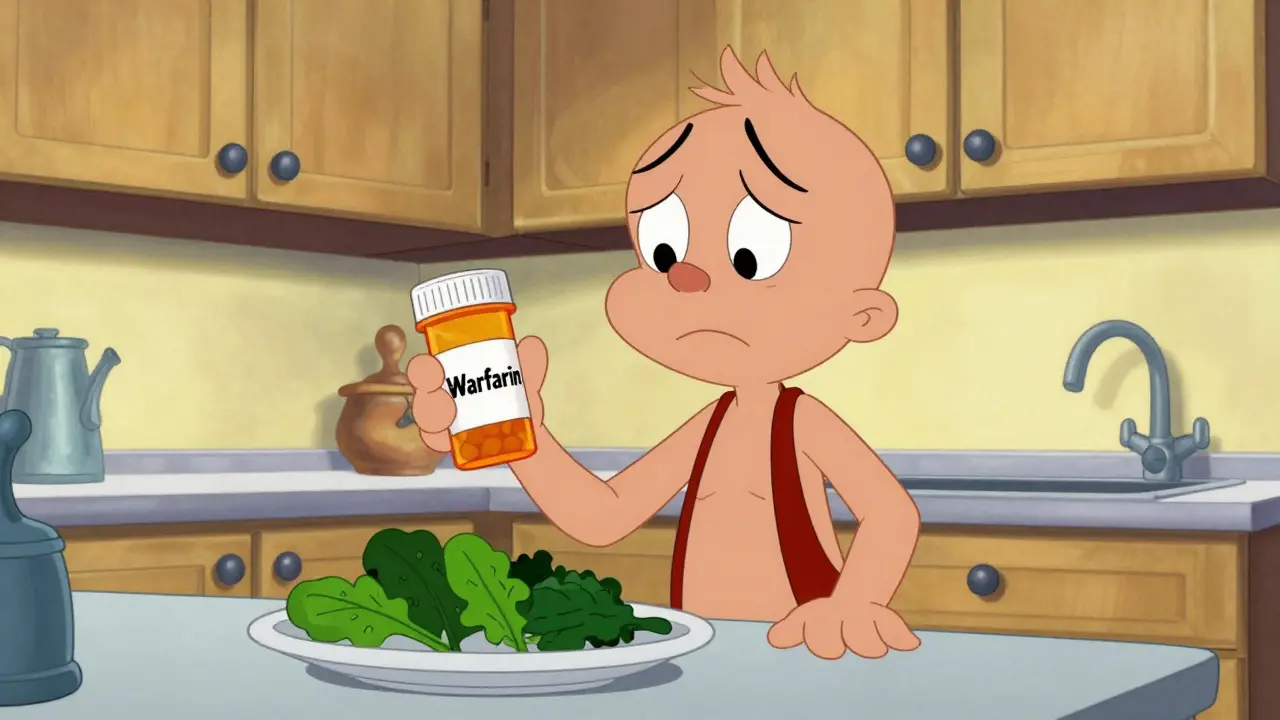
Imagine this: You’ve been told to take Warfarin, a blood thinner that saves lives by preventing dangerous clots. But then you hear the scary part-some of your favorite green veggies might make the medicine stop working. It feels like a trap. Do you avoid spinach? What about kale? If you’re taking Warfarin (also known as Coumadin or Jantoven), you aren’t alone in feeling confused. The relationship between what you eat and how well your medication works is real, but it’s also manageable.
The good news? You don’t need to banish all greens from your plate. In fact, doing so can be just as risky as eating too many. The secret isn’t elimination; it’s consistency. This guide breaks down exactly which foods contain high levels of Vitamin K, the nutrient that directly opposes Warfarin’s effects, and gives you a practical plan to keep your blood clotting levels stable.
How Vitamin K and Warfarin Interact
To understand why your diet matters, you first need to know how the drug works. Warfarin is a vitamin K antagonist. That’s a fancy way of saying it blocks Vitamin K from doing its job. Your body needs Vitamin K to produce clotting factors-proteins that help your blood form clots when you get cut. Warfarin slows down this process to prevent strokes and heart attacks.
Here is the catch: if you suddenly eat a lot more Vitamin K than usual, you overwhelm the drug’s blocking ability. Your blood starts clotting faster, and your INR (International Normalized Ratio) drops. A low INR means you’re at higher risk for clots. Conversely, if you suddenly cut out all Vitamin K-rich foods, your INR spikes, increasing your risk of bleeding.
Research from the National Institutes of Health shows that every 100 micrograms (mcg) increase in daily Vitamin K intake can lower your INR by 0.2 to 0.4 units. That might sound small, but for someone whose target INR is tight (like 2.0 to 3.0), that shift can push you out of the safe zone. The goal is to keep your daily Vitamin K intake steady, not necessarily low.
The Complete List of High-Vitamin K Foods
Knowing what’s in your food is the first step to control. Below is a verified list of common foods high in Vitamin K, based on data from the USDA FoodData Central database. Note that cooking methods matter-boiling can reduce Vitamin K content by 15-20%, while steaming preserves more of it.
| Food Item | Serving Size | Vitamin K Content (mcg) |
|---|---|---|
| Kale (cooked) | ½ cup | 547 mcg |
| Spinach (cooked) | ½ cup | 444 mcg |
| Collard Greens (cooked) | ½ cup | 418 mcg |
| Swiss Chard (cooked) | ½ cup | 299 mcg |
| Parsley (fresh) | ¼ cup | 246 mcg |
| Turnip Greens (cooked) | ½ cup | 265 mcg |
| Mustard Greens (cooked) | ½ cup | 210 mcg |
| Brussels Sprouts (cooked) | ½ cup | 109 mcg |
| Broccoli (cooked) | ½ cup | 102 mcg |
| Green Cabbage (cooked) | ½ cup | 82 mcg |
| Asparagus (cooked) | ½ cup | 70 mcg |
| Romaine Lettuce (raw) | 1 cup shredded | 48 mcg |
Don’t forget non-vegetable sources. Beef liver contains about 106 mcg per 3 ounces, and egg yolks have around 25 mcg each. Even some commercial supplements and meal replacement drinks like Boost or Ensure Original contain hidden Vitamin K (about 25 mcg per serving). Always check labels if you use these products regularly.
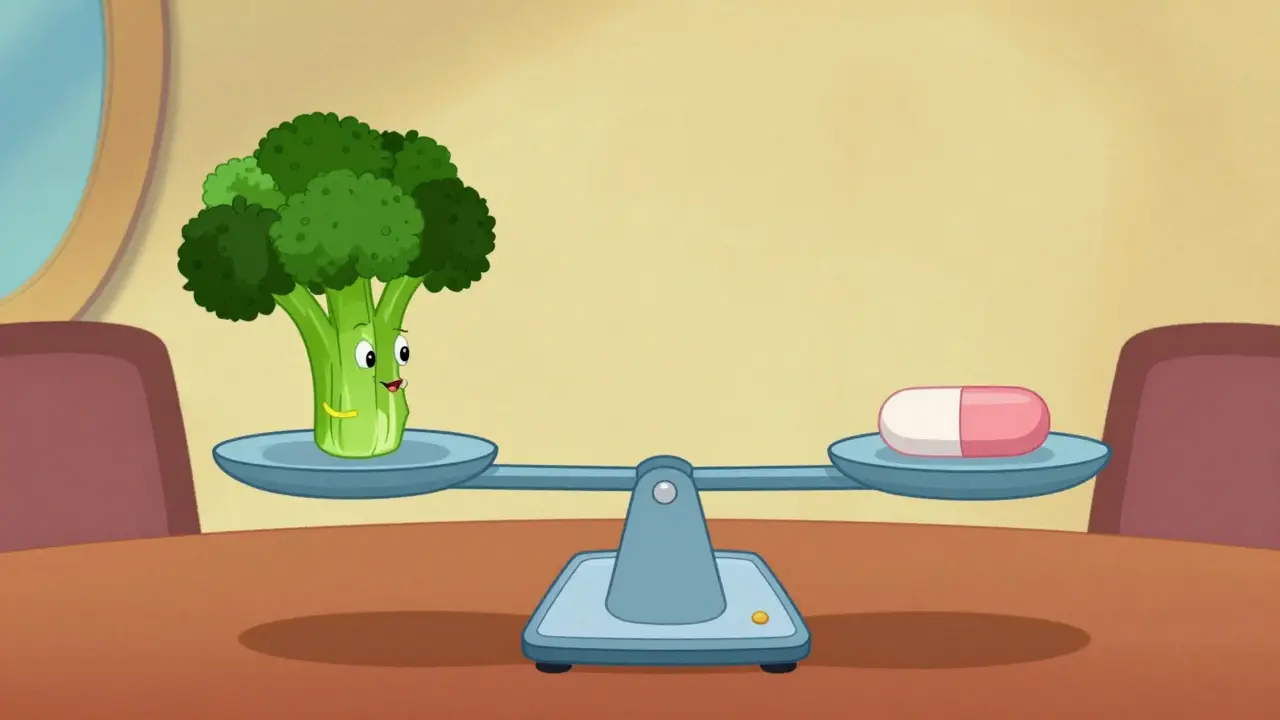
The Myth of Avoidance: Why Consistency Wins
A huge misconception among patients is that they must avoid all green vegetables. This is dangerous advice. A 2022 survey found that nearly 70% of patients initially feared all greens, leading many to restrict their diets severely. The result? Unstable INR levels and hospital visits.
Experts from the American Heart Association and the Anticoagulation Forum agree: complete avoidance is neither necessary nor recommended. Dr. Gary Raskob, a leading expert in anticoagulation therapy, emphasizes that the goal is consistency. If you usually eat a side of broccoli with dinner, keep doing that. Don’t start eating three cups of kale every day because you heard it’s healthy. And don’t stop eating salad just because you’re sick.
Think of your Vitamin K intake like a budget. You don’t need to spend zero dollars; you just need to spend the same amount every week so you don’t go into debt or run out of cash. Aim to keep your daily intake within a 20% variation of your baseline. For most adults, a typical therapeutic range involves 60 to 180 mcg of Vitamin K daily, depending on individual factors.
Hidden Traps: Drinks and Supplements
While vegetables are the obvious source, other items can sneakily affect your Warfarin levels. Two juices stand out as major troublemakers:
- Cranberry Juice: Studies show it can increase your INR by 0.8 to 1.2 units in just 72 hours. This happens because cranberry juice may interfere with how your liver processes Warfarin, making the drug stronger. Limit consumption or avoid it entirely unless your doctor approves.
- Grapefruit Juice: Similar to cranberry, grapefruit inhibits an enzyme called CYP2C9, which helps break down Warfarin. This can raise Warfarin levels in your blood by 15-30%, significantly increasing bleeding risk.
Alcohol is another factor. Moderate consumption (one drink or less per day) is generally safe if it’s consistent. However, binge drinking can cause wild swings in your INR. Stick to what you normally do, and never change your alcohol habits without talking to your healthcare provider.

Practical Steps to Manage Your Diet
Managing Warfarin doesn’t require a PhD in nutrition. It requires a system. Here is a simple protocol used by top anticoagulation clinics:
- Establish a Baseline: For one week, track everything you eat. Use an app or a notebook. Calculate your average daily Vitamin K intake. This is your new normal.
- Keep a Food Diary: Patients who keep a food diary improve their time-in-therapeutic-range (TTR) by over 12%. Note any changes in portion sizes or new foods.
- Eat at Consistent Times: Try to consume your main Vitamin K-rich meals at the same time each day. Some experts recommend evening meals to avoid interference with morning INR tests.
- Watch Seasonal Shifts: Summer often brings more salads and raw veggies. Winter might mean more cooked greens. These seasonal changes can spike your Vitamin K intake by 30-50%. Plan ahead and adjust portions slowly.
- Consult Before Supplementing: Never start a multivitamin or herbal supplement without checking with your doctor. Many contain Vitamin K or interact with Warfarin.
If you’re struggling, ask for a referral to a certified clinical dietitian. They can help you create a personalized plan using tools like the Iowa Vitamin K Food Frequency Questionnaire. Most patients find that after 3 to 6 months of tracking, managing their diet becomes second nature.
When to Seek Help
Even with the best planning, things can slip up. Watch for signs that your INR might be off:
- Signs of Low INR (Clot Risk): Swelling in legs, shortness of breath, chest pain.
- Signs of High INR (Bleeding Risk): Unusual bruising, nosebleeds that won’t stop, blood in urine or stool, severe headaches.
If you experience any of these, contact your healthcare provider immediately. Don’t wait for your next scheduled test. Also, always inform dentists and surgeons that you are on Warfarin before any procedures.
Can I eat spinach while on Warfarin?
Yes, but you must be consistent. Spinach is very high in Vitamin K (444 mcg per half-cup cooked). If you eat it regularly, keep the portion size the same every time. Do not suddenly start eating large amounts of spinach if you haven't been, as this will lower your INR.
Does cooking vegetables reduce Vitamin K?
Yes. Boiling vegetables can reduce Vitamin K content by 15-20% compared to steaming or eating them raw. However, the reduction is not enough to ignore the nutrient. Treat cooked and raw servings as significant sources of Vitamin K and track them accordingly.
Is cranberry juice safe with Warfarin?
Generally, no. Cranberry juice has been shown to significantly increase INR levels, raising the risk of bleeding. It interferes with the metabolism of Warfarin. Most doctors recommend avoiding it or limiting it strictly under medical supervision.
What should my daily Vitamin K intake be?
There is no single number for everyone. The goal is consistency. Most guidelines suggest maintaining your intake within 20% of your personal baseline. Typical ranges fall between 60-180 mcg daily, but your specific target depends on your genetics, dose, and current diet. Work with your clinic to find your baseline.
Do I need to avoid all green leafy vegetables?
No. Avoiding all greens is unhealthy and unnecessary. Experts advise against total elimination. Instead, focus on eating the same amount of greens each day. Sudden changes in consumption are what cause dangerous INR fluctuations.