
Medication Anxiety Checker
Check if Your Medication Might Be Causing Anxiety
This tool helps identify if your medication could be causing anxiety symptoms. Click "Check" to see if your medication is associated with anxiety.
Results
Risk of Anxiety
Common Symptoms
What to Do Next
It’s not just in your head - sometimes, the anxiety you’re feeling comes from a pill you took yesterday. Millions of people start a new medication for asthma, thyroid issues, or ADHD, only to find themselves trembling, racing with panic, or unable to sleep. They assume it’s a mental health relapse, but the real culprit might be the very drug meant to help them. Medication-induced anxiety isn’t rare. In fact, 5-7% of all anxiety cases are directly linked to prescription or over-the-counter drugs. And for those on multiple meds, that number jumps even higher.
What Medications Can Cause Anxiety?
Not all anxiety is mental. Some is chemical. Certain drugs mess with your brain’s natural balance, turning up the volume on stress signals. Here are the most common offenders:- Corticosteroids - Drugs like prednisone, methylprednisolone, and dexamethasone are powerful anti-inflammatories. But they also flood your system with stress hormones. At high doses or after long use, they trigger nervousness, insomnia, and full-blown panic attacks. One patient on Reddit said, “I’d never had anxiety until I started prednisone. Three panic attacks in two days.”
- ADHD stimulants - Adderall, Vyvanse, Ritalin - these drugs work by boosting dopamine and norepinephrine. That’s good for focus, but too much can feel like caffeine on steroids. Restlessness, racing thoughts, and heart palpitations are common. Many patients report anxiety symptoms within days of starting or increasing the dose.
- Asthma inhalers - Albuterol (Proventil) and salmeterol (Serevent) are lifesavers for breathing, but they also stimulate the nervous system. Side effects include trembling, fast heartbeat, and a feeling of dread - symptoms that mimic panic attacks.
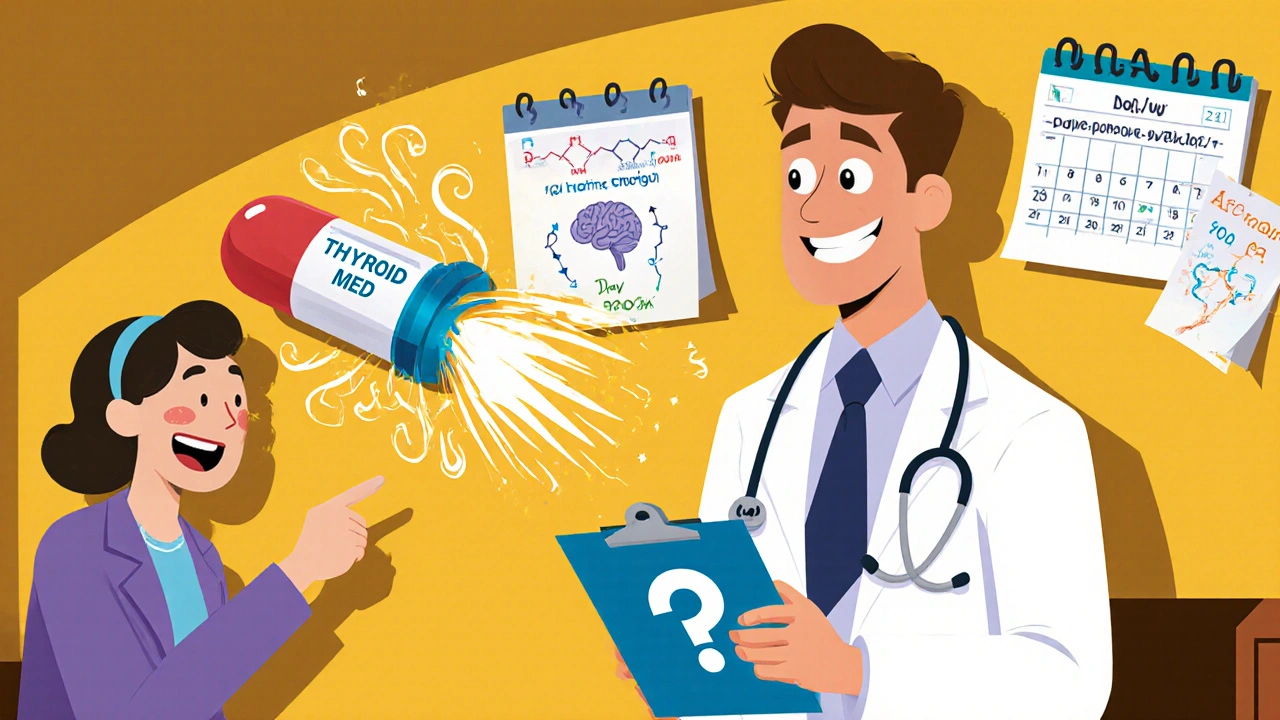
- Thyroid meds - Levothyroxine (Synthroid) replaces missing thyroid hormone. But if the dose is too high, your body goes into overdrive. Symptoms: sweating, jitteriness, heart flutters, and constant worry. The American Thyroid Association says keeping TSH levels between 0.4 and 4.0 mIU/L helps avoid this.
- Decongestants - Sudafed and similar products contain pseudoephedrine, which narrows blood vessels and speeds up your heart. That’s why you feel wired after taking it - even if you’re just treating a cold.
- Antibiotics and seizure meds - Some antibiotics (like fluoroquinolones) and seizure drugs (like gabapentin) have been linked to anxiety, though less commonly. It’s rare, but real.
Why Does This Happen?
Your brain runs on chemicals. Serotonin, dopamine, norepinephrine - they control mood, alertness, and fear responses. When a medication interferes with these, your brain doesn’t know how to calm down.- Stimulants like Adderall flood your system with norepinephrine, which triggers the “fight or flight” response. That’s why you feel jumpy, even if nothing’s threatening you.
- Corticosteroids overwork your HPA axis - the system that handles stress. When it’s constantly activated, your body thinks it’s under siege, even when it’s not.
- Thyroid meds push your metabolism into overdrive. Your heart races, your hands shake, and your mind races with thoughts you can’t turn off.
This isn’t “being dramatic.” It’s biology. And the symptoms? They look exactly like generalized anxiety disorder: racing heart, trouble breathing, sweating, inability to concentrate, insomnia. That’s why so many people are misdiagnosed.
How Doctors Miss the Link
A 2023 survey found that 42% of patients waited more than three months before their doctor connected their anxiety to a new medication. Why?- Anxiety is often assumed to be psychological. Doctors ask, “Have you been stressed?” but rarely ask, “What meds did you start?”
- Patients don’t make the connection either. “I’ve always been nervous,” they say - not realizing the symptoms started the day they began prednisone.
- Some symptoms appear during withdrawal, not use. If you stop a drug and then feel anxious, you might think it’s your mental health returning - when it’s actually withdrawal.
One patient, “ThyroidWarrior,” shared: “It took three months and two doctors to realize my levothyroxine dose was too high. My anxiety wasn’t depression - it was a lab result out of range.”
How to Tell If It’s the Medication
The key is timing. Ask yourself:- Did your anxiety start within days or weeks of beginning a new medication?
- Did it get worse when you increased the dose?
- Did it improve when you skipped a dose (under medical supervision)?
- Do you feel better after stopping the drug - even if you’re still stressed?
According to the DSM-IV, if anxiety symptoms disappear within a few weeks of stopping the medication - and didn’t exist before - it’s likely medication-induced. For short-acting drugs like albuterol, wait a week. For long-acting ones like prednisone or antidepressants, wait 4-8 weeks.
Solutions: What to Do Next
You don’t have to suffer. Here’s how to fix it:1. Talk to Your Doctor - Immediately
Don’t wait. Don’t assume it’s “just stress.” Bring a symptom journal. Write down:- When you took the medication
- What time of day
- What symptoms appeared
- How long they lasted
This helps your doctor spot patterns. One patient, “ADHDmom,” tracked her anxiety after switching from Adderall to Vyvanse. She noticed the worst episodes happened 2-4 hours after taking her pill. Her doctor lowered the dose - anxiety dropped by 70% in two weeks.
2. Ask About Alternatives
- For ADHD: Switch from stimulants to non-stimulants like atomoxetine (Strattera) or guanfacine. These don’t trigger the same nervous system response.
- For asthma: Try a different inhaler. Levalbuterol (Xopenex) causes fewer side effects than albuterol in some people.
- For thyroid: Request a TSH test. If your level is below 0.4, your dose is likely too high.
- For corticosteroids: Ask if a lower dose or shorter course is possible. Tapering slowly reduces withdrawal anxiety.
3. Don’t Quit Cold Turkey
Stopping some meds suddenly can make anxiety worse. Corticosteroids, antidepressants, and seizure drugs need to be tapered under medical supervision. Abrupt withdrawal can trigger rebound anxiety, insomnia, or even seizures.4. Try CBT While Adjusting
Cognitive Behavioral Therapy (CBT) doesn’t cure medication-induced anxiety - but it helps you cope while your body adjusts. Studies show CBT reduces symptoms by 60-70% in people going through medication changes. It teaches you to recognize panic as a physical reaction, not a threat.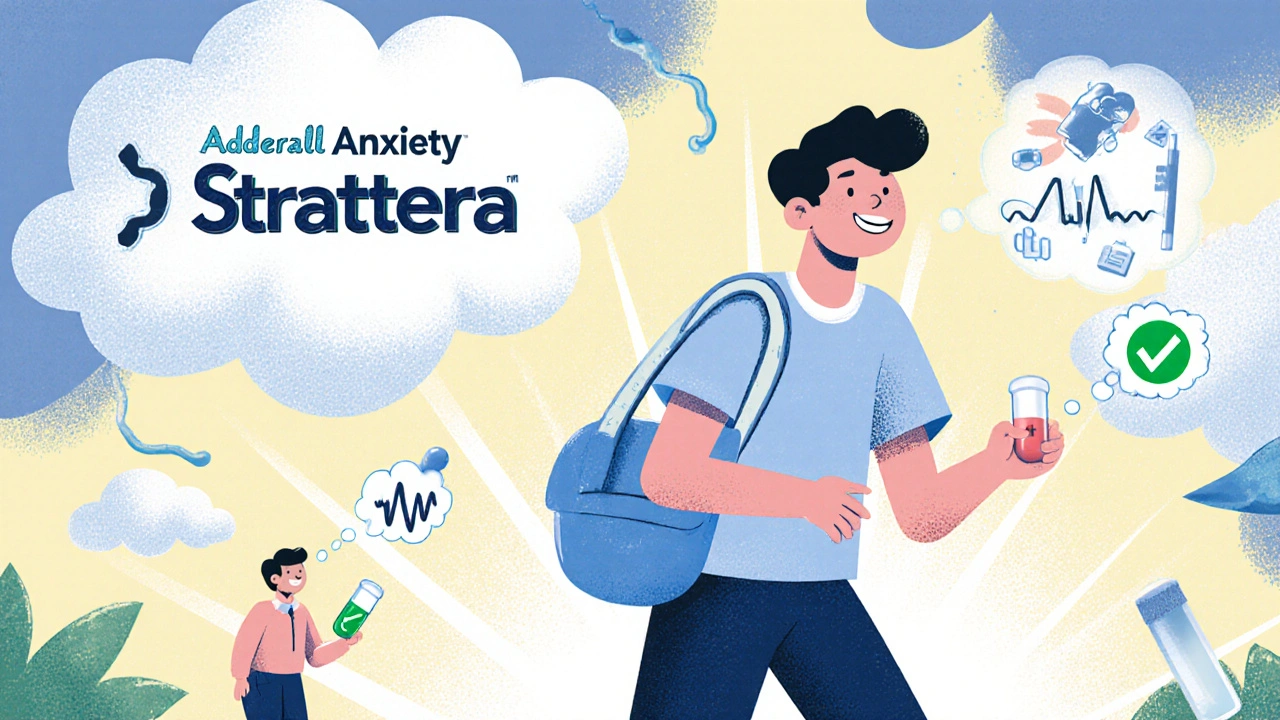
Prevention: Avoiding It Before It Starts
If you’ve had anxiety before, tell your doctor before starting any new medication. Ask:- “Can this cause anxiety?”
- “Is there a lower-risk alternative?”
- “Can we start with the lowest dose?”
Starting ADHD meds at very low doses and increasing slowly prevents anxiety in 65% of patients who would otherwise react. For steroids, ask for the shortest possible course. For thyroid meds, insist on regular blood tests.
The Bigger Picture
Scientists are now looking for genetic markers that predict who’s more likely to get anxiety from meds. A 2022 study found people with certain variants in the CYP2D6 gene are more sensitive to side effects from stimulants and antidepressants. The National Institute of Mental Health is investing $2.3 million to study this further.By 2026, we may have blood tests or genetic screens to warn you before you even take a pill. Until then, awareness is your best tool.
What to Do Right Now
If you’re feeling anxious after starting a new medication:- Don’t panic - it’s likely temporary.
- Check your symptoms against the list above.
- Write down when you took the drug and when anxiety hit.
- Call your doctor. Say: “I think this medication might be causing my anxiety.”
- Don’t stop the drug unless they tell you to.
Medication-induced anxiety isn’t weakness. It’s a side effect - and one that’s completely fixable.
Can anxiety from medication go away on its own?
Yes - in most cases, anxiety caused by medication fades once the drug is out of your system. For short-acting drugs like albuterol or pseudoephedrine, symptoms usually disappear within 24-48 hours after stopping. For longer-acting drugs like prednisone or Adderall, it can take 1-4 weeks. The key is stopping the drug safely under medical guidance. If anxiety lasts longer than 8 weeks after stopping, it may be a separate condition.
Is medication-induced anxiety the same as an anxiety disorder?
No. Medication-induced anxiety is triggered by a substance and resolves after the substance is removed. A primary anxiety disorder, like generalized anxiety disorder (GAD), exists independently - it’s not tied to a drug and persists even when you’re not taking anything. Doctors use timing to tell them apart: if anxiety was present before the drug or continues long after stopping, it’s likely a separate condition. The DSM-IV requires anxiety symptoms to last 6+ months outside of drug use to diagnose GAD.
Can over-the-counter drugs cause anxiety?
Yes. Decongestants like Sudafed (pseudoephedrine), weight-loss pills with caffeine, and even some herbal supplements (like guarana or ephedra) can trigger nervousness, rapid heartbeat, and panic. Even high-dose caffeine from energy drinks or supplements can cause anxiety in sensitive people. Always check the label for stimulants.
What should I do if my doctor dismisses my concerns?
Bring printed evidence. Print out the side effects from WebMD, Mayo Clinic, or the drug’s official prescribing information. Show your symptom journal. Say: “I’ve tracked this for two weeks, and every anxiety spike happened within hours of taking this drug.” If they still won’t listen, ask for a referral to a pharmacist or a psychopharmacologist - specialists trained in drug-brain interactions.
Are there natural ways to reduce medication-induced anxiety?
While nothing replaces adjusting the medication, some strategies help manage symptoms: deep breathing (to slow your heart), avoiding caffeine and alcohol, getting regular sleep, and light exercise like walking. Magnesium and L-theanine supplements may ease mild anxiety, but they won’t fix the root cause. The real solution is medical - not herbal.
How long does it take for anxiety to improve after stopping the drug?
It depends on the drug. For stimulants like Adderall, most people feel better within 3-7 days. For corticosteroids, it can take 2-4 weeks because the body needs time to reset its natural stress response. Thyroid medication side effects often improve within 1-2 weeks after a dose adjustment. Patience matters - but if symptoms don’t improve after 8 weeks, talk to your doctor again. It might not be the medication after all.

Comments
Bob Martin
October 28, 2025
So let me get this right - you're telling me my panic attacks after taking prednisone weren't because I'm weak but because my body got hijacked by a steroid? That's the dumbest thing I've heard since people thought vaccines caused autism. But hey at least now I have an excuse to blame my anxiety on Big Pharma instead of my own brain.
Also why is every single Reddit post these days just a 2000 word medical textbook with bullet points? Can we please just talk like humans again?
Sage Druce
October 28, 2025
I was on Adderall for three years and never realized my constant jitteriness and sleepless nights were side effects until I finally quit. I thought I was just a high-strung person. Turns out I was just overdosed on chemical fire. My doctor never asked about my mental state after starting it. They just kept increasing the dose because my focus improved. I wish someone had told me sooner. You're not broken. The medicine might be. Take it slow. Your body knows what it needs.
Tyler Mofield
October 30, 2025
The pathophysiological mechanism underlying medication-induced anxiety involves dysregulation of the hypothalamic-pituitary-adrenal axis and monoaminergic neurotransmission particularly norepinephrine and serotonin systems. Clinical correlation requires temporal association between initiation or dosage escalation and symptom onset. Diagnostic criteria align with DSM-5-TR criteria for substance/medication-induced anxiety disorder. Failure to recognize this entity results in iatrogenic morbidity and inappropriate psychopharmacological escalation
Patrick Dwyer
October 31, 2025
This is exactly why we need more collaboration between primary care providers and clinical pharmacists. Many patients are unaware of the neurochemical impact of common prescriptions. A medication review every 90 days could prevent a lot of unnecessary suffering. I've seen patients on three different drugs that all contribute to sympathetic overdrive. It's not just one pill. It's the cocktail. And nobody's putting it all together.
luna dream
October 31, 2025
They don't want you to know this. The pharmaceutical industry profits more from treating side effects than curing the original condition. That's why they don't test for anxiety reactions in clinical trials. They bury the data. The FDA is a puppet. Your doctor is paid by them. They want you addicted to pills that cause the problems they then sell you more pills to fix. Wake up. This is not medicine. This is a business model.
Linda Patterson
November 1, 2025
I'm from America and we don't need this kind of weakness. If you can't handle a little jitteriness from your ADHD meds then maybe you shouldn't be working or driving or functioning in society. Back in my day we took what the doctor gave us and didn't whine about it. You think Europe is better? They're all on antidepressants and still complaining. Get tough. Stop blaming pills. Take responsibility.
Jen Taylor
November 2, 2025
I had the exact same thing with levothyroxine! I thought I was having a nervous breakdown - heart pounding, hands shaking, can't sleep, mind racing like a squirrel on espresso. My doctor said 'it's just anxiety' and upped my SSRI. Then I found this article and checked my TSH - it was 0.18. I was literally hyperthyroid. They lowered my dose and within two weeks I felt like myself again. I cried. Not from sadness. From relief. You're not crazy. You're just dosed wrong. Please, please, please get your labs checked. It's not complicated. It's just overlooked.
Shilah Lala
November 3, 2025
So let me get this straight - you spent 2000 words telling people to talk to their doctor? Wow. Groundbreaking. I'm sure the 12-year-old with ADHD who can't afford to see a specialist is just gonna call up their GP and say 'hey can we try something less likely to make me want to jump out a window?'
Meanwhile I'm on a 1000 mg dose of gabapentin because my insurance won't cover the non-stimulant. And my doctor says 'it's not supposed to cause anxiety' like he's reading from a brochure printed in 1998.
Thanks for the info. Now what?
Christy Tomerlin
November 5, 2025
I tried Strattera. It made me feel like a zombie. Then I went back to Adderall. Anxiety? Sure. But at least I could finish a sentence. Life's a tradeoff. You want calm? Try meditation. You want to function? Take the pill. Don't let fear of side effects stop you from living. Some people just have nervous systems that don't chill. That's not a bug. It's a feature.
Susan Karabin
November 5, 2025
I used to think anxiety was something you had to fight. Now I think it's your body trying to tell you something. Like when your car makes a weird noise - you don't ignore it. You check the engine. Same with your mind. If you start feeling off after a new med - don't push through. Listen. Slow down. Breathe. Maybe the problem isn't you. Maybe it's the chemistry. You don't have to be brave. You just have to be aware.
Lorena Cabal Lopez
November 6, 2025
This is why I don't trust doctors. They don't know what they're doing. They just push pills. I've been on five different meds for anxiety. None of them worked. All of them made it worse. Now I just drink tea and hope for the best. If you're gonna be anxious anyway - why not be anxious without a prescription?
Stuart Palley
November 7, 2025
I was on prednisone for a month. Panic attacks every night. I thought I was losing my mind. Then I stopped. Two days later - gone. Not a trace. My doctor said 'it's probably coincidence.' Coincidence? I had zero anxiety before that pill. Zero. And now I'm terrified to take anything ever again. What's next? Will they say my depression was caused by breathing?
Write a comment