You sit in the doctor's office, heart pounding slightly faster than usual. The cuff squeezes your arm, the machine beeps, and you see those two numbers on the screen: 145/92. Your doctor nods, scribbles something on a pad, and hands you a prescription for high blood pressure. But which one? You’ve heard whispers about ACE inhibitors causing coughs, ARBs being the newer alternative, and beta-blockers making people feel tired. It’s confusing.
Managing hypertension isn't just about lowering a number; it's about protecting your heart, kidneys, and brain from long-term damage while keeping your daily life intact. The three most common classes of drugs-Beta-blockers, ACE inhibitors, and Angiotensin II Receptor Blockers (ARBs)-work differently, have different side effects, and serve different patients best. Understanding these differences can help you talk to your doctor with confidence and avoid the frustration of switching medications multiple times because they make you feel awful.
How These Drugs Actually Work
To pick the right medication, you first need to know what each one is doing inside your body. They don’t all attack high blood pressure in the same way.
ACE inhibitors (like lisinopril or enalapril) block an enzyme called angiotensin-converting enzyme. This enzyme normally turns a substance in your blood into angiotensin II, which tightens your blood vessels. By stopping this conversion, ACE inhibitors keep your vessels relaxed and open, lowering blood pressure. However, blocking this enzyme also causes a buildup of another substance called bradykinin. Bradykinin is harmless in small amounts, but when it accumulates, it irritates the lining of your lungs, leading to that famous dry, hacking cough.
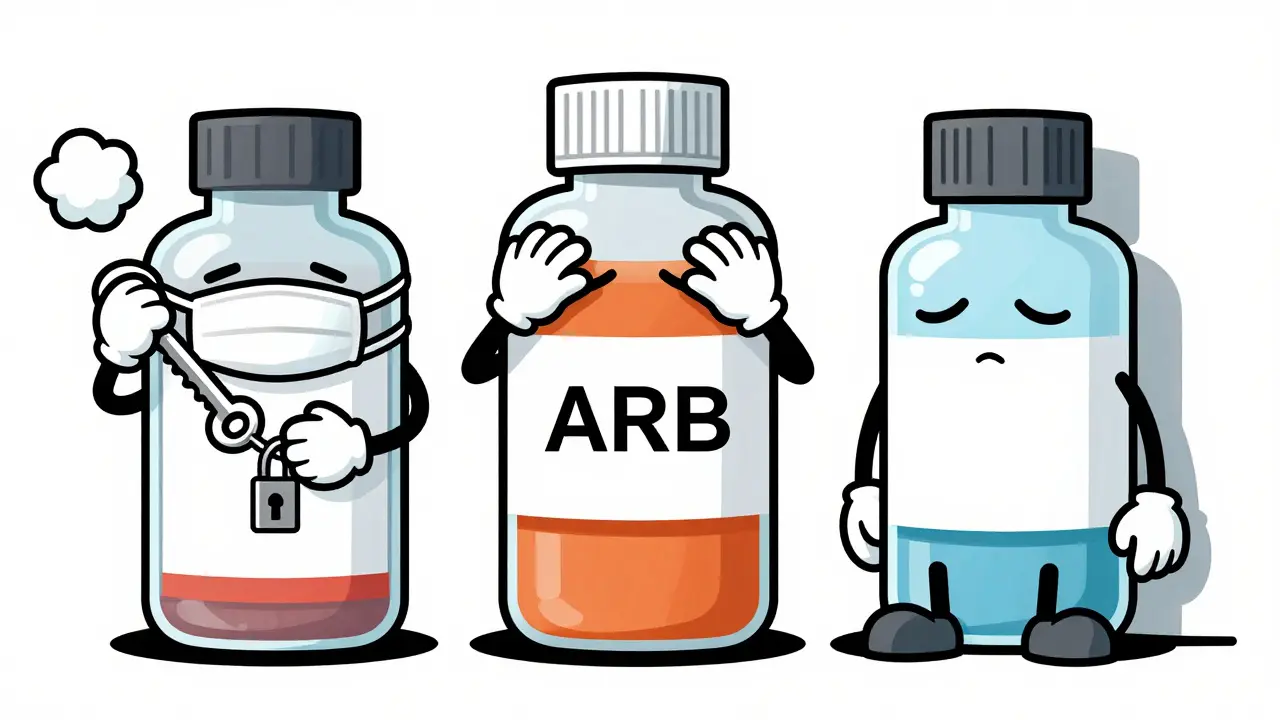
ARBs (like losartan or valsartan) take a shortcut. Instead of blocking the enzyme, they block the receptor where angiotensin II would attach. Think of it like this: if ACE inhibitors stop the key from being made, ARBs cover the lock so the key doesn’t fit. Because ARBs don’t affect bradykinin levels, they rarely cause coughing. This makes them a popular choice for people who couldn’t tolerate ACE inhibitors.
Beta-blockers (like metoprolol or carvedilol) work on a completely different system. They block adrenaline from binding to beta receptors in your heart. This slows your heart rate and reduces the force of each beat. Less blood pumped out per minute means less pressure against your artery walls. While effective for some conditions, they aren’t always the first choice for simple high blood pressure because they can leave you feeling sluggish or cold.
Side Effects: The Real Deal
Medication adherence drops sharply when side effects interfere with daily life. Here is how these three classes compare based on real-world data from millions of patients.
| Drug Class | Common Side Effect | Incidence Rate | Impact on Daily Life |
|---|---|---|---|
| ACE Inhibitors | Dry Cough | 10-20% | High (often leads to discontinuation) |
| ACE Inhibitors | Angioedema (swelling) | 0.1-0.7% | Critical (requires immediate medical attention) |
| ARBs | Dizziness/Lightheadedness | ~5% | Moderate (usually improves over time) |
| Beta-Blockers | Fatigue/Tiredness | 28% | High (can affect work and exercise) |
| Beta-Blockers | Cold Hands/Feet | Variable | Moderate (due to reduced circulation) |
The cough associated with ACE inhibitors is not just annoying; it’s debilitating for many. Studies show that up to 20% of patients develop this cough, and it’s the primary reason 78% of people stop taking their ACE inhibitor. If you’re prescribed lisinopril and start coughing after a few weeks, don’t push through it. Switching to an ARB usually resolves the issue immediately.
Beta-blockers bring a different set of challenges. Because they slow your heart rate, you might feel unusually tired or find it harder to catch your breath during exercise. For athletes or active individuals, this can be a dealbreaker. Additionally, non-selective beta-blockers can tighten airways, which is risky for anyone with asthma or COPD. Selective beta-1 blockers (like metoprolol) are safer for lungs but still carry the fatigue risk.
Who Should Take What?
There is no single "best" drug for everyone. Your medical history dictates the choice. Guidelines from the American Heart Association (AHA) and European Society of Cardiology provide clear paths based on comorbidities.
- Diabetes with Kidney Issues: ACE inhibitors are often the gold standard here. They reduce protein leakage in urine (proteinuria) by up to 21% more effectively than ARBs in some studies, offering superior kidney protection. If you can’t handle the cough, ARBs are the next best step.
- History of Heart Attack (Myocardial Infarction): Beta-blockers are essential here. They reduce the workload on your healing heart and lower the risk of future cardiac events by up to 23%. ACE inhibitors are also frequently added to this regimen for additional vascular protection.
- Heart Failure with Reduced Ejection Fraction (HFrEF): This is a complex area. Traditionally, ACE inhibitors were the cornerstone. However, newer evidence suggests that sacubitril-valsartan (a combination of an ARB and a neprilysin inhibitor) may offer better outcomes, reducing cardiovascular mortality by 20% compared to older ACE inhibitors. Beta-blockers like carvedilol are also critical, reducing all-cause mortality by 35% in these patients.
- Uncomplicated High Blood Pressure: If you have no other major conditions, guidelines suggest starting with thiazide diuretics, calcium channel blockers, ACE inhibitors, or ARBs. Beta-blockers are generally moved down the list because they are less effective at preventing strokes compared to the others.
Cost and Availability
Let’s talk money. Hypertension is a lifelong condition for most, so cost matters. Fortunately, all three classes have generic versions available.
Lisinopril (ACE inhibitor) is the most prescribed antihypertensive globally, with over 129 million prescriptions annually in the US alone. Its widespread use keeps prices low. Losartan (ARB) is also widely available and competitively priced. Metoprolol (beta-blocker) is similarly affordable.
In many insurance plans, generics for all three classes fall into the lowest tier, meaning your copay could be as low as $4-$10 per month. Don’t let brand-name pricing scare you. Ask your pharmacist specifically for the generic equivalent. The clinical efficacy is identical.
Common Mistakes to Avoid
Even with the right medication, errors in usage can undermine your health.
- Stopping Abruptly: Never quit beta-blockers suddenly. Doing so can cause a rebound effect, spiking your heart rate and blood pressure dangerously. Taper off under medical supervision.
- Ignoring Potassium Levels: Both ACE inhibitors and ARBs can raise potassium levels in your blood. High potassium (hyperkalemia) can disrupt heart rhythms. If you have kidney disease, your doctor will monitor this closely. Avoid excessive use of salt substitutes containing potassium chloride unless cleared by your physician.
- Combining ACE Inhibitors and ARBs: Some doctors used to prescribe both together for extra power. This practice has been largely abandoned. The ONTARGET trial showed that combining them increases the risk of kidney failure and dangerous drops in blood pressure without providing significant extra benefit. Stick to one renin-angiotensin blocker at a time.
- Expecting Instant Results: Beta-blockers and ACE inhibitors can take several weeks to reach their full therapeutic effect. Don’t get discouraged if your home readings don’t drop overnight. Consistency is key.

What Do Patients Say?
Data from clinical trials is vital, but patient experiences matter too. On platforms like Drugs.com, lisinopril averages a 5.8/10 rating, largely dragged down by reports of cough and fatigue. Losartan, however, scores higher at 7.1/10, with fewer complaints about adverse effects.
Online communities reflect this shift. Many users report switching from lisinopril to valsartan (an ARB) after struggling with coughs, noting immediate relief. Others describe beta-blockers as making them feel "foggy" or unable to perform manual labor, prompting switches to calcium channel blockers like amlodipine. These anecdotes highlight why tolerability is just as important as efficacy.
Next Steps for You
If you’re newly diagnosed or considering a switch, here is your action plan:
- Track Your Symptoms: Keep a log of any cough, fatigue, or dizziness. Note when they started relative to your medication dose.
- Ask About Alternatives: If your current med causes side effects, ask, "Would an ARB be a better fit for me?" or "Is there a selective beta-blocker that might cause less fatigue?"
- Monitor at Home: Buy a validated upper-arm blood pressure monitor. Check your pressure twice a week, morning and evening, before taking meds. Bring this log to your appointments.
- Review Labs Annually: Ensure your kidney function and potassium levels are checked regularly, especially if you’re on an ACE inhibitor or ARB.
Choosing between beta-blockers, ACE inhibitors, and ARBs isn’t a guessing game. It’s a strategic decision based on your specific health profile. By understanding how these drugs work and what side effects to expect, you become an active partner in your care rather than a passive recipient of prescriptions. Your heart health depends on finding the balance that works for your body-and that often takes a little trial and error.
Can I take an ACE inhibitor and an ARB together?
Generally, no. Combining ACE inhibitors and ARBs is no longer recommended due to increased risks of kidney damage, low blood pressure, and high potassium levels without significant additional benefits. Major guidelines advise against dual blockade of the renin-angiotensin system.
Why do ACE inhibitors cause a dry cough?
ACE inhibitors block the enzyme that breaks down bradykinin, a substance that relaxes blood vessels. When bradykinin builds up in the lungs, it irritates the airway lining, causing a persistent, dry cough. Switching to an ARB usually stops this because ARBs do not affect bradykinin levels.
Are beta-blockers bad for people with diabetes?
Beta-blockers can mask the symptoms of low blood sugar (hypoglycemia), such as tremors and rapid heartbeat, making it harder for diabetics to recognize dangerous drops. They may also slightly worsen insulin resistance. However, if you have heart disease and diabetes, the cardiovascular benefits often outweigh these risks. Newer beta-blockers like nebivolol have fewer metabolic side effects.
Which is better for kidney protection: ACE inhibitors or ARBs?
Both are excellent for protecting kidneys, especially in diabetic patients. ACE inhibitors have a slight edge in some studies regarding protein reduction, but ARBs are equally effective and better tolerated. If you cannot tolerate the cough from an ACE inhibitor, an ARB is the preferred alternative for kidney protection.
Can I drink alcohol while taking these medications?
Moderate alcohol consumption is usually safe, but alcohol can raise blood pressure and counteract the effects of your medication. Excessive drinking can also increase the risk of dizziness and fainting, especially with beta-blockers and ACE inhibitors. Always discuss your alcohol intake with your doctor to determine safe limits for your specific case.
How long does it take for these drugs to work?
Blood pressure lowering effects often begin within hours to days. However, the full protective benefits on the heart and kidneys can take weeks to months. Beta-blockers may take longer to stabilize heart rate and energy levels. Consistent daily use is crucial for maximum effectiveness.
Are there natural alternatives to these medications?
Lifestyle changes like reducing sodium intake, exercising regularly, losing weight, and limiting alcohol can significantly lower blood pressure. However, for most people with diagnosed hypertension, lifestyle changes alone are not enough to replace medication. Always consult your doctor before stopping prescribed drugs in favor of natural remedies.
What should I do if I miss a dose?
If you remember within a few hours, take the missed dose. If it’s close to the time for your next dose, skip the missed one and resume your regular schedule. Never double up on doses to make up for a missed one, as this can cause dangerously low blood pressure.