
Every year, thousands of older adults are prescribed clarithromycin for a sinus infection, pneumonia, or stomach bug-without anyone checking if they’re also taking a blood pressure medication. That’s a problem. When these two drugs are mixed, the result can be sudden, dangerous drops in blood pressure, kidney injury, and even hospitalization. This isn’t rare. It’s predictable. And it’s preventable.
Why Clarithromycin and Blood Pressure Pills Don’t Mix
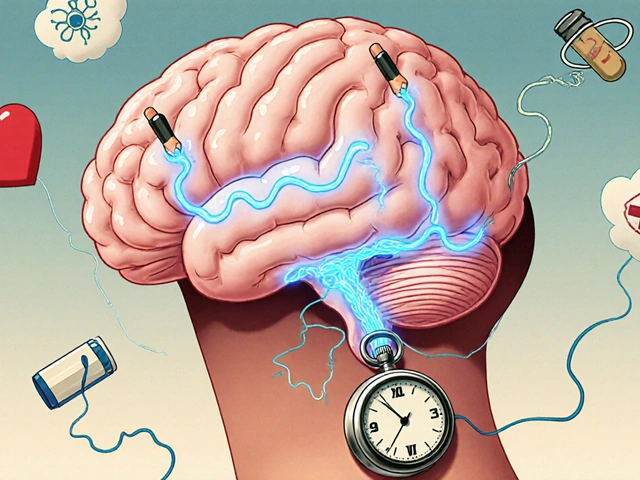
Clarithromycin is an antibiotic. Calcium channel blockers like nifedipine, amlodipine, and felodipine are used to treat high blood pressure and chest pain. On the surface, they do completely different things. But inside your body, they collide. The issue starts with an enzyme called CYP3A4. This enzyme lives in your liver and gut and is responsible for breaking down about half of all prescription drugs, including most calcium channel blockers. Clarithromycin doesn’t just pass through-it shuts down CYP3A4 like flipping a switch. When that happens, the calcium channel blocker can’t be cleared from your system. Its levels in your blood spike-sometimes by 200% or more. That’s not a minor bump. It’s enough to turn a safe dose into a toxic one. Your blood vessels relax too much. Your heart slows down. Blood pressure plummets. Systolic pressure can drop from 130 to 80 in under two days. That’s not just dizziness. That’s fainting, falls, reduced blood flow to your kidneys, and acute kidney injury.Which Calcium Channel Blockers Are Most Dangerous?
Not all calcium channel blockers carry the same risk. The dihydropyridine class-nifedipine, amlodipine, felodipine-is the most affected because they rely almost entirely on CYP3A4 for breakdown. Among them, nifedipine is the biggest red flag. A 2013 study of over 96,000 patients found that those taking clarithromycin and nifedipine together had more than five times the risk of hospitalization for low blood pressure or kidney damage compared to those taking azithromycin instead. The numbers don’t lie: for every 160 people taking this combo, one ends up hospitalized. That’s a 0.63% absolute risk increase-small on paper, devastating in real life. Amlodipine is more commonly prescribed, so it shows up more often in these cases. But its risk is lower than nifedipine’s. Felodipine and nicardipine are also high-risk. Non-dihydropyridines like verapamil and diltiazem are still dangerous, but their main risk is slowing the heart rate too much, which can make low blood pressure worse.The Real-World Cost of This Mistake
This isn’t theoretical. Real patients are being hurt. A 76-year-old man on 30 mg of nifedipine daily started clarithromycin for a chest infection. His blood pressure dropped from 130/80 to 80/50 in 48 hours. He needed IV fluids and 24 hours in the ICU. His case was published in BMJ Case Reports. Another 72-year-old woman on amlodipine 10 mg daily developed severe hypotension and a heart rate of 48 beats per minute after starting clarithromycin. She was hospitalized. Her doctors later realized she was also on a beta-blocker-another drug that slows the heart. The combination was a triple threat. The FDA added a black box warning to clarithromycin in 2011. That’s the strongest warning they give. It says: Do not use this drug with calcium channel blockers unless absolutely necessary. Yet, a 2016 study found that over 12% of clarithromycin prescriptions in patients over 65 were still being written for those on CCBs.
Azithromycin Is the Safe Alternative
Here’s the good news: there’s a simple fix. Use azithromycin instead. Azithromycin is another macrolide antibiotic. It works just as well for most infections. But it doesn’t touch CYP3A4. It doesn’t interfere with blood pressure meds. The same 2013 JAMA study showed no increase in hospitalizations when azithromycin was used instead of clarithromycin in patients on calcium channel blockers. It’s not just theory. In 2022, 68.4% of macrolide prescriptions for patients on CCBs were azithromycin-up from just over half in 2013. That’s progress. But it’s not enough. Many prescribers still default to clarithromycin because it’s cheaper or they’re used to it. If you’re on a calcium channel blocker and your doctor prescribes clarithromycin, ask: Can we use azithromycin instead? If they say no, ask why. The answer should be simple: azithromycin is safer and just as effective.Who’s at Highest Risk?
This interaction hits older adults hardest. Why? Because they’re more likely to be on multiple medications, have reduced kidney function, and have less room for error in drug metabolism. People with chronic kidney disease (eGFR below 60) are at even greater risk. Their bodies can’t clear the drugs as efficiently, so levels build up faster. Those with heart failure or existing low blood pressure are also vulnerable. Even a small drop can trigger dizziness, falls, or organ damage. And here’s something rarely discussed: if you’re taking more than one drug that slows your heart-like a beta-blocker, a calcium channel blocker, and clarithromycin-you’re stacking risks. The combined effect on cardiac output can be deadly.What Should You Do?
If you’re on a calcium channel blocker:- Check your medication list. Do you take nifedipine, amlodipine, felodipine, or verapamil?
- If you’re prescribed clarithromycin, ask your doctor or pharmacist: Is there a safer antibiotic?
- Don’t assume it’s safe just because you’ve taken it before. Your body changes. Your kidney function changes. Your other meds change.
- If you start clarithromycin and feel dizzy, lightheaded, or unusually tired within 2-3 days, check your blood pressure. If it’s below 90 systolic or has dropped more than 30 points from your normal, stop the antibiotic and seek help immediately.

Why Don’t Doctors Know This?
You’d think this would be automatic. But it’s not. A 2018 study found that only 43% of electronic health record systems had alerts for this interaction. Even when they did, many were ignored or buried in pop-ups. Many doctors still think of clarithromycin as a "safe" antibiotic because it’s widely used. They don’t realize it’s one of the most dangerous when paired with common blood pressure drugs. The American Geriatrics Society’s Beers Criteria® lists clarithromycin as potentially inappropriate for older adults taking CYP3A4 substrates like calcium channel blockers. That’s not a suggestion. It’s a warning from the top experts in geriatric medicine.What’s Changing?
The tide is turning. The 2022 update to the STOPP/START criteria now explicitly says: Avoid clarithromycin in patients taking dihydropyridine calcium channel blockers; use azithromycin instead. Newer clinical decision support tools are catching this interaction with 92.7% accuracy. Pharmacies are starting to flag these combinations. But the system still has gaps. Every year, about 8,400 people in the U.S. are hospitalized because of this interaction. Around 320 die. Most of these cases are preventable.Final Takeaway
This isn’t about being paranoid. It’s about being informed. Clarithromycin and calcium channel blockers are a dangerous pair. The science is clear. The risks are real. The solution is simple: switch to azithromycin. If you’re a patient, ask the question. If you’re a caregiver, double-check the prescription. If you’re a clinician, make this a habit-not an afterthought. One less clarithromycin prescription could mean one less hospital bed taken, one less family scared, one less life changed.Can clarithromycin cause low blood pressure even if I’ve taken it before without problems?
Yes. Your body’s ability to process drugs changes over time. If you’ve started a new medication, developed kidney issues, or gotten older since your last course of clarithromycin, your risk has increased. Even if you’ve taken it safely before, that doesn’t mean it’s safe now.
Is azithromycin just as effective as clarithromycin for infections?
For most common infections-like sinusitis, bronchitis, strep throat, and some lung infections-azithromycin works just as well. It’s not always the first choice for every infection, but for the majority of cases where clarithromycin is prescribed, azithromycin is a direct, safer substitute. Always confirm with your doctor that azithromycin is appropriate for your specific condition.
What if my doctor says clarithromycin is the only option?
Ask why. Clarithromycin is rarely the only option. If your infection is serious enough to require a macrolide and you’re on a calcium channel blocker, your doctor should consider alternatives like doxycycline, levofloxacin, or amoxicillin-clavulanate, depending on the infection. If they insist on clarithromycin, request a consultation with a pharmacist or specialist to review the risks. This interaction is well-documented and avoidable.
How quickly do symptoms appear after starting clarithromycin?
Symptoms often start within 24 to 72 hours. The most common signs are dizziness, lightheadedness, fatigue, blurred vision, or fainting. Blood pressure can drop rapidly. If you’re on a calcium channel blocker and start feeling unusually weak or dizzy after beginning clarithromycin, check your blood pressure right away. Don’t wait.
Does this interaction happen with all antibiotics?
No. Only certain antibiotics inhibit CYP3A4. Erythromycin has a similar risk to clarithromycin. Azithromycin, doxycycline, amoxicillin, ciprofloxacin, and most other common antibiotics do not. Always check whether your antibiotic affects CYP3A4 before taking it with blood pressure meds. When in doubt, ask your pharmacist.




Comments
Jeane Hendrix
January 6, 2026
Wow, this is insane. I had no idea clarithromycin could do this. My grandma was on amlodipine and got prescribed this for a sinus infection last year-she passed out in the kitchen and broke her hip. No one ever warned us. This needs to be screamed from the rooftops.
Tom Swinton
January 7, 2026
Look, I’m not a doctor, but I’ve been managing my dad’s meds for five years now, and this is exactly the kind of thing that slips through the cracks-because doctors are rushed, pharmacies are understaffed, and patients don’t ask enough questions. Clarithromycin is cheap, it’s ‘common,’ and it’s treated like harmless candy. But when you’re 70, on three blood pressure pills, and your kidneys aren’t what they used to be? This isn’t a ‘maybe’-it’s a ticking bomb. Azithromycin isn’t just an alternative-it’s the responsible choice. Why are we still normalizing this? The science has been clear since 2011. The FDA warned us. The Beers Criteria says no. And yet, 12% of prescriptions? That’s not ignorance-that’s negligence.
Brian Anaz
January 9, 2026
Another liberal panic over a simple antibiotic. People are dying from flu, not from taking meds they were prescribed. Stop fearmongering. If your grandma got sick, maybe she shouldn’t have been on so many pills in the first place. This is why America’s healthcare is broken-overcautious nonsense.
Venkataramanan Viswanathan
January 9, 2026
This is a critical issue, especially in aging populations. In India, we see similar patterns-elderly patients on multiple medications, often prescribed without full interaction checks. The lack of electronic alert systems here is alarming. Azithromycin should be the default in such cases. We need better prescribing guidelines and mandatory pharmacist review for polypharmacy patients. This is not just an American problem.
Saylor Frye
January 10, 2026
It’s fascinating how the CYP3A4 pathway is such a ubiquitous metabolic bottleneck. The pharmacokinetic implications here are textbook-first-pass metabolism, enzyme inhibition, non-linear clearance curves. But honestly, most prescribers treat this like a trivia question, not a clinical imperative. The fact that we’re still seeing 12% error rates in 2024? That’s not incompetence. That’s systemic laziness.
Kiran Plaha
January 12, 2026
I’m a nurse in Delhi. We don’t have fancy EHR alerts. But we teach our patients: if you’re on blood pressure pills and get antibiotics, always ask ‘Is this the one that stops your liver from cleaning the other pill?’ Simple. Clear. Saves lives.
Matt Beck
January 13, 2026
Life is just a series of chemical reactions, man. 🤔 We’re all just atoms dancing in a soup of prescriptions. Clarithromycin? It’s not evil-it’s just… misunderstood. Like a misunderstood poet. 🌿 The body knows what to do. Maybe we just need to trust the process? 🙏 But also… maybe don’t mix drugs. 😅
Isaac Jules
January 14, 2026
THIS IS WHY WE NEED TO BAN CLARITHROMYCIN. PEOPLE ARE DYING BECAUSE DOCTORS ARE TOO LAZY TO LOOK UP DRUG INTERACTIONS. AZITHROMYCIN EXISTS. IT’S CHEAPER. IT’S SAFER. WHY ARE WE STILL DOING THIS? STOP KILLING GRANDPARENTS WITH INCOMPETENCE. #PharmaGreed #StopTheBleeding
Amy Le
January 14, 2026
Oh wow, another ‘warning’ that no one follows. 🤦♀️ We’ve had black box warnings since 2011 and yet somehow, the system still operates like it’s 1998. This isn’t a medical issue-it’s a cultural one. Americans think ‘prescribed’ means ‘safe.’ It doesn’t. It just means ‘someone signed a piece of paper.’ We need mandatory CEUs for prescribers on drug interactions. Or better yet-fire the ones who keep doing this.
Pavan Vora
January 15, 2026
My uncle in Mumbai took clarithromycin with amlodipine… he got dizzy, fell, broke his pelvis. No one told him. The doctor just said ‘take this for infection.’ I checked online later-found this exact warning. I cried. We need better awareness. Even in India, we need to change this. Please share this post.
Write a comment