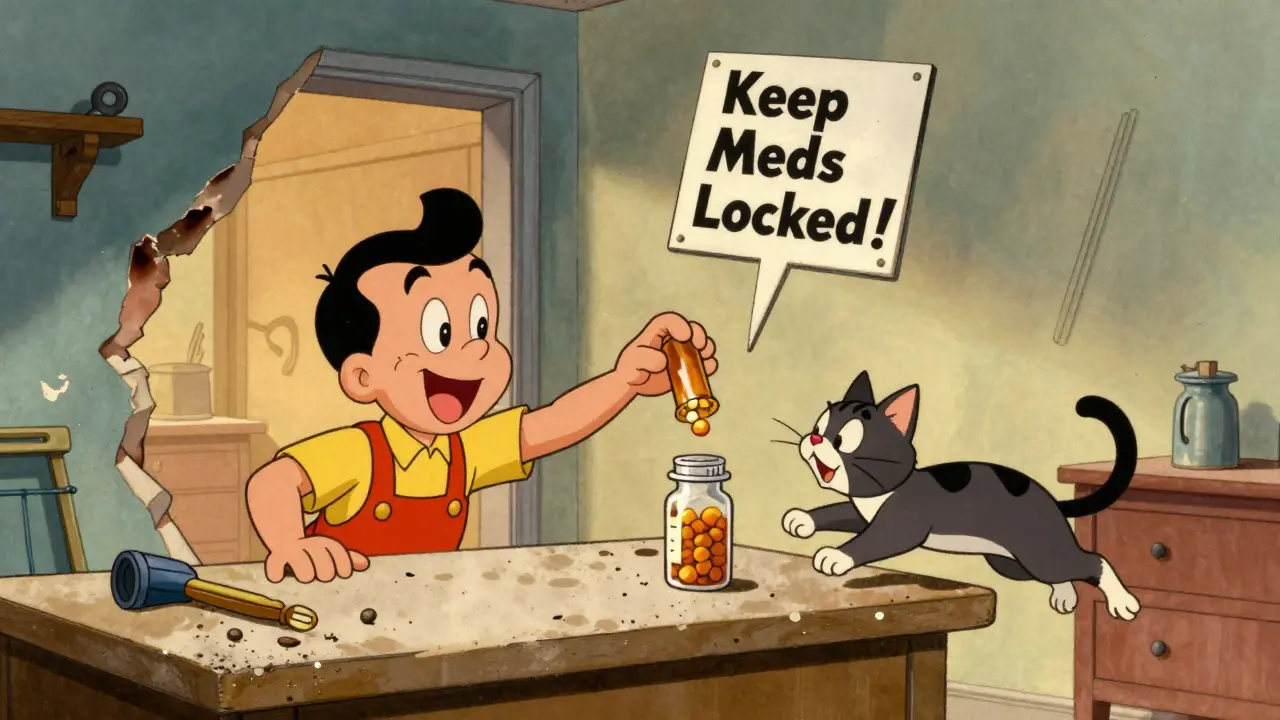
When you’re tearing down walls or packing up boxes for a move, your medications shouldn’t be an afterthought. A pill bottle left on a kitchen counter during a renovation, or tucked into a suitcase without a second thought during a move, could lead to accidents, spoiled medicine, or worse-someone else taking what isn’t theirs. In New Zealand, where nearly half of adults take at least one prescription drug regularly, this isn’t just about convenience. It’s about safety.
Don’t Store Medications in the Bathroom or Near Heat
You’ve probably heard this before, but it’s even more critical during renovations or moves. Bathrooms are humid. Steam from showers, sinks, and baths breaks down the chemicals in pills and patches. Insulin, thyroid meds, and even some antibiotics can lose potency faster in moisture. During a renovation, if your bathroom is being gutted, don’t move your meds into the temporary bathroom setup if it’s still getting steamy. Same goes for heat. Don’t leave your meds in the garage, the car, or near a radiator. The ideal temperature range for most medications is between 15°C and 25°C. That’s room temperature. Not hot. Not cold. Just steady. If you’re packing up for a move and your car will sit in the sun for hours, your pills could be ruined before you even get to the new house.Use a Locked, Dry, and Cool Spot-Temporarily
Before you start moving boxes or demoing cabinets, pick one secure spot in your home that won’t be touched. A locked bedroom drawer. A closet in a room that’s not being renovated. A high shelf in the kitchen, away from the sink. The goal is simple: out of sight, out of reach, and locked if possible. You don’t need a fancy medicine safe. A locked toolbox, a small gun safe, or even a locked filing cabinet works fine. The point isn’t to impress anyone-it’s to stop kids, pets, or even well-meaning relatives from grabbing something they shouldn’t. Safe Kids Worldwide says meds should be stored at or above counter height. That’s still true during a move. If your usual cabinet is gone, find another high spot. Lock it. Label it.Keep Original Containers-No Exceptions
Never dump pills into random containers. Not even if you think you’ll remember which is which. The FDA and New Zealand’s Medsafe both say: keep medications in their original bottles. Why? Because those labels have the name, dosage, prescribing doctor, and expiration date. During a move, when boxes are stacked everywhere and labels are smudged, that info is your lifeline. If you’re packing for a move, pack your meds last. Unpack them first. Put them in your chosen secure spot as soon as you arrive. Don’t wait until you’ve unpacked the dishes or the bedding. If you’re in the middle of a renovation, keep your meds in one spot, not scattered across three rooms.Refrigerated Medications Need Special Care
Insulin, some biologics, and certain antibiotics must stay cold. That means 2°C to 8°C-fridge temperature. During a move, you can’t just toss them into a box and hope for the best. Use a small insulated cooler with ice packs. Don’t let them freeze. Frozen insulin is useless, and you can’t tell by looking. Some people use reusable gel packs designed for medical transport. Others wrap them in a towel and put them in a cooler with a thermometer inside. Check the temp before you load the car. If it’s above 8°C or below 2°C, don’t risk it. If you’re on insulin or another critical refrigerated med, talk to your pharmacist before the move. They can give you a small portable cooler and advice on how long your meds can survive without power. Some pharmacies even rent medical-grade transport coolers for a day or two.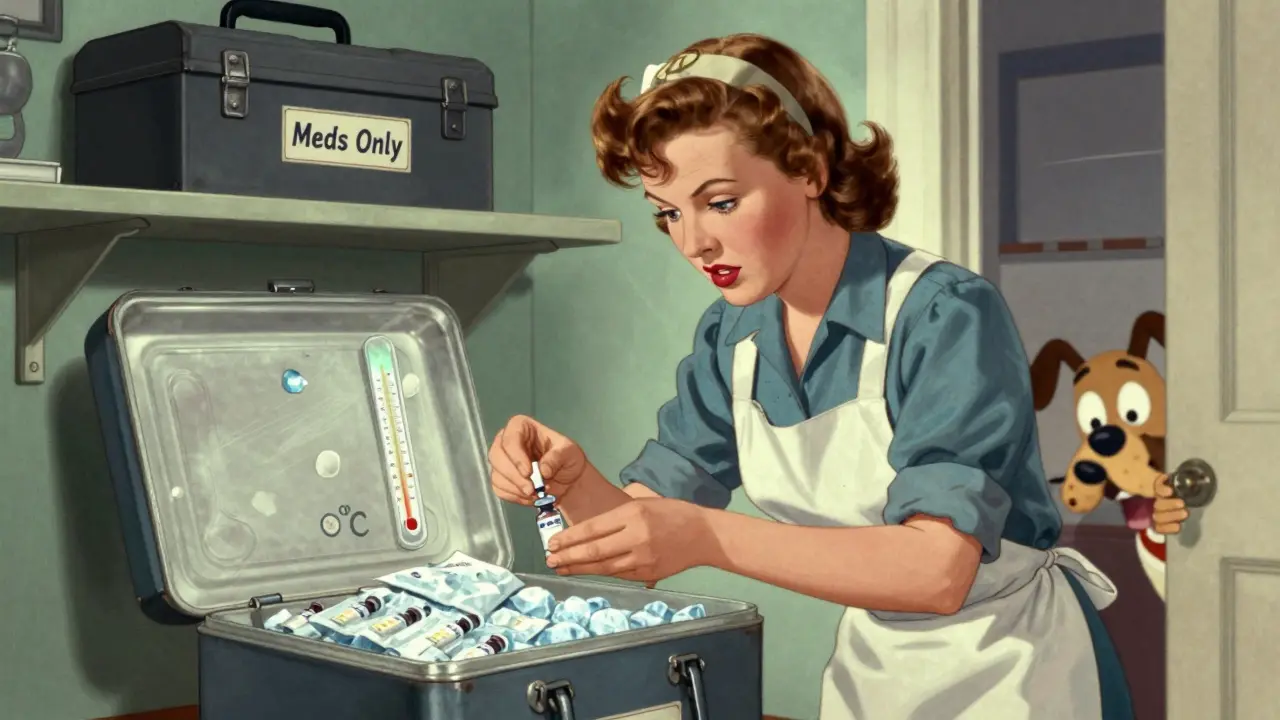
Dispose of Expired or Unneeded Meds Before You Move
Moving is the perfect time to clean out your medicine cabinet. Don’t pack expired painkillers, old antibiotics, or pills you stopped taking years ago. They take up space. They’re a hazard. And they’re not worth the risk. In New Zealand, the best way to dispose of unwanted meds is through a pharmacy take-back program. Most pharmacies, including those in Wellington, Auckland, and Christchurch, have drop-off bins for old or unused medications. They’re collected and incinerated safely-no chemicals in landfills, no pills washing into waterways. If there’s no take-back bin nearby, the EPA and Medsafe recommend this method: remove pills from their bottles. Mix them with something unappealing-used coffee grounds, cat litter, dirt. Put them in a sealed plastic bag. Then throw them in the trash. Never flush them unless the label says to. Fentanyl patches and some strong opioids are exceptions-they must be flushed to prevent accidental overdose. Check the label. If in doubt, ask your pharmacist.Don’t Let Kids or Pets Get to Them
Children and pets don’t know what pills are. They see color. They see shape. They see something they can chew. During renovations, kids might be visiting from grandparents’ houses. Pets might be in temporary care. Even a single pill can be deadly. A 2024 study from the New Zealand Poison Centre showed that over 1,200 cases of accidental pediatric medication exposure occurred last year. Nearly 30% happened during home changes-renovations, moves, or when visitors were around. Lock your meds. Even if you think the house is empty. Even if you’re just popping out for lunch. Use a lock. Use a high shelf. Use both. It’s not paranoia. It’s prevention.What About Traveling with Meds?
If you’re moving across the country or overseas, you’ll need to carry your meds with you. Always pack them in your carry-on. Never in checked luggage. Planes have temperature swings. Bags get lost. Your meds might sit in a cargo hold for hours in freezing or scorching conditions. Bring enough for the trip plus a few extra days. Keep them in original bottles. If you’re flying internationally, carry a letter from your doctor listing your meds and why you need them. Some countries have strict rules-even common painkillers like codeine are controlled substances.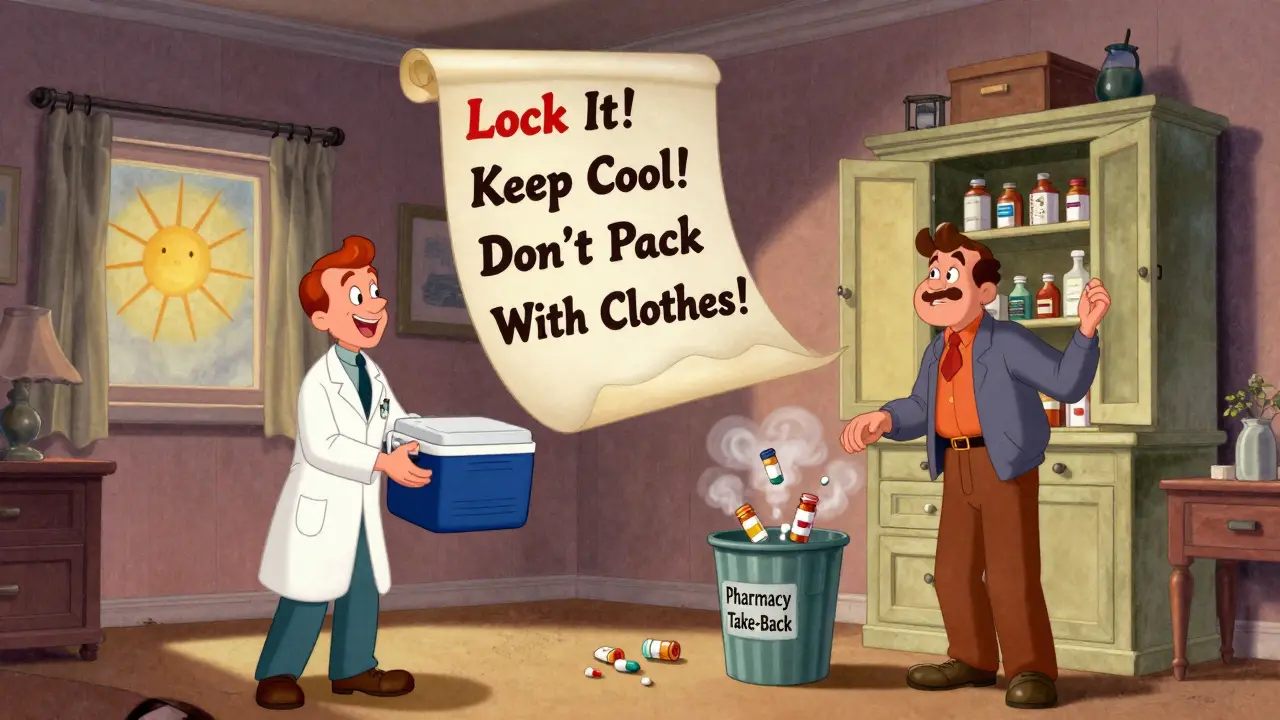
Plan Ahead-Don’t Wait Until the Last Minute
The biggest mistake people make? Waiting until the day before the move to think about meds. Or until the contractor knocks down the cabinet where they kept their pills. Here’s a simple checklist:- Two weeks before: Sort your meds. Toss expired ones. Call your pharmacy for a take-back.
- One week before: Pick your temporary storage spot. Buy a lock if needed.
- Three days before: Pack your meds last. Use original bottles. Keep refrigerated meds cool.
- Day of move: Carry your meds with you. Don’t let movers touch them.
- Day after move: Unpack meds first. Put them in your permanent secure spot.
What If You’re Not Sure?
If you’re on a complex regimen-multiple daily pills, injectables, or high-risk meds like opioids or seizure drugs-talk to your doctor or pharmacist before you start packing. They know your meds better than anyone. They can tell you what’s temperature-sensitive, what needs special handling, and what can be safely disposed of. Don’t guess. Don’t assume. Ask.Final Thought: It’s Not Just About Safety-It’s About Control
Home renovations and moves are chaotic. You’re juggling contractors, boxes, kids, pets, and stress. But your medications? They don’t get to be part of the chaos. They need stability. They need security. They need to be treated like the life-saving tools they are. Take five minutes before you start packing. Lock them up. Label them. Keep them cool. Dispose of the rest. It’s one less thing to worry about when everything else feels out of control.Can I store my medications in the garage during a renovation?
No. Garages often get too hot or too cold, and they’re not secure. Medications should be kept between 15°C and 25°C in a dry, locked space like a bedroom drawer or a kitchen cabinet away from windows and heat sources.
What should I do with old or expired pills before moving?
Take them to a pharmacy with a medication take-back bin. Most New Zealand pharmacies offer this for free. If that’s not available, mix pills with used coffee grounds or cat litter, seal them in a plastic bag, and throw them in the trash. Never flush unless the label says to.
Is it safe to move insulin in a regular cooler?
Yes, but only if you use a well-insulated cooler with ice packs and keep the temperature between 2°C and 8°C. Never let insulin freeze. Check the temp with a thermometer before and after transport. If you’re unsure, ask your pharmacist for a medical-grade cooler.
Should I pack my medications with my clothes or separately?
Pack them separately. Never let movers handle your medications. Keep them in your personal carry-on during the move. Use original bottles and lock them in a small container you can carry with you.
Can I throw away my old pill bottles?
Yes, after you’ve removed the pills and scratched off or covered your personal info. You can recycle the plastic bottles if your local recycling program accepts them. But never reuse them for anything else-especially not for storing other substances.
What if I forget to pack my meds on moving day?
If you’re missing a critical med, contact your pharmacy immediately. Many can provide a small emergency supply. Don’t skip doses unless your doctor says so. If you’re out of town, call your doctor’s office-they may be able to fax a prescription to a local pharmacy.
Comments
Sue Stone
January 24, 2026
Just threw out my grandma's expired blood pressure pills yesterday. Took 'em to the pharmacy like the article said. Felt good. No more junk cluttering up the cabinet.
Andrew Smirnykh
January 25, 2026
I moved last year and forgot my insulin was in the car for six hours. It was 95°F outside. Turned out fine, but I learned the hard way. Now I carry it in a small cooler with me at all times. Don’t be like me.
Anna Pryde-Smith
January 26, 2026
Oh my god, I can't believe people still leave meds in the bathroom. Are you trying to poison your kids? I had a cousin who gave her toddler a Xanax because she thought it was a candy. She didn't even realize it until the ambulance showed up. Lock. It. Up.
Janet King
January 26, 2026
Keep medications in original containers. This is not optional. The label has the name, dosage, prescriber, and expiration date. If you lose the label, you lose the safety. Always. No exceptions.
Stacy Thomes
January 28, 2026
Y’ALL. I just moved and I packed my meds in a little locked box with my passport and cash. I carried it on my lap the whole time. My dog even knew not to sniff it. This is LIFE-SAVING stuff. Don’t treat it like your old socks.
Dawson Taylor
January 28, 2026
Temperature stability is the most overlooked factor. Medications are not pantry items. They are chemical compounds with narrow operational ranges. Deviation = degradation. Simple physics.
Laura Rice
January 29, 2026
i just wanna say that i learned this the hard way after my niece got into my old anxiety pills during a remodel. she was fine but i cried for 3 days. now i lock everything. even my coffee creamer is locked. just in case. 😔
Kerry Evans
January 30, 2026
Anyone who doesn’t dispose of expired meds properly is a public hazard. Mixing them with coffee grounds? That’s not enough. You need to crush them, dissolve them in vinegar, then pour them down the toilet. Only then are they truly neutralized. Don’t be lazy.
Oladeji Omobolaji
January 31, 2026
Back home in Nigeria, we just keep pills in a tin box on the top shelf. No locks. No coolers. But we know what each pill looks like. Maybe it’s different where you’re from. Still, the point is: don’t let kids get to them.
Vanessa Barber
February 1, 2026
Why are we treating meds like they’re nuclear codes? I’ve seen people lock their Advil in a safe like it’s a diamond. It’s just ibuprofen. Chill.
dana torgersen
February 2, 2026
...I mean, like, I get it, right? Like, meds are important, obviously, but also, like, do we really need to turn this into a whole... thing? Like, I just put mine in a drawer. It’s fine. I mean, what’s the worst that could happen? Someone takes a Tylenol? It’s not like it’s heroin. . . . right?
Write a comment