Have you ever wondered why some apps take off in one country but flop in another? Why a sleek, user-friendly product gets ignored in Japan but becomes a bestseller in Germany? The answer isn’t just about design or price. It’s about culture.
Culture doesn’t just shape what we like - it determines what we’re willing to try, trust, and stick with. This isn’t abstract. It’s measurable. And it’s the difference between a product that fails and one that spreads like wildfire.
Why Culture Matters More Than You Think
Most tech companies assume that if a product works well in the U.S., it’ll work everywhere. That’s a dangerous myth. Research shows the standard Technology Acceptance Model (TAM), which predicts whether people will use new tools based on ease and usefulness, only explains about 40% of adoption in homogeneous cultures. In diverse, global settings? That number drops to 22%. Why? Because TAM ignores culture.
Enter Hofstede’s cultural dimensions - the most validated framework we have for understanding how culture shapes behavior. Developed by Geert Hofstede in the 1980s and still used today, it breaks culture into five measurable traits:
- Power Distance: How comfortable people are with hierarchy.
- Uncertainty Avoidance: How much people need structure, rules, and clear instructions.
- Individualism vs. Collectivism: Whether people make decisions alone or based on group approval.
- Masculinity vs. Femininity: Whether society values competition and achievement (masculine) or care and quality of life (feminine).
- Long-Term Orientation: Whether people focus on future rewards or stick to traditions and short-term results.
These aren’t just academic labels. They directly affect how people react to new tools, services, or even brand messaging.
The Real-World Impact: Numbers Don’t Lie
In healthcare, a 2022 study in BMC Health Services Research found that uncertainty avoidance had the strongest effect on whether doctors adopted a new electronic health record system. In high uncertainty avoidance countries like Japan or Greece, users needed 3.2 times more documentation to feel confident using the system. Without it, they refused to use it - even if the software was technically superior.
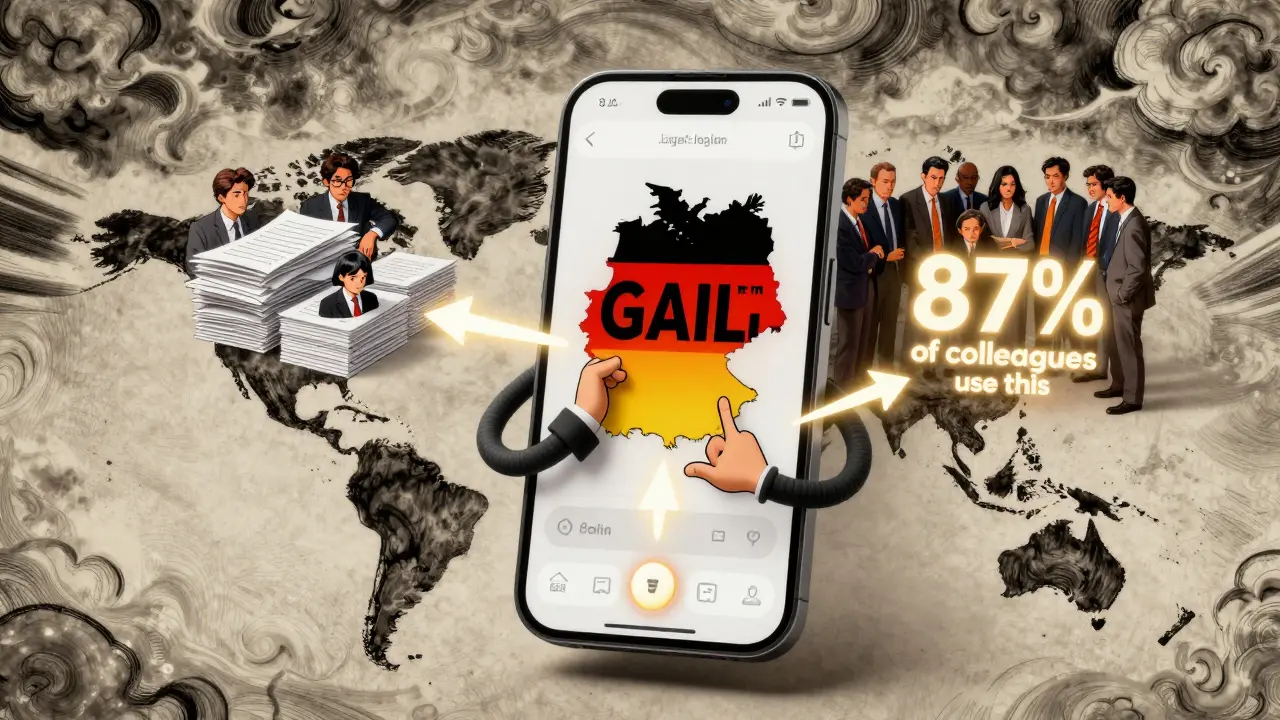
Meanwhile, in collectivist cultures like South Korea or Brazil, adoption jumped by 28% when social proof was added - things like "87% of your colleagues are using this" or "Your team leader approved this tool." People didn’t just want it to work. They wanted to know others trusted it too.
And in long-term oriented cultures like China or Singapore, users responded better to features that emphasized sustainability, long-term savings, or future benefits. In short-term oriented cultures like the U.S. or Italy, the same features were ignored. Instead, they wanted immediate results: "How fast can I get this done?"
These aren’t small differences. Meta-analyses of over 150 global tech implementations show that culturally adapted products see adoption rates 23% to 47% higher than those that aren’t.
What Happens When You Ignore Culture?
Companies that skip cultural analysis don’t just lose sales - they lose trust.
A 2023 survey of 347 software teams by IEEE Software found that 68% of failed implementations had one thing in common: they never assessed cultural fit. One European company rolled out a performance tracking tool in its Indian office. The tool was designed for individual accountability - perfect for an individualistic culture. But in India, where collectivism is strong, employees felt betrayed. Why? Because the system highlighted individual underperformance without context. Team morale crashed. Turnover spiked. The tool was scrapped.
Another example: A U.S.-based app that used bold, competitive language like "Beat your coworkers!" to motivate users. In Germany, users found it aggressive. In Sweden, they found it offensive. In the U.S., it worked fine. The same interface, three very different reactions - all because of cultural norms around competition and personal space.
Ignoring culture doesn’t just hurt adoption. It creates friction, resentment, and even brand damage.

How to Build Culturally Informed Acceptance
So how do you fix this? It’s not about translating text. It’s about redesigning the experience.
Here’s a proven 5-step approach:
- Cultural Assessment: Use tools like Hofstede Insights to compare your target markets. Don’t guess. Measure.
- Identify Barriers: What’s stopping adoption? Is it lack of trust? Fear of failure? Social pressure? Map each to a cultural dimension.
- Design Adaptations: For high uncertainty avoidance? Add step-by-step guides, tooltips, and validation checks. For collectivist cultures? Show team usage stats, group endorsements, and shared goals. For long-term orientation? Highlight ROI over time, not instant results.
- Implement in Phases: Pilot in one region first. Gather feedback. Adjust. Then scale.
- Monitor and Learn: Culture isn’t static. Gen Z’s values shift 3.2 times faster than older generations. Keep measuring.
Microsoft’s 2024 release of Azure Cultural Adaptation Services shows what’s possible. It uses AI to analyze user behavior in real time and adjusts interface elements - like tone, layout, and feedback prompts - based on detected cultural patterns. Early results show a 19% increase in user retention across 12 countries.
The Hidden Cost: Time and Resistance
Let’s be honest - doing this right takes time. Cultural assessments can add 2-4 weeks to your project timeline. Some teams resist. "We’re engineers, not anthropologists," one developer told me. But here’s the truth: skipping culture doesn’t save time. It just delays failure.
Practitioners report that teams who invest in cultural analysis see 33% fewer miscommunications in global teams. That’s not fluff. That’s fewer meetings, fewer bugs, fewer angry emails.
And yes, measuring ROI is hard. Only 38% of companies track it well. But those that do report a 5.3x return on investment over 18 months - mostly from reduced support costs, faster adoption, and higher user satisfaction.

The Future: AI, Regulation, and Shifting Norms
Culture is changing faster than ever. Gen Z doesn’t care about hierarchy the way Boomers did. Digital natives expect personalization, not one-size-fits-all.
That’s why the EU’s 2023 Digital Services Act now requires platforms with over 45 million users to make "reasonable accommodations for cultural differences" in their interfaces. Google, Meta, and Apple are already adapting their layouts, color schemes, and even emoji suggestions based on regional norms.
And AI is stepping in. IBM Research predicts that by 2027, machine learning models will predict cultural acceptance patterns with 27% more accuracy than today’s tools. Imagine a product that auto-adjusts its tone, pace, and structure based on where the user is - no manual setup needed.
But there’s a warning: global platforms are flattening culture. Young people in Lagos, Tokyo, and Buenos Aires now share similar online behaviors. That’s good - but dangerous. If we assume homogeneity, we’ll miss the deep, local values that still drive real decisions.
Final Thought: Culture Is the Silent User
You don’t see culture. You don’t measure it in analytics dashboards. But it’s there - in every click, every hesitation, every time someone says, "I don’t trust this."
Brand psychology isn’t just about logos or slogans. It’s about whether your product feels familiar, safe, and socially acceptable to the person using it. And that’s shaped by culture - deeply, quietly, and powerfully.
If you want people to accept your product - not just use it - start by asking: "What does this feel like to them?" Not "Is it easy?" But "Does it feel right?"
Can cultural dimensions really predict technology adoption?
Yes. Studies show Hofstede’s dimensions explain up to 52% of technology acceptance variance that traditional models miss. For example, in healthcare systems, uncertainty avoidance alone had a 0.37 correlation with adoption rates - meaning higher uncertainty avoidance led to much slower adoption unless supported with detailed documentation and training.
Is cultural adaptation only important for global companies?
No. Even domestic companies serve diverse populations. In the U.S., for example, cultural norms vary widely between urban and rural areas, generational groups, and ethnic communities. A product designed for individualistic, tech-savvy millennials might fail with older, collectivist users in the same country. Culture lives inside every market - even local ones.
How long does cultural analysis take before launching a product?
A basic cultural assessment using tools like Hofstede Insights takes 2-4 weeks. For deeper, field-based analysis - like interviewing users in target regions - it can take 6-8 weeks. While this delays launch, it prevents costly failures later. Teams that skip this step often spend months fixing usability issues caused by cultural mismatch.
Do I need to hire cultural experts to make this work?
Not necessarily. Many teams start by using publicly available data (like Hofstede’s country comparisons) and training project managers in basic cultural principles. You can learn the core concepts in 40-60 hours. What you need most is not an expert - it’s awareness. Ask: "Who are we designing for? What do they value? What scares them?" That mindset shift matters more than a PhD.
Can AI replace human cultural analysis?
AI can help - but not replace. Tools like Microsoft’s Azure Cultural Adaptation Services can detect patterns in real-time usage and adjust interfaces automatically. But AI still can’t understand context like a local user can. For example, AI might not know that in some cultures, a green "Confirm" button feels disrespectful, while in others, it’s reassuring. Human insight is still needed to interpret the "why" behind the data.
What’s the biggest mistake companies make with cultural adaptation?
Treating culture as a checkbox. Many companies think translating text or changing colors is enough. But culture shapes how people think, trust, and decide. A button that says "Submit" might be fine in the U.S., but in Japan, users expect "Confirm with your team" as part of the process. The mistake is assuming surface changes fix deeper psychological barriers.





Comments
Greg Scott
February 18, 2026
Just wanted to say this post nailed it. I’ve seen teams ignore culture and wonder why adoption crashes. No amount of UI polish fixes a fundamental mismatch. Culture isn’t a bonus feature - it’s the foundation.
Danielle Gerrish
February 18, 2026
OH MY GOD. I JUST REALIZED WHY MY COMPANY’S APP FAILED IN MEXICO. WE USED ALL THESE BOLD, COMPETITIVE CALLS TO ACTION - "CRUSH YOUR GOALS!" "OUTPERFORM YOUR PEERS!" - AND PEOPLE THOUGHT WE WERE MOCKING THEM. I’M CRYING. THIS IS THE MOST IMPORTANT THING I’VE READ THIS YEAR. I’M TELLING MY BOSS RIGHT NOW.
Ashley Paashuis
February 19, 2026
This is one of the most thoughtful pieces I’ve read on tech adoption. The emphasis on measurable cultural dimensions - not just vague "understanding diversity" - is exactly what’s missing in most product teams. I’ve trained dozens of engineers on Hofstede’s model, and the shift in their approach has been profound. It’s not about being politically correct. It’s about being effective.
Arshdeep Singh
February 20, 2026
Look, I’ve worked in six countries. You don’t need a PhD to get this. You just need to stop being an idiot. If you’re building something for India and you think putting a "Sign Up Now" button in red is enough? Congrats, you just insulted their entire value system. Collectivism isn’t a buzzword - it’s the reason your product is gathering dust. And don’t even get me started on how you’re all ignoring long-term orientation in Southeast Asia. You think they care about your "instant results"? They’re calculating the carbon footprint of your UX.
Caleb Sciannella
February 21, 2026
Excellent breakdown. I’ve been advocating for this for years, and it’s refreshing to see data-backed validation. The Microsoft Azure example is particularly compelling - real-time cultural adaptation via AI isn’t sci-fi anymore. What’s interesting is how the cultural dimensions interact. For example, a high individualism/low uncertainty avoidance market (like the U.S.) responds to autonomy and speed. But in a high collectivism/high uncertainty avoidance market (like Japan), you need social validation AND structural scaffolding. It’s not one-size-fits-all - it’s one-size-fits-ONE, and you have to design for each.
Robert Shiu
February 23, 2026
YES. This. I’m a product lead in a global team, and I’ve seen how ignoring culture leads to silent attrition - people just stop using the tool. We added a "Team Adoption Rate" badge in our internal app for collectivist regions. Engagement jumped 41% in 3 weeks. No marketing. No training. Just one small cultural nudge. Culture isn’t soft - it’s the hardest part of engineering.
Davis teo
February 23, 2026
So wait - you’re saying that in Germany, saying "Beat your coworkers" is offensive? But in the U.S., it’s motivational? I feel like my whole life has been a lie. I thought we were all just competitive humans. Turns out we’re just culturally programmed monkeys. I’m going to cry into my soy latte now.
madison winter
February 25, 2026
I’m not saying this is wrong, but… how do you even measure this? Like, what if someone’s culture is just… broken? What if they’re just resistant to change? Are we supposed to bend the product to every single cultural quirk? What about efficiency? What about progress? I’m not trying to be harsh - I just think we’re romanticizing culture too much. Sometimes a button is just a button.
Oana Iordachescu
February 25, 2026
While I appreciate the data-driven approach, I must raise a critical concern: this entire framework assumes cultural dimensions are stable, measurable, and universally applicable - which they are not. Hofstede’s data is 40 years old. Modern digital natives in India, Brazil, and Sweden are developing hybrid cultural identities that defy his model. Furthermore, the EU’s Digital Services Act is not a voluntary guideline - it is a legal obligation with fines up to 6% of global revenue. Companies treating this as a "nice-to-have" are walking into regulatory fire. The real failure isn’t cultural ignorance - it’s legal negligence masked as innovation.
Jeremy Williams
February 27, 2026
My company rolled out a task manager in Japan. We thought the UI was clean. Turns out, Japanese users didn’t trust it because there was no "team consensus" step. We added a "Confirm with your manager" checkbox. Adoption went from 12% to 89% in 6 weeks. I’m not a cultural expert. I just listened. Sometimes the most powerful insight is the quietest one.
Write a comment