When you're in pain, the quickest fix often feels like a pill-any pill. But for millions of people dealing with chronic or even acute pain, opioids are no longer the only-or even the best-option. The reality is, we now have powerful, safer ways to manage pain without the risk of addiction, respiratory failure, or dangerous side effects. This isn't theory. It's clinical practice, backed by the CDC, the FDA, and top research institutions. And it’s changing how doctors treat pain today.
Why Move Away from Opioids?
Opioids still get prescribed to about 1 in 5 U.S. adults with chronic pain. But the numbers don’t lie: 10.1 million people misused prescription opioids in 2021. Over 80,000 died from overdoses that year. Even when used as directed, opioids cause constipation in 40-95% of users, respiratory depression in up to 80%, and carry a 0.7% annual risk of developing opioid use disorder. That’s not just a side effect-it’s a public health crisis. The CDC’s 2022 Clinical Practice Guideline made it clear: for subacute and chronic pain, non-opioid and nonpharmacologic treatments should come first. Not as a last resort. Not as an add-on. As the first line of defense.What Is Multimodal Pain Management?
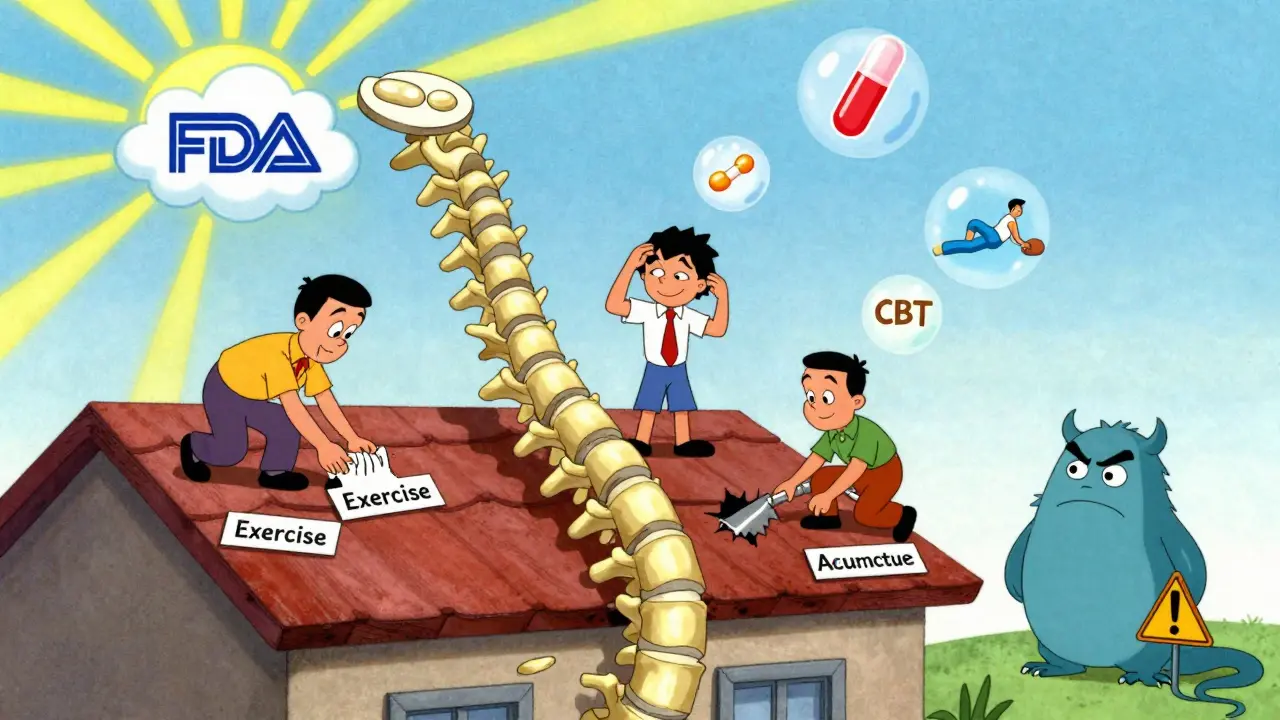
Multimodal pain management means using more than one method at the same time to target pain from different angles. Think of it like fixing a leaky roof-you don’t just patch one hole. You check the shingles, the flashing, the gutters. Pain works the same way. It travels through nerves, is amplified by inflammation, and can be worsened by stress, poor sleep, or movement patterns. A single drug won’t fix all that. This approach combines:- Nonpharmacologic methods (exercise, therapy, acupuncture)
- Nonopioid medications (NSAIDs, antidepressants, new targeted drugs)
- Regional techniques (nerve blocks, physical therapy)
Nonpharmacologic Strategies That Work
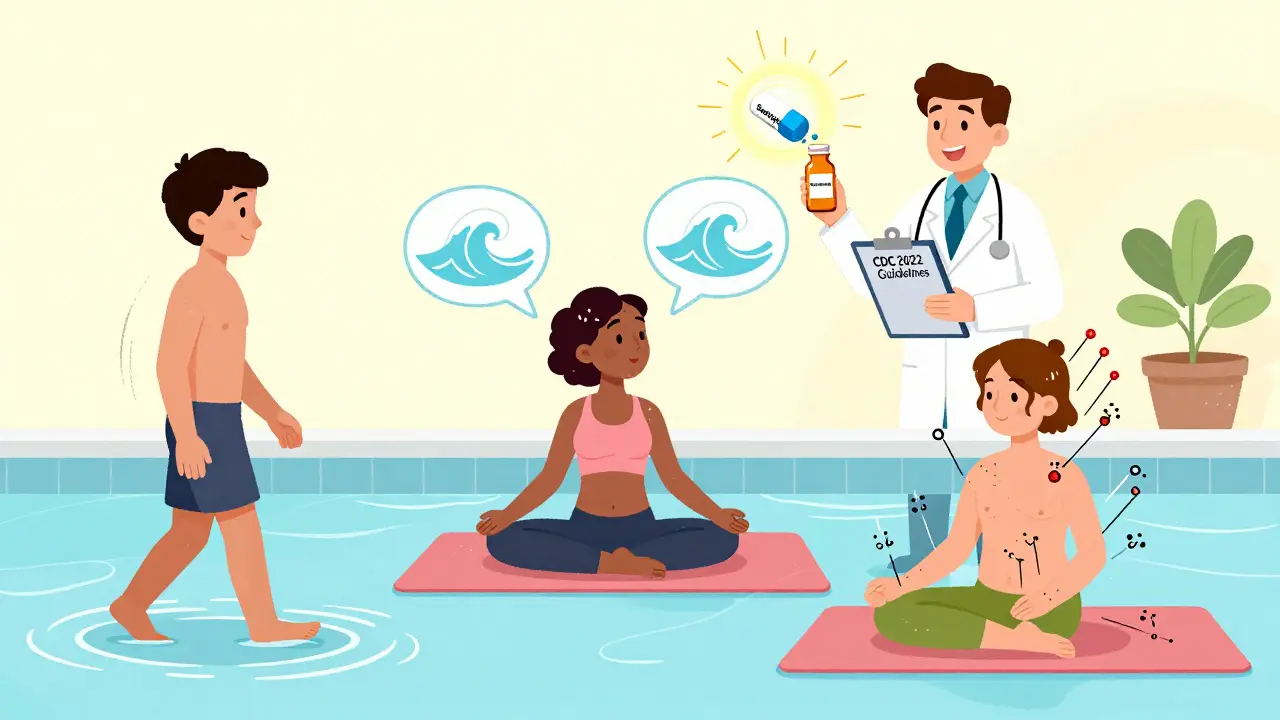
You don’t need a prescription for these. And they’re often cheaper than pills. For acute injuries like sprains or post-surgery pain, the basics still work: ice for 15-20 minutes every few hours during the first 72 hours, heat after that, elevation, and rest. But don’t stop there. Movement matters. Studies show that gentle, guided exercise started early reduces recovery time and prevents long-term pain. For chronic pain-like lower back pain or osteoarthritis-the evidence is even stronger:- Aerobic exercise: 30-45 minutes, 3-5 days a week. Walking, cycling, swimming. Low-impact, high reward.
- Aquatic therapy: Water reduces joint stress. Sessions at 32-35°C improve mobility and reduce pain in arthritis patients.
- Resistance training: Two to three times a week, using 60-80% of your one-rep max. Builds muscle to support joints and reduces pain signals.
- Yoga and tai chi: 60-90 minutes, 2-3 times a week. Improves flexibility, reduces stress, and lowers pain intensity by up to 40% in chronic pain patients.
- Cognitive Behavioral Therapy (CBT): 8-12 weekly sessions. Teaches your brain to reinterpret pain signals. Studies show 30-50% pain reduction in 60-70% of people with chronic low back pain.
- Mindfulness-based stress reduction: An 8-week program with weekly 2.5-hour sessions and a full-day retreat. Proven to reduce pain-related anxiety and improve quality of life.
- Acupuncture: 8-12 sessions over 4-8 weeks. Adverse events? Just 0.14 per 10,000 treatments. That’s safer than most OTC painkillers.
- Spinal manipulation: Often used for back and neck pain. Six to twelve sessions over 3-6 weeks can be as effective as medication.
Nonopioid Medications: Beyond Tylenol and Ibuprofen
Yes, acetaminophen and NSAIDs like ibuprofen still have a place. But they’re just the beginning. For acute pain:- Ibuprofen: 400-800 mg every 6-8 hours. Reduces inflammation and pain.
- Acetaminophen: 650-1000 mg every 6-8 hours. Good for mild to moderate pain. Don’t exceed 4,000 mg daily-liver damage is real.
- Triptans: For migraines. Can bring pain freedom in 40-70% of patients within two hours.
- Dihydroergotamine: Used for severe migraines and cluster headaches.
- Topical NSAIDs: Diclofenac 1% gel applied four times daily. Targets pain right where it is-with almost no systemic side effects. Reduces osteoarthritis pain by 20-40%.
- Naproxen: 375-500 mg twice daily. Longer-lasting than ibuprofen. Good for arthritis and persistent inflammation.
- Amitriptyline: A tricyclic antidepressant, taken at night at doses of 10-100 mg. Not for depression. For pain. It blocks pain signals in the spinal cord. Proven effective for nerve pain, fibromyalgia, and chronic headaches.
What’s Coming Next? The Future of Pain Relief
Research is moving fast. At UT Health San Antonio, scientists developed CP612, a compound that reduced nerve pain from chemotherapy and eased opioid withdrawal symptoms-without addiction potential. It’s not yet on the market, but human trials are expected soon. Duke University’s team, funded by the NIH’s $1.9 billion HEAL Initiative, is working on an ENT1 inhibitor. In animal models, repeated doses actually get more effective over time-opposite of opioids, which lose power and require higher doses. They’ve filed a patent and plan to launch a dedicated center for non-opioid pain research. Human trials could begin in 2-3 years. The FDA’s new draft guidance is pushing for faster approval of these drugs. They’re focusing on trial designs that measure real outcomes: reducing opioid use, improving function, not just pain scores. By 2028, experts predict non-opioid approaches will be the first-line treatment for 65% of chronic pain cases-up from 45% in 2022.What Doesn’t Work as Well?
No method is perfect. NSAIDs can cause stomach bleeding (1-2% risk with long-term use). Acetaminophen can damage the liver if you take too much. And nonpharmacologic treatments? They require effort. Only 40-60% of patients stick with structured exercise programs long-term. For sudden, severe trauma-like a broken bone or major surgery-non-opioid options alone may not be enough. But even here, multimodal plans reduce opioid needs by 50% or more. Regional nerve blocks, ketamine infusions, and high-dose NSAIDs combined with physical therapy are now standard in many hospitals.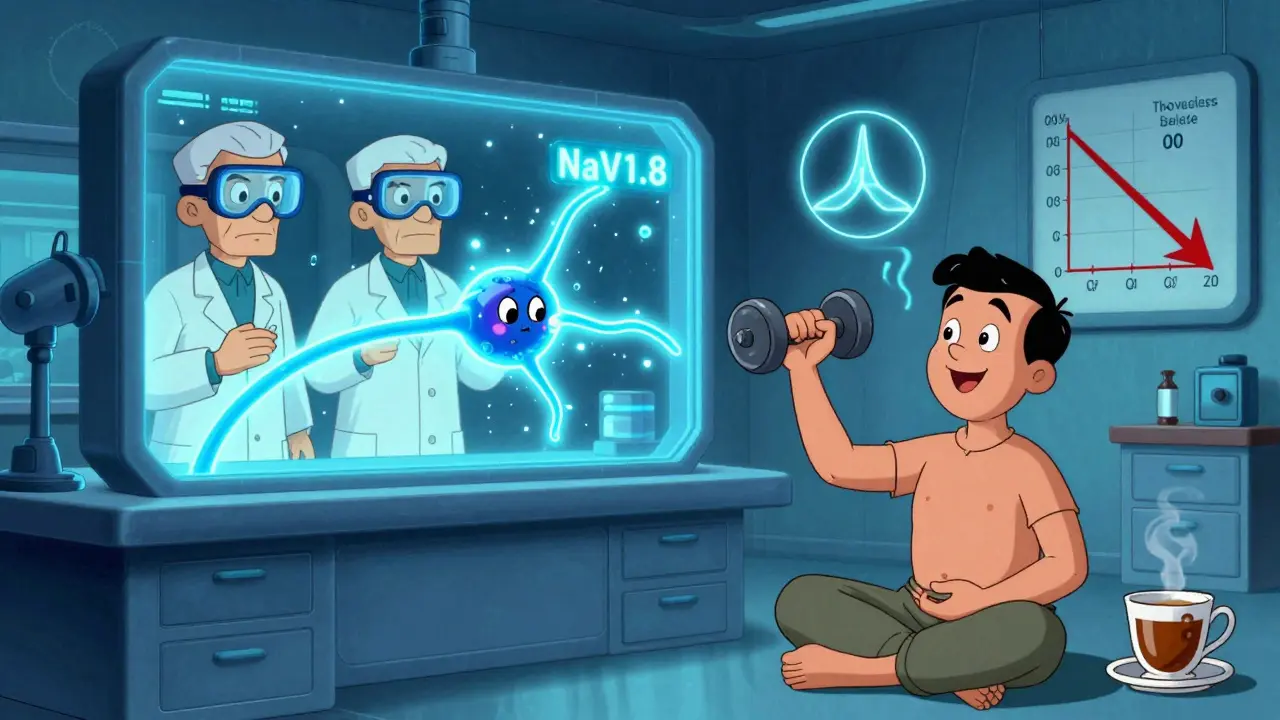
Who Benefits Most?
These strategies shine in specific conditions:- Chronic low back pain: Exercise + CBT = 30-50% pain reduction in most patients.
- Osteoarthritis: Topical diclofenac + weight management + aquatic therapy = better function than opioids.
- Migraine: Triptans + behavioral therapy = fewer attacks, less disability.
- Neuropathic pain: Amitriptyline + acupuncture + mindfulness = better outcomes than gabapentin or opioids.
How to Get Started
If you’re managing pain and want to avoid opioids:- Ask your doctor about non-opioid first-line options. Cite the CDC’s 2022 guidelines.
- Request a referral to physical therapy or a pain psychologist.
- Try a low-cost group class-yoga, tai chi, or water aerobics-before committing to expensive one-on-one sessions.
- If you’re on opioids, don’t stop abruptly. Talk to your provider about tapering while adding non-opioid therapies.
- Track your pain daily. Note what helps and what doesn’t. This helps your provider tailor your plan.
Are non-opioid pain treatments really as effective as opioids?
For many types of pain-especially chronic low back pain, osteoarthritis, and migraines-yes. Studies show non-opioid methods like exercise, CBT, and topical NSAIDs reduce pain by 30-50% in most patients. For acute pain, the new drug suzetrigine (Journavx) matches opioid effectiveness without the risks. Opioids may offer faster relief in severe trauma, but they don’t improve long-term function or reduce disability like multimodal approaches do.
Is acupuncture safe for chronic pain?
Yes. Acupuncture has an extremely low risk profile-only 0.14 adverse events per 10,000 treatments, according to CDC data. It’s commonly used for back pain, osteoarthritis, and headaches. Side effects, if any, are mild: minor bruising or soreness at needle sites. It’s not a placebo; brain imaging shows it changes how pain signals are processed.
Can I use NSAIDs long-term for arthritis pain?
Topical NSAIDs like diclofenac gel are safe for long-term use and have minimal side effects. Oral NSAIDs like naproxen or ibuprofen can increase risk of stomach bleeding or kidney issues with prolonged use. If you need them daily, talk to your doctor about adding a stomach protector (like a PPI) and getting regular blood tests. Always use the lowest effective dose.
What’s the difference between CBT and mindfulness for pain?
CBT focuses on changing how you think about pain-challenging catastrophic thoughts, setting activity goals, reducing fear of movement. Mindfulness teaches you to observe pain without reacting to it-reducing emotional distress and stress hormones that worsen pain. Both work well, and many programs combine them. CBT has stronger evidence for functional improvement; mindfulness is better for emotional regulation.
Is suzetrigine (Journavx) available everywhere?
Journavx is FDA-approved and available by prescription in the U.S. as of late 2023. It’s not yet widely stocked in all pharmacies, especially in rural areas. Many pain clinics and hospitals have started using it for post-surgical and trauma pain. Ask your doctor if it’s appropriate for your condition-it’s not meant for every type of pain, but it’s a major step forward for acute pain management.
Why aren’t more doctors using these alternatives?
Many doctors were trained to prescribe opioids as the default. Changing habits takes time. But adoption is growing fast: 73% of pain specialists now use multimodal non-opioid approaches as first-line treatment, up from 42% in 2018. Insurance coverage for physical therapy and CBT is improving, and new guidelines from the CDC and FDA are pushing the shift. The biggest barrier is access-finding a qualified therapist or specialist can be hard in some areas.
Can I combine non-opioid treatments with other medications?
Yes, and it’s often recommended. For example, combining amitriptyline with acupuncture and daily walking is more effective than any single treatment. New drugs like suzetrigine are designed to work alongside other non-opioid medications without dangerous interactions. Always tell your provider about everything you’re taking-even supplements-to avoid risks.


Comments
Lu Jelonek
December 23, 2025
I’ve been using aquatic therapy for my knee osteoarthritis for six months now. Water temperature around 33°C makes a huge difference-less stiffness, more mobility. No pills, no side effects. Just me, the pool, and slowly getting my life back.
My physical therapist said it’s not just about strength-it’s about retraining the nervous system to stop screaming at me every time I move. It’s weird, but it works.
Usha Sundar
December 25, 2025
CBT saved me. That’s it.
Dan Gaytan
December 27, 2025
This is the kind of post that gives me hope. I’ve been stuck on oxycodone for three years after a back injury, and my doctor just suggested trying suzetrigine + physical therapy. I’m scared to stop the pills, but I’m also tired of feeling like a zombie.
Thank you for laying this out so clearly. I’m booking a pain specialist this week.
siddharth tiwari
December 28, 2025
they told us opioids were safe too back in the 90s
now they want us to believe this new drug is magic
big pharma always has a new scam
theyll replace one addiction with another
wait till you see the side effects of suzetrigine in 5 years
they dont care about you
they care about profit
bharath vinay
December 30, 2025
you think this is new? acupuncture was used in ancient china 3000 years ago
they called it witchcraft back then
now its FDA approved
the system never changes
they just rebrand old stuff as breakthroughs
and charge you $150 a session
the real solution? stop working so hard and sleep more
but that doesnt sell pills
niharika hardikar
December 30, 2025
While the multimodal paradigm represents a significant paradigmatic shift in pain management protocols, it is imperative to acknowledge the epistemological limitations of self-reported pain metrics in clinical trials.
The reliance on visual analog scales and subjective functional assessments introduces substantial confounding variables, particularly in populations with comorbid anxiety disorders or somatization tendencies.
Furthermore, the generalizability of RCTs conducted in tertiary care centers to primary care settings remains statistically underpowered.
While the pharmacokinetic profile of suzetrigine is promising, long-term neuroadaptive changes in NaV1.8 expression have not been longitudinally evaluated.
Until peer-reviewed, multicenter, real-world evidence studies are published, caution is warranted.
Gray Dedoiko
December 31, 2025
Just wanted to say I’ve been doing yoga twice a week for my chronic back pain and honestly? It’s the first thing in years that actually helped me sleep through the night.
Not because it’s magic, but because it taught me to stop fighting the pain. Just… let it be there without panicking.
Also, group classes are way cheaper than therapy. And way less awkward than talking to a shrink.
Jillian Angus
December 31, 2025
my mom tried acupuncture and said it felt like needles in her back
she still takes ibuprofen every day
but she walks every morning now
so i guess that counts
Andy Grace
January 1, 2026
My physio said the same thing about movement being medicine. I used to think rest was the answer. Turns out, staying still made everything worse.
Started with 10-minute walks. Now I’m doing light weights twice a week. No pills. No drama.
Just slow progress. That’s all I needed.
CHETAN MANDLECHA
January 2, 2026
Look, I used to be skeptical too. But after my knee surgery, I did the whole package: topical diclofenac, ice, walking 20 mins a day, and CBT sessions. No opioids. Zero dependence.
It took time. It was boring. But I didn’t end up addicted.
And I didn’t have to choose between pain and being a zombie.
So yeah. This stuff works.
And if your doctor doesn’t know about it? Find a new one.
Write a comment