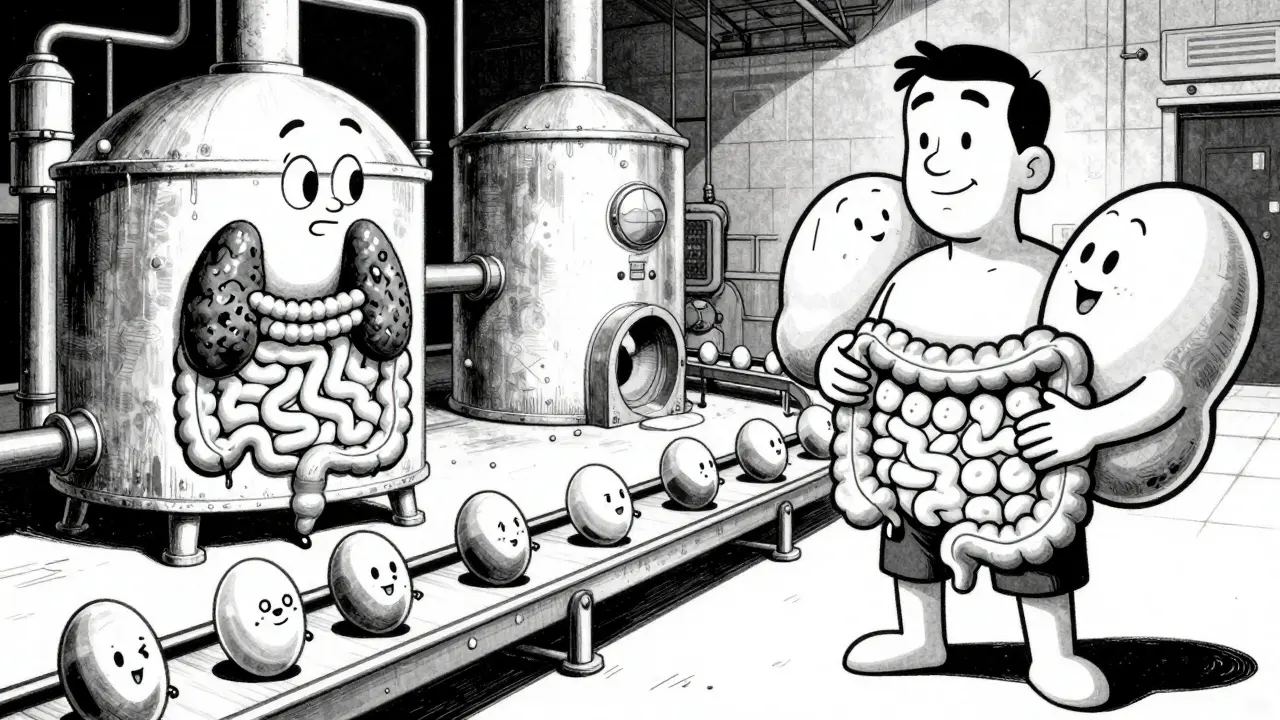
If you rely on thyroid hormone replacement, you've probably heard that what you eat affects how your medicine works. One of the most debated topics in patient communities is the relationship between levothyroxine is a synthetic form of the thyroid hormone T4 used to treat hypothyroidism and soy. The short answer? You don't have to give up your tofu or soy milk, but you do need to be strategic about when you consume them. Timing is the difference between your medication working as intended and your TSH levels spiking unexpectedly.
Why Soy Interferes With Your Medication
The issue isn't that soy "destroys" your thyroid or makes hypothyroidism worse. Instead, it's a matter of absorption in the gut. Soy isoflavones (specifically genistein and daidzein) can bind to thyroid hormones in the digestive tract. This process, essentially a form of adsorption on the surface of soy proteins, prevents the medicine from entering your bloodstream.
Clinical data shows that this interaction can reduce the bioavailability of your dose by anywhere from 9% to 30%. For some, this might be a negligible shift. For others, it can be the difference between feeling energetic and feeling like you're back in a deep fog. In some documented cases, patients have required dose increases-sometimes up to 200 µg-simply because they were consuming soy protein shakes at the same time as their medication.
Comparing Soy to Other Common Interferents
Soy isn't the only thing that messes with your absorption. To put it in perspective, it's more impactful than your morning coffee, but generally less severe than calcium or iron supplements. While a cup of coffee might reduce absorption by about 20%, calcium carbonate can slash it by 25-36%. This is why endocrinologists often group soy with "high interference" foods, though the required waiting period is slightly shorter than what's needed for heavy-duty minerals.
| Interfering Substance | Estimated Absorption Reduction | Recommended Separation Gap |
|---|---|---|
| Calcium Supplements | 25-36% | 4 Hours |
| Iron Supplements | Significant | 4 Hours |
| Soy Products | 9-30% | 2-4 Hours |
| Coffee | ~20% | 1 Hour |
The Golden Rules for Timing Your Dose
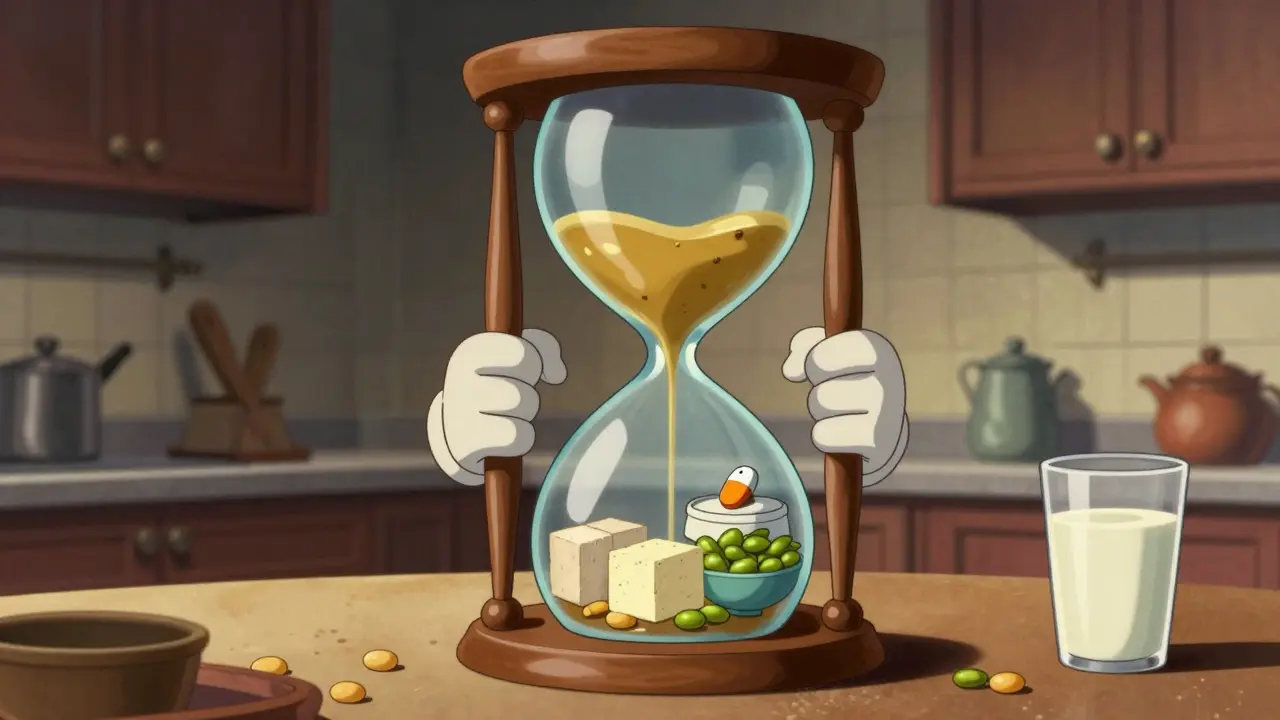
The goal is to create a "clear window" for your medication to be absorbed without competition. Since Hypothyroidism requires a very stable level of T4 in the blood, consistency is more important than perfection. If you eat soy every day at the same time, your doctor can adjust your dose. The danger comes from inconsistent soy intake, which causes your TSH levels to swing wildly.
Here is the best-practice protocol for daily management:
- The Empty Stomach Standard: Always take your medication with water only. Wait at least 60 minutes before eating breakfast or drinking anything other than water.
- The Soy Gap: For most adults, a 2-hour window between taking your pill and eating soy products (like tofu, edamame, or soy milk) is sufficient to prevent significant interference. However, if you are consuming high-protein soy concentrates or supplements, aim for 3 to 4 hours.
- The Bedtime Alternative: If you love a soy-heavy breakfast, consider taking your medication at bedtime. Just ensure you've waited about 2 hours after your last meal of the day to avoid interactions with dinner.

Does the Type of Soy Matter?
Not all soy is created equal when it comes to your thyroid. Whole soy foods, such as edamame and tofu, generally show a stronger interference pattern than isolated isoflavone supplements. This is likely due to the complex protein structures in whole foods that provide more surfaces for the medication to bind to.
It's also worth noting that the impact varies by person. A meta-analysis of over 3,600 participants suggested that people with normal thyroid function (euthyroid) don't see much change in their TSH levels from soy. But for those already treating hypothyroidism, the effect is much more pronounced, especially for those whose TSH is already borderline high (above 4.5 mIU/L).
Common Pitfalls and How to Fix Them
Many people fall into the "health shake trap." You might start your day with a healthy soy-based protein shake immediately after taking your pill. This is the worst-case scenario for absorption. Because protein shakes are concentrated, they act like a sponge, soaking up the medication before it can reach your small intestine.
If you've noticed your TSH creeping up after changing your diet to be more plant-based, don't panic and don't immediately ask for a higher dose. First, audit your timing. Are you drinking soy milk with your morning toast? Are you eating a tofu salad for lunch shortly after a late dose? Shifting your soy intake by just a few hours often stabilizes TSH levels without needing more medication.
Do I have to stop eating soy entirely if I have hypothyroidism?
No, you do not need to eliminate soy. Medical consensus from institutions like the Mayo Clinic indicates that soy doesn't cause thyroid disease or make it worse; it simply interferes with the absorption of the replacement hormone. As long as you separate the timing of your medication and soy consumption by 2 to 4 hours, you can safely include soy in your diet.
How long should I actually wait after taking levothyroxine before eating soy?
For most adults, a 2-hour gap is the minimum recommended window. However, some clinical guidelines suggest 3-4 hours for maximum safety, especially when consuming concentrated soy protein or if you have a history of unstable TSH levels. The most important factor is consistency-pick a window and stick to it every day.
Can soy isoflavone supplements affect my thyroid differently than tofu?
Yes. Whole soy foods like tofu and edamame tend to have a stronger interference effect on medication absorption than isolated isoflavone supplements. This is because the protein matrix in whole foods is more effective at binding the medication in the gut.
What happens if I accidentally take my medication and eat soy at the same time?
A single occurrence won't cause a medical emergency, but it will likely reduce the amount of hormone your body absorbs from that specific dose. If this becomes a daily habit, you will see a gradual rise in your TSH levels over several weeks or months, which may lead to symptoms of hypothyroidism like fatigue and weight gain.
Is it better to take thyroid medication in the morning or at night regarding soy?
Neither is inherently "better," but it depends on your lifestyle. If you eat soy-heavy breakfasts, taking your medication at bedtime (at least 2 hours after your last meal) is a great strategy. If you prefer morning dosing, just ensure you wait 2-4 hours before having soy products.




Comments
Sam Hayes
April 6, 2026
been dealing with this for years and the consistency part is really the key
if you just stick to one routine your doctor can actually calibrate your dose properly
Joseph Rutakangwa
April 6, 2026
just be consistent with your timing
Will Baker
April 7, 2026
oh wow imagine thinking a little tofu is going to ruin your life
totally fascinating how people obsess over a 9% drop in absorption while probably eating processed garbage the rest of the day
Mark Zhang
April 8, 2026
it's definitely a bit of a struggle to manage the morning routine especially with kids or work
but finding that window really does make a difference in how you feel throughout the day
simran kaur
April 8, 2026
funny how they only mention soy but never the additives in these synthetic hormones
the pharmaceutical industry loves to push the blame onto dietary choices so we keep buying the higher doses they prescribe
it is all a cycle to keep us dependent on their specific chemical formulations and avoiding natural alternatives that actually work without needing a four hour waiting period
Jenna Carpenter
April 8, 2026
your body is just tryin to tell you that soy isnt for u
true wellness comes from alignin with nature not timing pills around tofu
Brian Shiroma
April 10, 2026
right because nothing says "healthy lifestyle" like waking up at 5am just to swallow a pill and stare at the wall for an hour before you can have a piece of toast
absolutely peak efficiency
Hudson Nascimento Santos
April 12, 2026
The duality of the human condition is present here; we seek a biological equilibrium through synthetic means, yet we are cautioned against the very plants that might offer alternative sustenance.
It makes one wonder if the rigidity of the schedule is more psychological than physiological, though the chemistry of adsorption is hard to argue against.
Lawrence Rimmer
April 12, 2026
This whole approach is just a band-aid for a systemic failure of modern nutrition
we've reduced health to a series of timed intervals and checklists instead of actually addressing why the thyroid fails in the first place
sophia alex
April 13, 2026
Imagine not having the discipline to wait two hours for a meal 🙄
Honestly some of you people act like it's a tragedy to avoid soy milk for a few hours in the morning. Get it together! 🇺🇸
Dipankar Das
April 14, 2026
I strongly urge everyone to maintain the utmost discipline regarding their medication schedules!
It is imperative that you do not allow dietary convenience to compromise your health outcomes!
Strict adherence to the recommended four-hour gap will ensure the highest efficacy of your treatment!
Dee McDonald
April 14, 2026
Let's get a thread going on the best soy-free breakfast alternatives that actually taste good!
I've been using almond milk and it's a total game changer for the morning rush
Who else has tried switching their protein sources to avoid the TSH spike
Vicki Marinker
April 16, 2026
The prose in this post is marginally acceptable, but the premise is tedious.
One does not simply "audit their timing" as if they were a corporate accountant managing a ledger of legumes.
Hope Azzaratta-Rubyhawk
April 17, 2026
It is absolutely vital that we empower ourselves with this knowledge to take control of our health!
Consistency is the only path to stability and we must demand better timing habits from ourselves every single day!
Write a comment