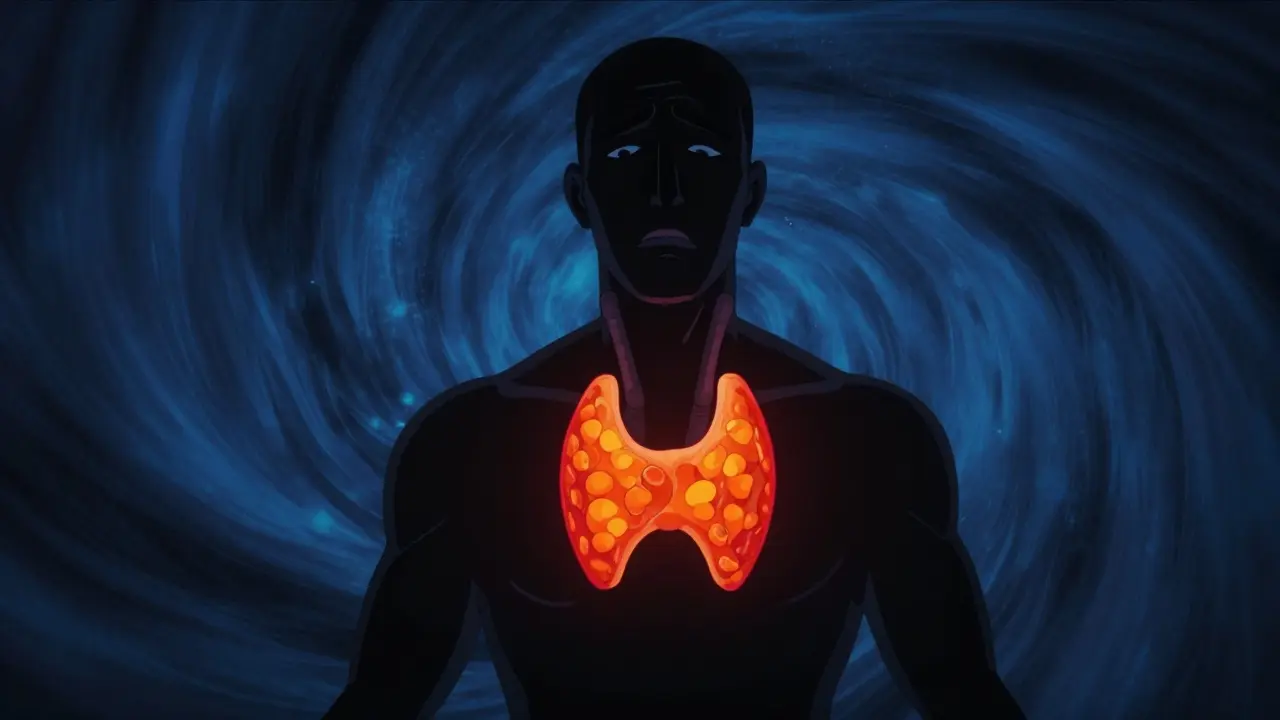
Imagine finding a lump in your neck. It’s small, maybe barely noticeable, but it triggers a cascade of worry. Is it serious? Will you need major surgery? The answer depends on what that lump actually is. For many people, a diagnosis of thyroid cancer is a malignant growth originating in the butterfly-shaped endocrine gland at the base of the neck sounds terrifying. But here is the surprising truth: for most patients, this is one of the most treatable forms of cancer. Survival rates for common types exceed 98% over ten years. However, navigating the maze of treatment options-from simple surgery to complex radiation-can feel overwhelming. This guide breaks down exactly what you are facing, why doctors choose specific treatments, and what recovery really looks like.
Understanding the Four Main Types of Thyroid Cancer
Not all thyroid cancers behave the same way. In fact, they differ so much that their treatments are almost entirely separate. Doctors classify them based on the type of cell where the cancer started. Knowing which type you have is the single most important factor in predicting your outcome and planning your care.
The vast majority of cases fall into two categories: papillary and follicular. These are called "differentiated" thyroid cancers because the cells still look somewhat like normal thyroid tissue under a microscope. They tend to grow slowly and respond well to standard treatments. Then there are the rarer, more aggressive forms: medullary and anaplastic. Understanding these distinctions helps explain why one person might just need a small surgery while another faces a multimodal battle involving chemotherapy and radiation.
| Type | Prevalence | Growth Rate | Treatment Response |
|---|---|---|---|
| Papillary (PTC) | 70-80% | Slow | Excellent; highly responsive to RAI |
| Follicular (FTC) | 10-15% | Moderate | Good; may spread to blood/bone |
| Medullary (MTC) | 3-5% | Moderate to Fast | Poor response to RAI; targeted drugs needed |
| Anaplastic (ATC) | <2% | Very Rapid | Resistant to standard therapies; aggressive care required |
Papillary thyroid carcinoma is the most common form, accounting for up to 80% of diagnoses. It often spreads to lymph nodes in the neck but rarely moves elsewhere in the body. Because it grows slowly, some very small tumors (microcarcinomas under 1 cm) can even be monitored without immediate surgery, a practice known as active surveillance. On the other end of the spectrum, Anaplastic thyroid carcinoma is an extremely rare and aggressive cancer that requires immediate, intensive multimodal therapy. It does not respond to radioactive iodine, and survival drops significantly with every week of delay. This stark contrast highlights why accurate diagnosis is non-negotiable.
Thyroidectomy: The Surgical Foundation
Surgery is the first line of defense for almost all thyroid cancers. The procedure, called a thyroidectomy is the surgical removal of part or all of the thyroid gland, has been performed since the late 19th century, but modern techniques have drastically reduced risks. The goal isn’t just to remove the tumor; it’s to clear any remaining thyroid tissue that could harbor cancer cells, making subsequent treatments like radioactive iodine more effective.
You typically face three surgical choices:
- Lobectomy: Removal of only one half (lobe) of the thyroid. This is often sufficient for small, low-risk papillary cancers confined to one side. Recovery is faster, and you may keep enough thyroid function to avoid lifelong medication, though many still require it.
- Total Thyroidectomy: Removal of the entire gland. This is the standard for larger tumors, cancers spreading to both lobes, or when radioactive iodine therapy is planned. It ensures no thyroid tissue remains to produce TSH (thyroid-stimulating hormone), which can stimulate cancer growth.
- Completion Thyroidectomy: If a lobectomy reveals unexpected cancer features during pathology review, surgeons may return to remove the remaining lobe later.
Modern thyroidectomies prioritize preserving critical structures. Your surgeon will carefully protect the recurrent laryngeal nerves, which control your voice, and the parathyroid glands, which regulate calcium levels. Advanced nerve monitoring devices are now routine in many centers, reducing injury rates from over 12% to under 5%. While minimally invasive robotic approaches exist, traditional open surgery remains the gold standard due to better visibility and lower complication rates. Most patients go home the same day after a lobectomy or within 24 hours after a total thyroidectomy.

Radioactive Iodine Therapy: Targeting Hidden Cells
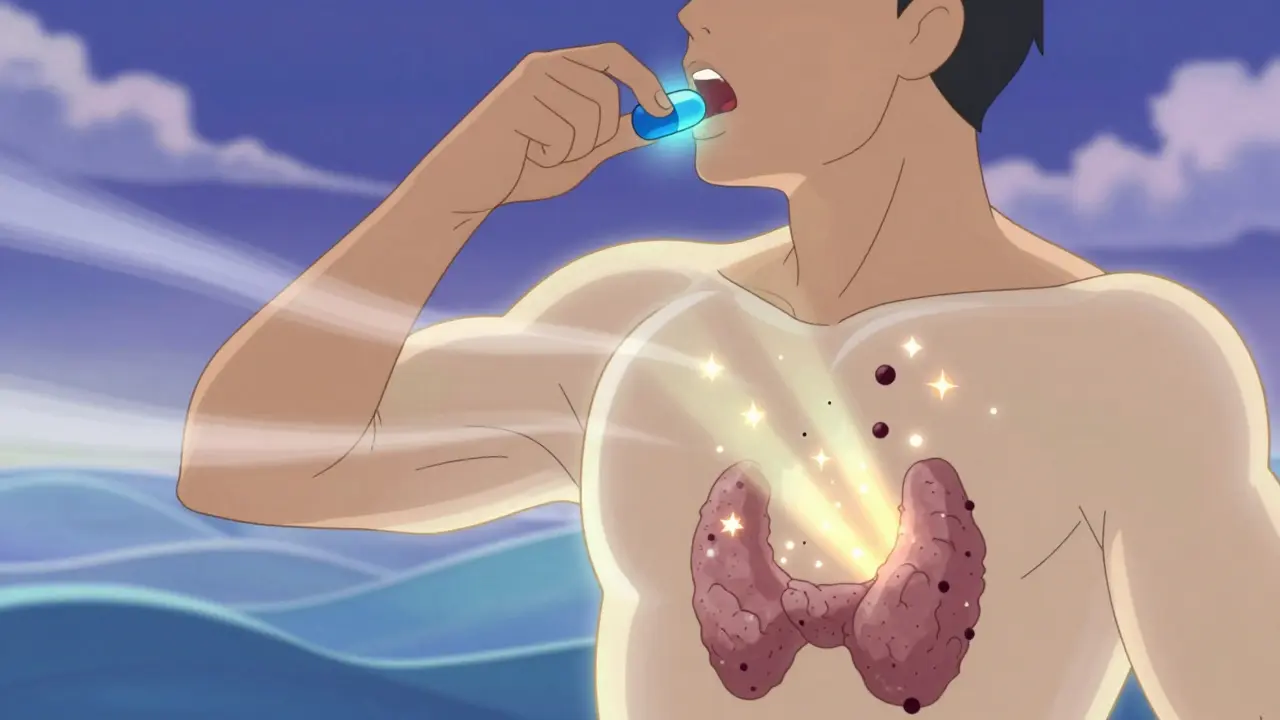
After surgery, many patients with differentiated thyroid cancer undergo radioactive iodine therapy (RAI) uses Iodine-131 isotopes to destroy residual thyroid tissue and microscopic cancer cells. Developed in the 1940s, this treatment exploits a unique biological trait: thyroid cells are the only cells in the body that actively absorb iodine. By swallowing a capsule or liquid containing I-131, you deliver radiation directly to any leftover thyroid tissue or metastatic cells, sparing surrounding organs.
This process is not instantaneous. Preparation takes 2-4 weeks. You must raise your TSH levels to stimulate cancer cells to absorb the iodine. This happens either by stopping thyroid hormone replacement (causing temporary hypothyroid symptoms like fatigue and cold intolerance) or by injecting recombinant human TSH (Thyrogen®), which avoids those symptoms but adds cost. Once prepared, you take the dose. The I-131 has a half-life of 8 days, meaning its radioactivity halves every eight days. During this period, you’ll follow strict safety precautions to limit radiation exposure to others, especially children and pregnant women.
Recent guidelines have shifted toward de-escalation. For low-risk patients, studies show that lower doses (30 mCi) work just as well as higher ones (100 mCi) for ablating remnant tissue, significantly reducing side effects like dry mouth or salivary gland inflammation. However, RAI is useless for medullary and anaplastic cancers because those cells do not absorb iodine. In those cases, external beam radiation or targeted drug therapies become necessary alternatives.
Life After Treatment: Management and Monitoring
Surviving thyroid cancer is often just the beginning. Because the thyroid produces hormones essential for metabolism, energy, and mood, removing it means you must replace those hormones for life. Levothyroxine is the standard medication. But getting the dose right is tricky. For cancer survivors, doctors often aim for a suppressed TSH level (lower than normal) to prevent cancer recurrence, rather than just maintaining normal thyroid function.
Monitoring involves regular blood tests and imaging. Thyroglobulin (Tg) is a protein produced only by thyroid cells. If your thyroid is removed, Tg should be undetectable. Rising levels signal potential recurrence. Neck ultrasounds and occasionally whole-body scans help track any changes. Many patients report persistent issues despite proper medication. Surveys indicate nearly 70% experience lingering hypothyroid symptoms, with "brain fog" being a top complaint. This underscores the importance of working closely with an endocrinologist to fine-tune your dosage.
Calcium management is another critical aspect, particularly after total thyroidectomy. Damage to the parathyroid glands can cause temporary or permanent hypocalcemia (low calcium). Symptoms include tingling in fingers or lips, muscle cramps, and anxiety. Most patients recover parathyroid function within weeks, but some require long-term calcium and vitamin D supplements. Regular blood tests monitor calcium levels to ensure they stay within the safe range of 8.5-10.2 mg/dL.
Navigating Costs and Emotional Impact
The financial burden of thyroid cancer treatment varies widely. In the United States, a total thyroidectomy can cost between $15,000 and $28,500, while each RAI treatment runs $1,200 to $3,500, excluding hospital fees. Insurance coverage differs significantly, so understanding your plan’s details early is crucial. Beyond finances, the emotional toll is real. Diagnosis brings fear, and the prolonged treatment timeline-surgery, recovery, RAI prep, therapy, and monitoring-can lead to burnout. Support groups, both online and local, provide invaluable peer connection. Sharing experiences about diet restrictions during RAI prep or coping with voice changes reduces isolation and builds resilience.
Despite the challenges, the outlook remains hopeful. Advances in targeted therapies, such as selpercatinib for RET-mutant medullary cancer and dabrafenib/trametinib for BRAF-mutant anaplastic cancer, offer new hope for previously untreatable cases. Research into redifferentiation strategies aims to make resistant cancers sensitive to RAI again. As detection improves and treatments refine, thyroid cancer continues to shift from a feared diagnosis to a manageable chronic condition for the vast majority of patients.
Is thyroid cancer always fatal?
No. Most thyroid cancers, particularly papillary and follicular types, have excellent survival rates. The 10-year survival rate for papillary thyroid cancer in patients under 45 exceeds 98%. Even advanced stages often respond well to treatment. Anaplastic thyroid cancer is more dangerous, but it represents less than 2% of cases.
Do I need radioactive iodine if I had a lobectomy?
Usually not. Radioactive iodine is primarily used after a total thyroidectomy to destroy any remaining thyroid tissue. If you had a lobectomy for a small, low-risk tumor, your remaining thyroid lobe likely functions normally, and RAI would damage healthy tissue unnecessarily. Your doctor will decide based on tumor size, spread, and risk factors.
How long does recovery from thyroidectomy take?
Most patients feel ready to return to light activities within 1-2 weeks. Full recovery, including resolution of soreness and energy normalization, typically takes 3-4 weeks. Heavy lifting is restricted for about 3 weeks to allow internal healing. Voice changes or hoarseness usually improve within days to weeks, though permanent issues are rare.
Can thyroid cancer come back after treatment?
Yes, recurrence is possible, especially in the neck lymph nodes. This is why long-term monitoring with thyroglobulin blood tests and neck ultrasounds is essential. However, even recurrences are often treatable with additional surgery, radioactive iodine, or targeted therapies. Early detection through regular check-ups leads to successful management.
What causes thyroid cancer?
The exact cause is often unknown, but risk factors include prior radiation exposure to the head or neck, family history of thyroid cancer or genetic syndromes (like MEN2 for medullary cancer), and certain genetic mutations (such as BRAF or RET). Age and gender also play roles, with women being three times more likely to develop it than men.