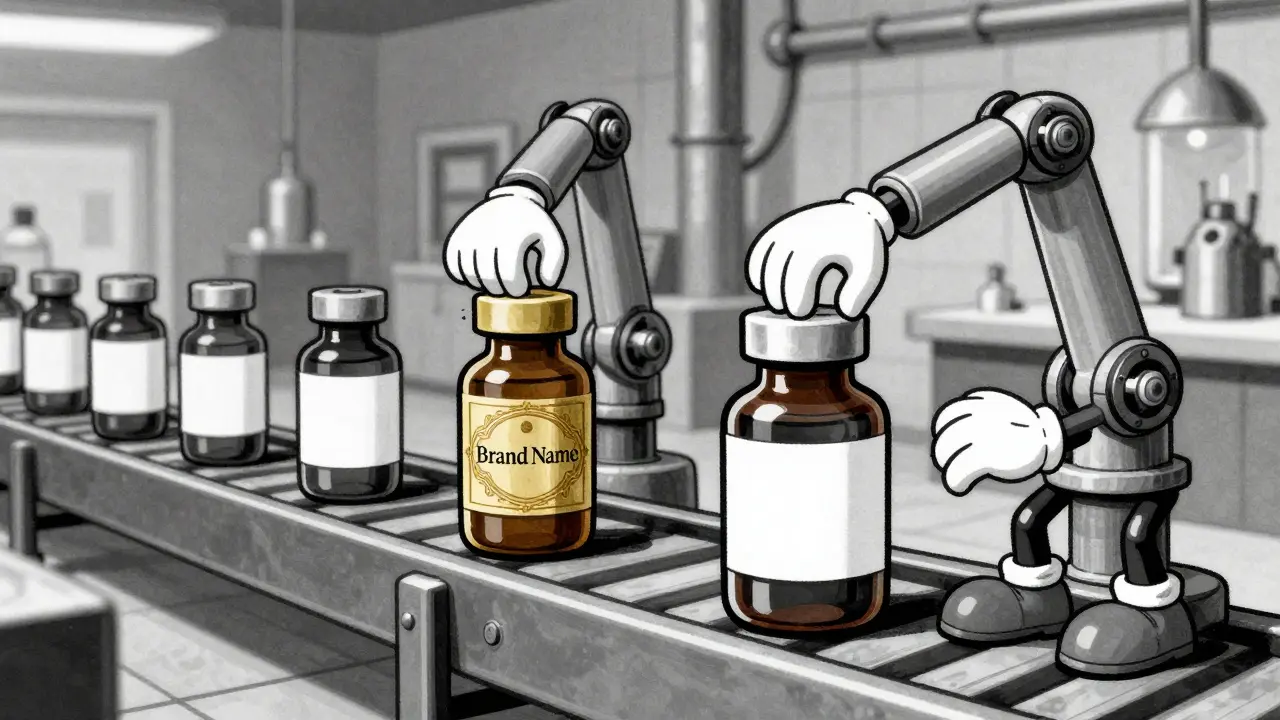
Ever wonder why your pharmacist might offer you a version of a medication that looks exactly like the brand name but costs significantly less, yet isn't labeled as a "traditional" generic? You've likely encountered Authorized Generics is a pharmaceutical product that is identical to the brand-name drug in dosage, safety, and quality, but is marketed under a different name with the brand company's explicit permission. This isn't just a random discount; it's a calculated move in a high-stakes game of pharmaceutical chess.
The secret behind the price drop
To understand why authorized generic pricing is lower, we first have to look at how these drugs are made. Unlike traditional generics, which are developed by other companies through a complex process called an Abbreviated New Drug Application (ANDA), an authorized generic is literally the brand-name drug in a different bottle. It uses the same active ingredients, is made in the same factories, and follows the exact same quality control processes.
Because the brand company already has the FDA's approval via the original New Drug Application (NDA), they don't have to spend millions of dollars and years of time proving to the government that the drug is safe and effective again. They just change the label and the price. By cutting out the R&D costs associated with creating a new generic version from scratch, the manufacturer can drop the price without losing money on development.
Beating the 180-day exclusivity window
The real reason these drugs exist is strategic. In the U.S., the Hatch-Waxman Act created a rule where the first generic company to successfully challenge a patent gets 180 days of market exclusivity. For six months, that one generic company is the only one competing with the brand name. If you're a brand manufacturer, that's a nightmare scenario: one competitor can set a high price and scoop up a massive chunk of your market share.
To stop this, brand companies launch their own authorized generic. By doing this, they create a three-way fight: the original brand, the authorized generic, and the first traditional generic. This forces the traditional generic company to lower their prices immediately to stay competitive. Data from the Federal Trade Commission (FTC) shows that when an authorized generic enters the market during this window, retail prices often drop by 4% to 8% and wholesale prices by 7% to 14% compared to when no such generic exists.
| Feature | Brand Name | Authorized Generic | Traditional Generic |
|---|---|---|---|
| Manufacturing Source | Original Manufacturer | Original Manufacturer | Third-party Manufacturer |
| FDA Approval Path | Full NDA | Original NDA | ANDA |
| Typical Price | Highest | Lower (4-8% less than brand) | Lowest (usually) |
| Ingredients/Quality | Standard | Identical to Brand | Bioequivalent |
Real-world examples of pricing shifts
We've seen this play out in very public ways. Take the EpiPen, for example. After facing massive backlash for hiking the price of the brand-name epinephrine auto-injector to $600, Mylan released an authorized generic for $300. They essentially cut the price in half overnight because the product was already made; they just decided to sell it under a different label to appease the public and maintain a foothold in the market.
Similarly, Gilead did this with its hepatitis C medications, Harvoni and Epclusa. Instead of waiting for their patents to expire and letting other companies rush in, they launched authorized generics early. This allowed them to keep a larger slice of the market share while still offering a lower-cost option to patients.
How PBMs and insurance affect your wallet
While the list price of an authorized generic is lower, what you actually pay at the pharmacy counter depends on Pharmacy Benefit Managers (PBMs) . These are the middlemen who decide which drugs are on your insurance "formulary" (the list of covered meds).
If a PBM puts the authorized generic on a lower tier than the brand name, you'll see a huge saving. However, some PBMs place them on the same tier, meaning your co-pay might stay the same even if the drug is technically cheaper for the insurance company. Interestingly, when PBMs do make it easy to switch to these generics, patient adherence-meaning how consistently people take their meds-improves by about 8.2 percentage points because the cost is no longer a barrier.
The impact on different health categories
Not all drugs see the same price drops. Authorized generics have a particularly strong impact on medications where patients are very loyal to the brand name. In categories like cardiovascular medications and central nervous system drugs, we've seen retail price reductions of around 6.8% and 7.2% respectively. This is because patients are often hesitant to switch to a "random" generic, but are more likely to switch to a product that is physically identical to the brand they trust.
Is there a catch?
From a patient's perspective, authorized generics are a win: you get the exact same drug for less money. But some experts, like those at Memorial Sloan Kettering, worry about the "big picture." There are concerns that brand companies use authorized generics as bargaining chips in legal settlements to keep other traditional generics off the market for longer.
Essentially, the brand company might say to a competitor, "We'll give you a piece of the pie if you agree not to launch your generic for another two years." This is why the FTC keeps a close eye on these strategies. While the immediate price drop is helpful, the long-term goal is to ensure that true competition-where multiple different companies are all fighting for your business-actually happens.
Is an authorized generic the same as a regular generic?
Not quite. A regular generic is made by a different company that proves to the FDA the drug is "bioequivalent" to the brand. An authorized generic is the exact same drug made by the original brand company, just sold without the brand name. It is chemically and physically identical to the original.
Why would a brand company sell their own drug for less?
It is a defensive move. By launching an authorized generic, they can compete with the first generic manufacturer that enters the market, preventing that competitor from owning the market during their 180-day exclusivity period.
Will my insurance cover an authorized generic?
Most insurance plans do, but your out-of-pocket cost depends on the formulary tier assigned by your Pharmacy Benefit Manager (PBM). Some may charge the same co-pay as the brand, while others may treat it as a low-cost generic.
Are authorized generics safe?
Yes. Because they are manufactured by the original brand company using the same facilities and ingredients, they meet the exact same safety and quality standards as the brand-name version.
How can I tell if my medication is an authorized generic?
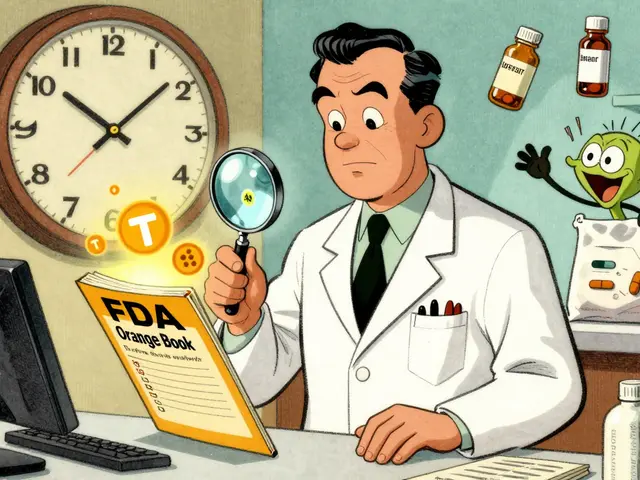
The easiest way is to ask your pharmacist. They can see if the drug is listed as an authorized generic via the FDA's quarterly reports or if the manufacturer is the same as the brand-name version but the label is different.
Next steps for patients and caregivers
If you're looking to save on medication, start by asking your pharmacist if an authorized generic is available for your prescription. Because these are identical to the brand, you don't have to worry about the slight variations in inactive ingredients that sometimes occur with multi-source generics.
If your insurance company is refusing to cover a cheaper authorized version, contact your doctor to see if they can provide a "prior authorization" or a medical justification for the switch. Also, check if your state has recently passed PBM transparency laws, which may give you more leverage in understanding why certain drugs are priced the way they are on your plan's list.

Comments
william wang
April 18, 2026
It's actually pretty wild how the Hatch-Waxman Act creates such a specific window for exclusivity. Most people don't realize that the 180-day rule is exactly why these authorized generics pop up out of nowhere. It's a clever way for brand companies to protect their revenue while technically offering a cheaper option to the consumer. I've seen this happen with a few different cardiovascular meds lately, and it usually results in a much faster price drop than if we just waited for the traditional generics to hit the market in bulk.
Tama Weinman
April 18, 2026
Typical corporate shell game. They tell us it's about "affordability" but it's really just about maintaining a monopoly under a different name. The PBMs are obviously in on it too, keeping the co-pays high while the companies rake in the profits from both the brand and the authorized version. It's all designed to keep the average person dependent and broke while the FDA looks the other way.
Joshua Nicholson
April 19, 2026
Kinda crazy how the label is the only difference. lol
Nikki Grote
April 21, 2026
From a clinical perspective, the bioequivalence of traditional generics is usually sufficient, but the identicality of authorized generics eliminates the variable of excipient-induced reactions. For patients with hypersensitivity to specific fillers, this is a massive advantage because the pharmacokinetics remain unchanged from the original NDA formulation. The strategic use of these products to mitigate the 180-day exclusivity period is a standard industry maneuver to stabilize market share.
Cheryl C
April 22, 2026
USA pharama is just wild 🇺🇸💊 honestly if the drugs r the same why even have 2 names?? just make it cheap for everyone lol!! smh at the greed 🙄
Adele Shaw
April 23, 2026
This whole system is a joke and it's honestly exhausting that we even have to explain this. I'm sick of these companies playing chess with our lives and our wallets. We live in the greatest country on earth but we can't even get a simple pill without some middleman PBM taking a cut of the profit. It's absolutely disgusting how much power these corporations have over the American people!
Kim Hyunsoo
April 24, 2026
The EpiPen example is just... wow 😵 It's like a magic trick where they take away your money and then give a little bit back to make you feel better. Such a kaleidoscopic way of handling healthcare 🌈. I wonder if other industries do this weird little dance with pricing just to keep the peasants happy ✨
Josephine Wyburn
April 25, 2026
I cannot even begin to describe the absolute turmoil I felt when I realized my insurance was charging me the same price for a drug that the company was selling for half the price to others 😭 honestly it's just so draining to have to fight with a PBM every single month just to get a basic medication and I feel like I'm losing my mind trying to navigate these tiers 😫 it's just so unfair that we have to suffer like this while they just change a bottle label and call it a day 💔
ira fitriani
April 26, 2026
Let's stay positive and focus on the win here! 🌟 If you can get the exact same quality for less, that's a victory for your budget! 💰 Just keep pushing your pharmacist and stay empowered in your health journey! We can handle this! 🌈✨
Heer Malhotra
April 27, 2026
The lack of ethical standards in Western pharmaceutical pricing is an absolute disgrace. It is a moral failure that profit motives supersede the basic human right to affordable healthcare. While the authorized generic provides a marginal benefit, the underlying structure remains predatory and exploitative of the vulnerable.
Anmol Garg
April 27, 2026
It's interesting to think about the balance between innovation and access. On one hand, companies need the incentive to create new medicines, but on the other, those medicines are useless if people can't afford them. Maybe we can look at this as a slow step toward a more empathetic system where the focus shifts from market share to actual patient well-being. We all just want to be healthy and supported in our journey.
Write a comment