Imagine eating your favorite sandwich only to feel sick hours later, with no obvious reason why. For millions of people, this isn't just a bad meal; it is a serious medical condition. Celiac Disease is a lifelong autoimmune disorder triggered by consuming gluten found in wheat, barley, and rye. It affects approximately 1 in 100 people worldwide, yet many go undiagnosed for years. Understanding exactly how your body reacts to this protein is crucial for managing symptoms and preventing long-term damage.
The Hidden Mechanics of an Autoimmune Reaction
Most people think of celiac disease simply as "stomach trouble," but the reality involves a complex immune system error. When you eat food containing Gluten a family of proteins that give dough its elasticity, found primarily in wheat, rye, and barley, your digestive system breaks it down into smaller peptides. In a healthy person, these peptides are absorbed safely. However, if you carry specific genetic markers like HLA-DQ2 or HLA-DQ8, your body misidentifies these peptides as dangerous invaders.
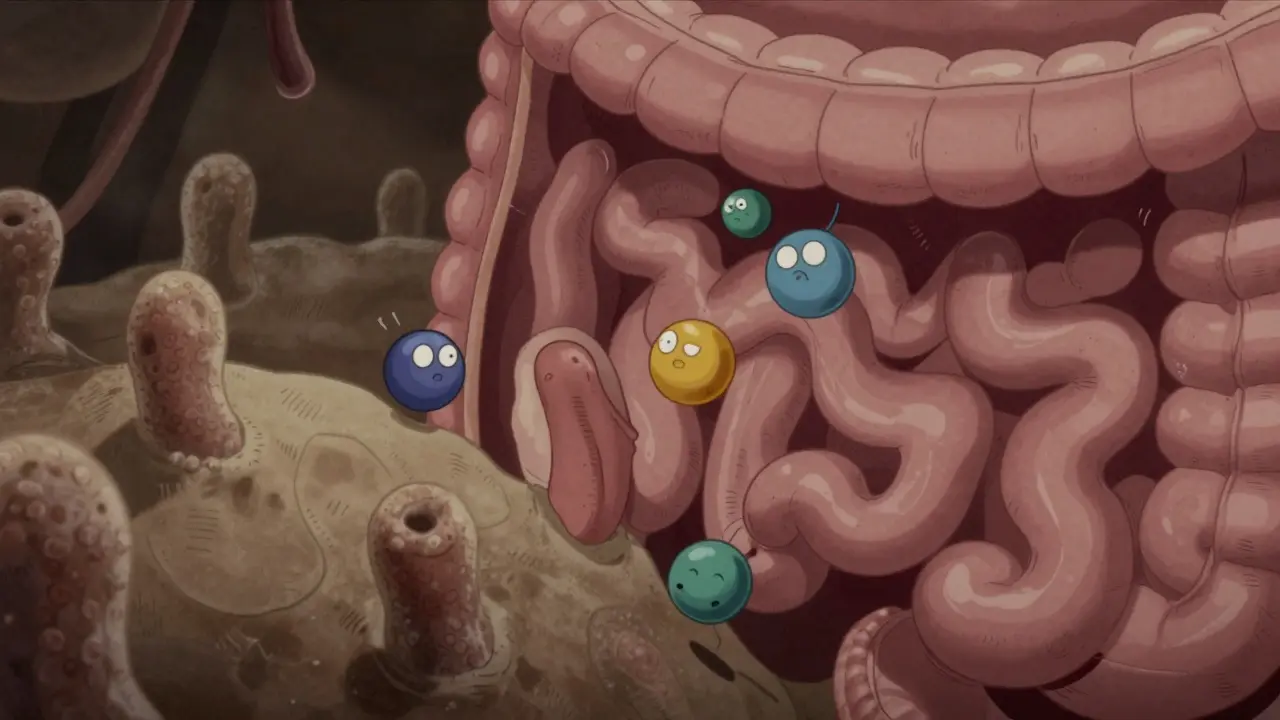
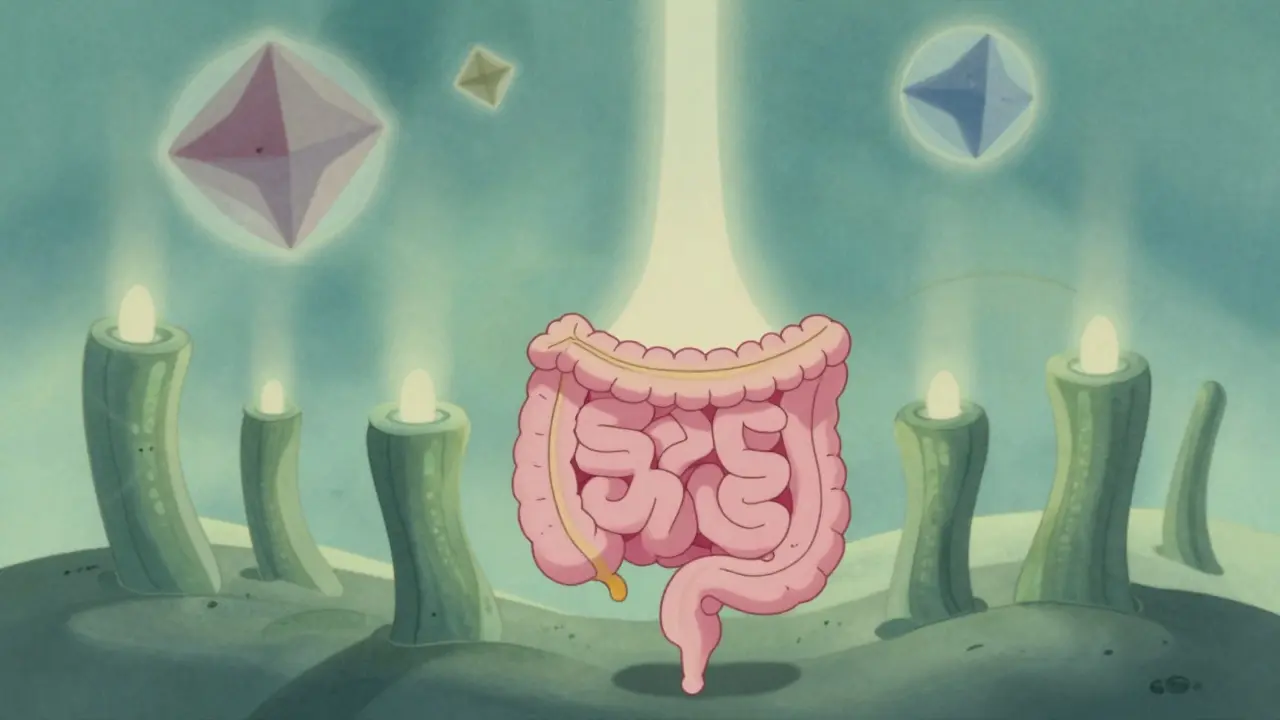
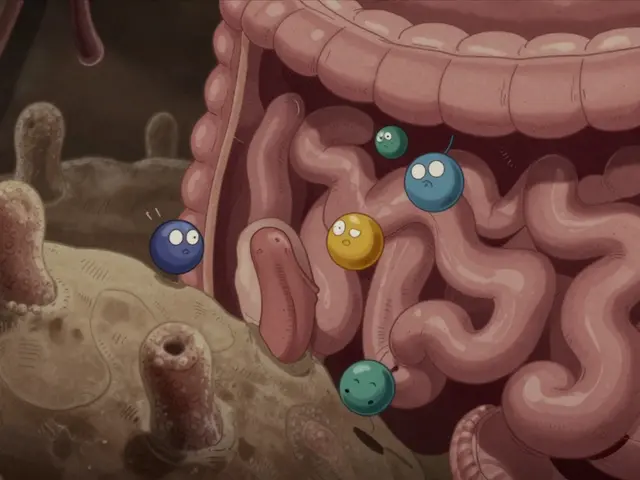
This mistake triggers an inflammatory attack inside the lining of your Small Intestine the primary site for nutrient absorption located between the stomach and large intestine. Normally, tiny finger-like projections called villi line this organ to absorb vitamins and minerals. During an active celiac flare-up, the immune system attacks these villi. Over time, they flatten out-a condition known as Villous Atrophy damage to the intestinal villi resulting in reduced surface area for nutrient absorption. Without healthy villi, your body cannot get enough iron, calcium, or vitamins, leading to anemia, bone density loss, and chronic fatigue even if you eat plenty of nutritious food.
Recent breakthroughs have shed light on exactly how this starts. Research published in late 2024 suggests that the gut epithelium itself plays an active role in starting the fight against gluten. Previously, scientists thought the gut barrier was just a passive victim. Now we know it actively participates in signaling the immune system to attack. This changes how we view prevention, suggesting that protecting the gut lining could be just as important as avoiding gluten itself.
Distinguishing Between Celiac and Other Sensitivities
It is easy to confuse celiac disease with other reactions to gluten, but the stakes are much higher with celiac. You might hear people talk about Non-Celiac Gluten Sensitivity a condition where individuals experience symptoms after consuming gluten without having celiac disease or wheat allergy (NCGS). While both involve pain or bloating after eating bread, NCGS does not cause the same structural damage to your intestines. With celiac, there is physical destruction happening every time you eat wheat. With NCGS, the reaction is mostly symptomatic and lacks the specific antibody markers seen in celiac patients.
Doctors also distinguish it from Wheat Allergy an allergic reaction specifically to proteins in wheat that may cause hives, swelling, or breathing issues. A wheat allergy triggers histamine immediately, often within minutes, potentially causing throat closure. Celiac is slower, with symptoms appearing hours or even days after ingestion, and involves a different part of the immune system entirely. Misdiagnosing these conditions can lead to incorrect dietary restrictions or missing vital treatment for the autoimmune aspect.

The Diagnostic Journey: Testing and Confirmation
Getting diagnosed can be frustratingly slow. Many patients wait over six years because doctors initially dismiss symptoms like brain fog or mild acne. Accurate diagnosis requires a specific set of steps, and skipping one can ruin the results. The most common test checks your blood for anti-tissue transglutaminase (tTG) antibodies. These antibodies attack the Tissue Transglutaminase 2 an enzyme that modifies gluten peptides in the gut, making them targets for the immune system enzyme mentioned earlier in the process. For this test to work, you must still be eating gluten. If you stop before testing, your antibody levels drop, and you might get a false negative.
| Test Method | What It Measures | Accuracy Rate | Requirements |
|---|---|---|---|
| Blood Test (tTG-IgA) | Antibody levels | 98% Sensitivity | Must eat gluten regularly |
| Endoscopy with Biopsy | Villus damage in duodenum | Gold Standard | Requires sedation |
| Genetic Screening | Presence of HLA-DQ2/DQ8 genes | 99% Negative Predictive | Rules out disease if negative |
If your blood tests come back positive, the next step is usually an endoscopy. A doctor inserts a camera down your throat to take tissue samples from your upper intestine. They look for the flattening of the villi under a microscope. While this sounds invasive, it confirms the damage level, which helps determine how severely your nutrition has been impacted. Genetic testing is another tool; while it cannot diagnose active disease on its own, finding that you lack the specific genes associated with celiac allows doctors to confidently rule it out.
Mastering the Gluten-Free Lifestyle
Once diagnosed, the only effective treatment is strict avoidance of all gluten sources. This means adhering to a Gluten-Free Diet a nutritional strategy that eliminates wheat, rye, barley, and triticale to prevent intestinal damage permanently. There is currently no cure, and partial compliance is not an option because even microscopic amounts of gluten can trigger the attack again. The legal standard for a product labeled "gluten-free" allows up to 20 parts per million (ppm) of gluten. To put this in perspective, 20 ppm is roughly a single crumb of bread scattered in a bowl of cereal.
Implementing this change requires learning to read labels critically. Oats are often contaminated with wheat during processing unless they are specifically certified as gluten-free. Beyond grain safety, you must watch for hidden gluten in sauces, soy sauce, vinegar, and even some medications where starch acts as a binder. Restaurants pose a significant risk due to cross-contamination. Frying chicken in oil used for battered fish or using a shared toaster blade can introduce enough gluten to cause a flare-up. Patients often find that keeping dedicated kitchen tools, like a separate toaster and colander, reduces the anxiety of eating at home significantly.
Living Well with Celiac: Practical Strategies and Support
Living with celiac goes beyond food lists; it impacts social life and mental health. About half of adults report feeling isolated because they fear asking about ingredients at dinner parties. However, support networks exist to make this easier. Mobile apps now track thousands of safe restaurants and products, helping users avoid guesswork. It is also worth noting that healing takes time. Many people expect to feel better immediately after switching to gluten-free foods, but the intestinal lining takes months to regenerate. Patience is key, especially regarding lingering symptoms like fatigue or joint pain, which may persist until the gut heals fully.
Nutrient deficiency is another major concern to address early. Because the damaged intestine stops absorbing minerals, supplementing iron, vitamin D, and B12 is often necessary in the first year of diet management. Regular monitoring by a healthcare professional ensures these levels stabilize. As the market grows, so do options. In 2024, the variety of safe snacks reached over 45,000 products globally, including mainstream supermarket brands that make compliance less costly than in previous decades.
Looking Ahead: Emerging Therapies and Solutions
While the gluten-free diet remains the standard of care today, the future holds promise for reducing reliance on strict avoidance alone. Clinical trials are currently underway for enzymes that help digest gluten before it causes harm. Early versions showed a reduction in symptom severity for those who accidentally consume gluten, acting like a "backup plan" rather than a replacement for the diet. Another avenue involves immunotherapy, teaching the immune system to tolerate gluten instead of attacking it. These therapies are still in development phases but offer hope for those who struggle with strict adherence or face social barriers with current dietary limits.
Research continues to evolve rapidly. Scientists are now investigating how the gut microbiome influences disease onset, suggesting that bacteria in our stomach might play a protective role. As we learn more about the root causes, treatments may become more personalized. For now, understanding the mechanics of your condition empowers you to navigate daily life with confidence, knowing exactly what to avoid and how to protect your health long-term.
How quickly do symptoms appear after eating gluten?
Symptoms typically appear anywhere from two hours to three days after consuming gluten. The timing depends on the amount of gluten eaten and individual sensitivity, ranging from immediate bloating to delayed fatigue.
Can I take a break from the gluten-free diet occasionally?
No. For individuals with celiac disease, any amount of gluten can restart the immune attack on the small intestine. Even small crumbs can delay healing or cause new damage, so strict adherence is essential for recovery.
Is oatmeal safe for someone with Celiac Disease?
Oats themselves do not contain gluten, but they are frequently contaminated with wheat during farming or processing. Only oats specifically labeled "certified gluten-free" should be consumed to avoid cross-contamination risks.
Do I need to avoid medications containing gluten?
Yes, some prescription pills use wheat starch as a filler. While rare, it is wise to ask your pharmacist or check reliable databases to verify the gluten status of your specific medications, especially if taking multiple prescriptions.
How long does it take for the intestine to heal?
Healing varies by age and severity, but children often show improvement in weeks, while adults may take 6 to 24 months for full mucosal repair. Continued diet adherence is required during this entire period.
Comments
Victor Ortiz
March 31, 2026
The distinction between NCGS and celiac is often blurred in public discourse intentionally. Many blogs omit the genetic testing requirement entirely. This leads to misdiagnosis rates that are frankly unacceptable in modern medicine. The table provided lacks data on serology sensitivity variations across demographics. You should have mentioned DGP antibodies for IgA deficient patients specifically. Ignoring that detail compromises the clinical utility of this piece significantly. Most readers will walk away with partial information about blood tests. A deeper dive into seronegative cases would have been appreciated here. Accuracy matters when discussing autoimmune pathways affecting intestinal health. We cannot afford to spread misinformation regarding gluten thresholds either.
Jonathan Sanders
April 1, 2026
Wow great job summarizing what I tell my family every single week. It is hilarious that people get upset about missing out on bread. Just eat rice like the rest of us normal humans do. Your suffering does not make you unique in this world sadly. I bet reading labels gets old pretty fast for some folks. Nothing beats the joy of explaining medical restrictions to strangers constantly. At least the market is flooded with expensive fake foods now. Thanks for posting though it was mostly common sense stuff.
Amber Armstrong
April 2, 2026
I honestly read this article while crying because it felt like someone finally saw me clearly.
It is scary how many years I spent blaming myself for being sick without knowing why.
The part about villous atrophy really hit home for me personally.
You would not believe how much food you have to learn to avoid initially.
People think they are being nice when they offer bread but it makes everything worse.
My friends do not understand that cross contamination means danger for real.
We have to trust our instincts when we feel bloated after eating somewhere new.
Healing is definitely slow work for the body to repair itself fully.
I still miss pizza nights sometimes and that feels lonely on Sundays.
Finding safe snacks helps manage the guilt of having restrictions everywhere.
It is nice to see research moving forward with enzyme solutions soon.
We need more awareness campaigns so restaurants stop sneaking wheat in sauces.
Sharing our stories helps others feel less isolated in their daily struggle.
Thank you for writing such a comprehensive guide here today.
I hope everyone finds the support they need to stay healthy despite this.
emma ruth rodriguez
April 2, 2026
The diagnostic journey described here is quite accurate medically!
Blood tests require active gluten consumption!
Biopsy confirmation remains the gold standard universally!
Genetic screening helps rule out false positives effectively!
Patients must consult specialists immediately upon suspicion!
Avoidance protocols are non-negotiable for gut health!
Cross-contamination risks exist in many commercial kitchens!
Label literacy skills are essential for daily survival!
Nutrient deficiencies require vigilant monitoring by professionals!
Emerging therapies offer promise for future symptom management!
Rick Jackson
April 4, 2026
We view illness through a consumer lens often.
Dietary restrictions change how we interact with society fundamentally.
The biology is complex yet the solution seems simple enough.
Adherence requires mental fortitude beyond physical willpower alone.
Hope exists for better treatments down the road soon.
Living well means prioritizing internal peace over external norms.
Beccy Smart
April 4, 2026
Honestly this article explains things that most people already know by now. 😒
sanatan kaushik
April 6, 2026
Companies put cheap wheat everywhere and hurt people bad.
Why do they not care about safety standards more.
I see this problem in many countries globally.
Big business ignores patient needs for profit always.
We need stricter laws on ingredient labeling now.
Stop pretending cross contamination is nobody else fault.
Food giants make it hard for small families.
Health is wealth but they take your money instead.
Debbie Fradin
April 6, 2026
Giving up is not an option for any of us dealing with this.
Some claim diets fail because they lack discipline entirely.
We must push through the initial withdrawal phase aggressively.
Social pressure is a weak barrier against health goals clearly.
Optimism fuels the recovery process for long term success.
Stay strong and ignore the negativity from outsiders completely.
Progress happens when you protect your gut lining fiercely.
Believe in the science and follow the protocol strictly.
Write a comment