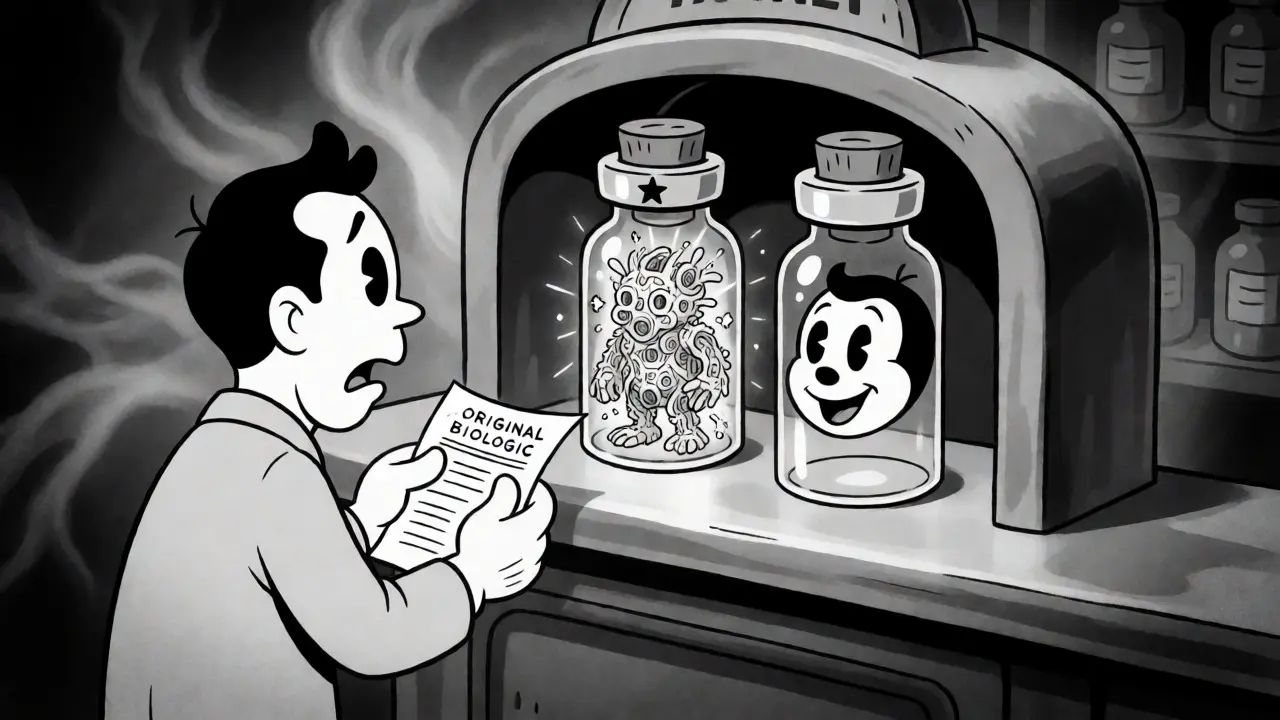
You’re standing in the pharmacy aisle, holding a prescription for a biologic drug that keeps your autoimmune disease in check. The pharmacist offers you a "biosimilar" instead of the brand name you’ve been using for years. It’s cheaper, sure. But does it actually work? If you swap out the original, will your symptoms flare up? This isn’t just a question of saving money; it’s about trusting a medication that looks different on the label but claims to do the exact same job.
The short answer, backed by over a decade of global data, is yes. Biosimilars are highly similar versions of approved biologic drugs with no clinically meaningful differences in safety or effectiveness. Unlike generic pills, which are simple chemical copies, biologics are complex proteins made in living cells. That complexity makes people nervous. But the science says if it passes the rigorous regulatory hurdles set by agencies like the FDA or EMA, it performs just as well as the original.
What Exactly Is a Biosimilar?
To understand why they work, you have to understand what they are. A biologic is a large, complex molecule produced by living organisms-bacteria, yeast, or mammalian cells. Think of them as intricate machines built inside a factory (the cell). Because living systems vary slightly, no two batches of biologics are ever identical, even from the same manufacturer. This is normal and accepted for the original drug, known as the reference product.
A biosimilar is developed to be highly similar to this reference product. It’s not an identical copy, because biological manufacturing can’t produce perfect clones. Instead, manufacturers prove similarity through a massive amount of testing. They run hundreds of analytical tests to compare structure and function. If those match closely enough, they move to clinical trials. These trials don’t necessarily look for "superiority" but for equivalence. They want to show that any tiny difference doesn’t change how the drug behaves in your body.
This is where biosimilars differ sharply from generics. Generics are small-molecule drugs, like aspirin or ibuprofen. They are chemically synthesized and can be copied exactly. You can test a generic pill and know it has the exact same active ingredient in the same amount. Biologics are too big and complex for that level of precision. So, regulators accept a high degree of similarity rather than absolute identity. The key metric is whether the difference is "clinically meaningful." If the variation doesn’t affect patient outcomes, the biosimilar gets approved.
The Evidence: Do They Actually Work?
Skepticism is healthy, but let’s look at the hard numbers. Since the first biosimilar was approved in Europe in 2006 and the US in 2015, we now have thousands of studies involving hundreds of thousands of patients. The consensus among major health organizations, including the World Health Organization and the International Society for Pharmacoeconomics and Outcomes Research, is clear: biosimilars deliver equivalent clinical outcomes.
Take oncology, for example. Cancer treatments are high-stakes. A meta-analysis published in 2022 looked at 1,711 patients across six different cancer types. It compared biosimilars to their reference products for drugs like bevacizumab, trastuzumab, and rituximab. The results? The overall response rates were statistically indistinguishable. For non-small cell lung cancer, the ratio of response rates between biosimilar and reference was 1.02. For breast cancer, it was 1.01. In plain English, that means the biosimilar worked just as well as the expensive original.
| Therapeutic Area | Drug Example | Clinical Outcome Metric | Biosimilar vs. Reference Result |
|---|---|---|---|
| Oncology (Breast) | Trastuzumab | Overall Response Rate | Equivalent (Ratio 1.01) |
| Rheumatology | Adalimumab | Drug Survival at 12 Months | 82.3% vs 81.7% (No significant diff) |
| Inflammatory Bowel Disease | Infliximab | Treatment Persistence | No significant difference (HR 0.92) |
| Hematology | Rituximab | Response Rate in Lymphoma | Equivalent (ORR 72.9% vs 69.3%) |
In rheumatology, where patients often stay on treatment for decades, real-world data is abundant. A study tracking 3,450 patients across Europe found that drug survival rates-the percentage of patients staying on therapy-were nearly identical between adalimumab biosimilars and the reference Humira. At 12 months, 82.3% stayed on the biosimilar versus 81.7% on the reference. That’s a fraction of a percent difference, likely due to statistical noise rather than actual efficacy gaps.
Safety and Immunogenicity Concerns
The biggest fear patients have is immunogenicity. This happens when your immune system recognizes the drug as foreign and creates antibodies against it. If these antibodies neutralize the drug, it stops working. Or worse, they could cause allergic reactions. Because biologics are made in living cells, there’s always a theoretical risk that a biosimilar might trigger a different immune response than the reference.
However, extensive monitoring hasn’t shown this to be a practical problem. Regulatory guidelines require strict assessment of immunogenicity during development. Real-world surveillance continues after approval. In the UK, the National Health Service switched over 12,000 lymphoma patients from reference rituximab to a biosimilar called Rixathon. They documented no increase in adverse events. Similarly, a survey of patients using adalimumab biosimilars showed identical rates of adverse events compared to the reference product.
It’s worth noting that switching from one biosimilar to another, or from reference to biosimilar, is also considered safe. A study in *Clinical Rheumatology* showed that patients who switched between multiple adalimumab biosimilars had the same retention rates as those who stayed on a single product. The scientific community agrees that while long-term data beyond five years is still accumulating, the current evidence base is robust enough to support widespread use.

Why Are They Cheaper? And Does Cost Matter?
If they work the same, why aren’t they free? Or at least, why is the price gap so significant? Biosimilars typically cost 15-30% less than reference products in the US, and up to 85% less in some European markets. This isn’t because they’re lower quality. It’s because the developers didn’t have to fund the initial discovery and massive Phase III trials that took the original drug to market. They leveraged existing knowledge, focusing only on proving similarity.
This price competition benefits everyone. When a biosimilar enters the market, the price of the reference product often drops too. The Congressional Budget Office estimated that biosimilar competition reduced prices of reference biologics by 26% within three years of entry. For Medicare Part B alone, this saved approximately $1.3 billion annually. Over the next decade, these savings are projected to reach $169 billion for the US healthcare system.
For patients, this means better access. High-cost biologics can be prohibitive, leading to skipped doses or rationing. Lower prices allow more people to start and stay on effective treatments. Insurance companies and national health services, like New Zealand’s PHARMAC or the UK’s NHS, aggressively adopt biosimilars to stretch their budgets further without compromising care.
Common Myths and Misconceptions
Despite the evidence, myths persist. One common belief is that biosimilars are "generic" versions of biologics. They’re not. As mentioned, generics are identical chemical copies. Biosimilars are highly similar biological copies. Calling them generics confuses patients and providers, suggesting a level of simplicity that doesn’t exist.
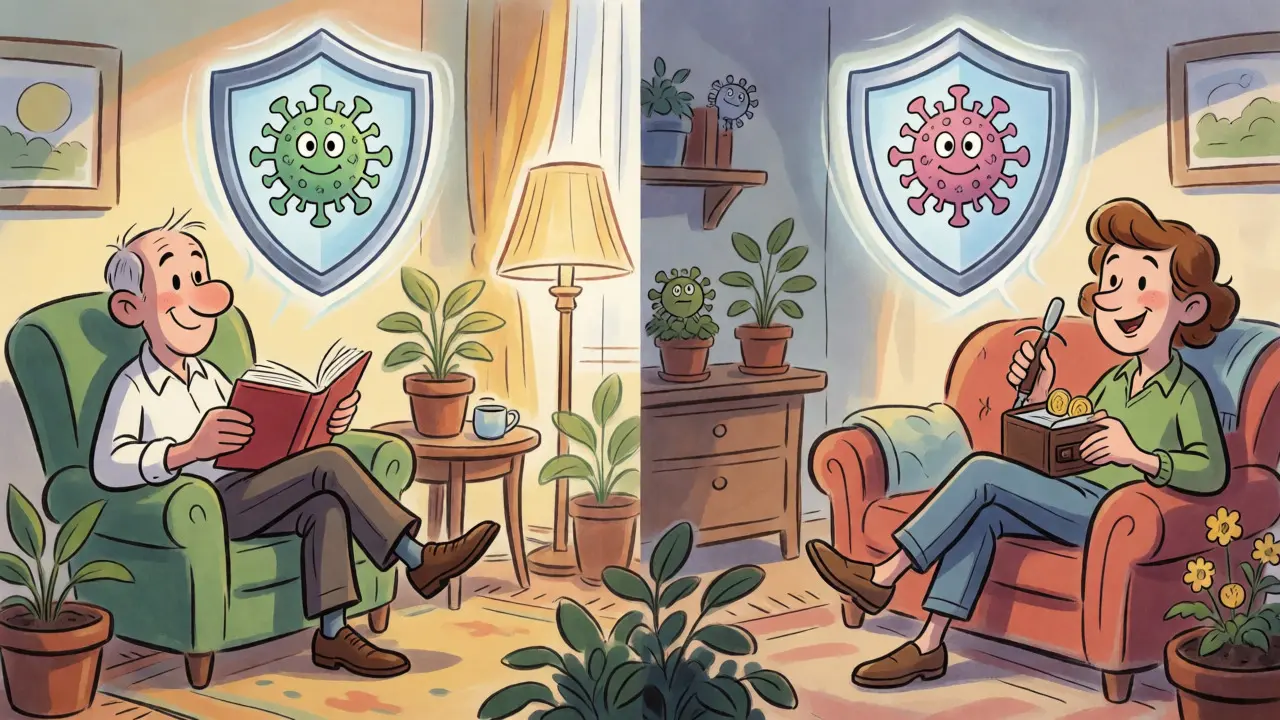
Another myth is that switching causes "nocebo" effects. Nocebo is when negative expectations lead to perceived side effects. Studies show that when patients are informed properly about the switch, adherence remains high. However, poor communication can amplify anxiety. If a doctor simply swaps the box without explanation, a patient might blame every minor symptom on the new drug. Proper counseling reduces this effect significantly.
Some worry that biosimilars haven’t been tested as rigorously. Actually, the development pathway is extremely demanding. It involves 200-300 analytical tests per batch. Clinical trials are designed to be sensitive enough to detect even small differences. Interestingly, 84% of biosimilar trials are double-blinded, compared to only 17% of reference drug trials. This means biosimilars are often evaluated under stricter conditions to ensure fairness.
How to Talk to Your Doctor About Switching
If you’re prescribed a biosimilar, don’t panic. Here’s how to navigate the conversation:
- Ask about the specific product: Know the name of both the reference and the biosimilar. Check the FDA Purple Book or local equivalent to confirm it’s an approved biosimilar.
- Discuss your history: Have you had issues with the reference product before? If you’ve been stable for years, your doctor might prefer to keep you on the same product unless there’s a strong financial reason to switch.
- Monitor closely: After a switch, pay attention to your symptoms for the first few months. Keep a log. Most changes, if any, appear early. If things go wrong, report them immediately.
- Clarify interchangeability: Not all biosimilars are automatically interchangeable. Interchangeable status means a pharmacist can substitute it without calling your doctor. Ask if yours has this designation in your region.
Remember, the goal of prescribing a biosimilar is usually to maintain your health while managing costs. It’s a standard practice in many countries now. In Europe, uptake exceeds 80% for several drugs. In the US, adoption is growing rapidly, especially in rheumatology and gastroenterology.
The Future of Biologic Therapy
The landscape is evolving. Regulators are looking to streamline the process further. The FDA proposed eliminating comparative clinical efficacy studies for some biosimilars if analytical and pharmacokinetic data are sufficient. This could speed up approvals and lower costs even more. Meanwhile, patent thickets-where manufacturers file multiple patents to delay competition-remain a hurdle. But pressure from governments and insurers is forcing faster market entry.
We’re also seeing more biosimilar-to-biosimilar switches. As more options enter the market, pharmacies might rotate suppliers based on contracts. Data suggests this is safe, but it requires clear labeling and patient education to avoid confusion. The future of biologics isn’t just about new molecules; it’s about making existing life-saving therapies accessible to everyone.
Are biosimilars the same as generic drugs?
No. Generic drugs are identical chemical copies of small-molecule drugs. Biosimilars are highly similar versions of complex biologic drugs made in living cells. They cannot be identical copies due to the nature of biological manufacturing, but they are proven to have no clinically meaningful differences.
Will my insurance cover a biosimilar?
Most insurance plans and national health services prioritize biosimilars due to their lower cost. Coverage is generally excellent, often requiring prior authorization for the more expensive reference product if a biosimilar is available.
Can I switch back to the original drug if I don’t like the biosimilar?
Yes, you can switch back. However, frequent switching should be avoided unless necessary, as it may complicate monitoring. Discuss any concerns with your doctor, who can assess whether a return to the reference product is medically appropriate.
What is 'interchangeability'?
Interchangeability is a specific regulatory designation. It means a biosimilar can be substituted for the reference product by a pharmacist without consulting the prescriber, depending on state laws. Not all biosimilars are interchangeable, though many are moving toward this status.
Do biosimilars have more side effects?
Large-scale studies and real-world data show that side effect profiles are comparable between biosimilars and reference products. Any minor differences observed are typically within expected statistical variations and do not represent a safety signal.




Comments
Stuart Lorne
September 1, 2026
look at the data its obvious big pharma is just scared of losing their monopoly on these complex molecules and trying to confuse everyone with jargon
Anderson Miller
September 2, 2026
Sarcasm aside, it's actually a solid piece.
The part about the nocebo effect is key though. If you go in expecting the cheap stuff to fail, it probably will because your brain is weird like that.
Akeem Feiton
September 4, 2026
THIS IS EXACTLY WHAT I'VE BEEN SAYING FOR YEARS!!!
These European regulators are playing games with our lives while American companies get taxed into oblivion for developing the actual cures. It's not just science it's economics and patriotism. The FDA does more work than any other agency and yet we let them push these 'highly similar' knockoffs? Disgusting how they treat our healthcare system like a commodity shop instead of a fortress of innovation. We need to protect our IP rights fiercely or we'll lose the next generation of biologics entirely. Stop trusting foreign data blindly!
Aaron Gragg
September 4, 2026
To add some nuance to the discussion regarding interchangeability: it is crucial to distinguish between regulatory approval as a biosimilar and the specific designation of 'interchangeable.'
While the clinical equivalence is well-documented through rigorous analytical characterization and comparative pharmacokinetic studies, the interchangeability status involves additional data demonstrating that switching between the reference product and the biosimilar yields the same clinical result in any given patient. This distinction matters significantly for pharmacy-level substitution protocols where prescriber intervention might be bypassed. Furthermore, the immunogenicity profiles, while statistically comparable in large cohorts, require vigilant post-marketing surveillance due to the inherent variability in biological manufacturing processes. The article rightly highlights the cost benefits, but one must also consider the logistical challenges of managing multiple biosimilar inventories within hospital formularies without compromising patient safety during transitions of care.
kishhore kumar
September 5, 2026
Great info! 😊 Really helpful for patients who are nervous about switching. The stats on drug survival rates were eye-opening 👍
Sarah Leitschuh
September 7, 2026
I appreciate the balanced take here.
It’s easy to get caught up in the fear of change, especially when it comes to something as critical as autoimmune management. But seeing the real-world data from Europe really helps put things in perspective. Communication with your provider is definitely the most important step in this process.
Adam Cox
September 8, 2026
You're missing the point entirely.
The issue isn't whether they work in a vacuum or in a controlled trial with perfect adherence. The issue is the chaotic reality of US insurance networks forcing switches mid-treatment. That creates instability that pure efficacy metrics don't capture. You can have equivalent response rates on paper and still have a patient flare up because their body reacted to the slight variance in excipients or delivery device mechanics which aren't always identical. It's reductive to say it's all fine just because the p-value is insignificant.
Rose Boerner
September 9, 2026
It is profoundly troubling that we continue to normalize the commodification of essential medicines under the guise of fiscal responsibility.
While the economic arguments are compelling, one must ask if the potential erosion of trust in pharmaceutical integrity is worth the marginal savings. Patients deserve transparency and stability, not experimental substitutions driven by profit margins rather than genuine therapeutic necessity. The moral obligation of healthcare providers is to prioritize patient well-being above all else, even if that means resisting the pressure to adopt cheaper alternatives prematurely.
Marc-David Mayer
September 10, 2026
This is such a great resource! 🌟 Definitely saving this for my mom who was worried about her Humira switch. 💉📉💰
Curtis Surpless
September 10, 2026
contrarian take but honestly the 'no clinically meaningful difference' line is doing a lot of heavy lifting here
like sure statistically equivalent but individual biology is messy and i bet there are outliers getting screwed over by the 'average' outcome
also calling them highly similar vs identical feels like semantics designed to make us feel better about paying less for potentially less consistent batches
whatever though market forces win usually
Harry Falk
September 12, 2026
Clear and concise explanation. Thanks for breaking down the myths.
Kristina Rhodes
September 12, 2026
It’s fascinating how much our perception of value is tied to price.
We often assume that higher cost equals higher quality, especially with health, but the scientific method suggests otherwise in this case. Perhaps the real challenge isn't the drug itself, but overcoming the psychological barrier of accepting that 'good enough' is actually 'just as good.' It requires a shift in mindset that many find difficult, yet it could lead to better access for so many more people. Optimism is warranted here, provided we keep educating ourselves.
Stuart Lorne
September 12, 2026
@9078 exactly what im saying its never just about the molecule its about the whole system being broken and selling you snake oil either way
Write a comment