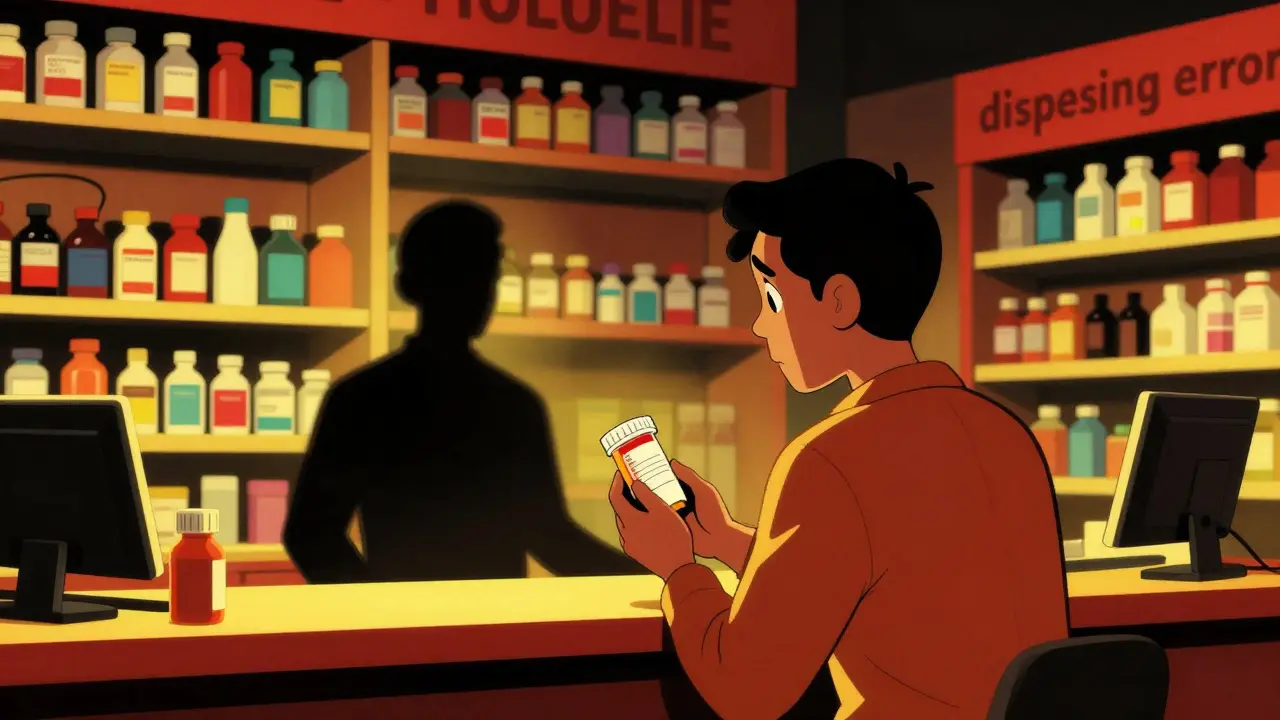
Imagine picking up your new prescription, heading home, and realizing the bottle says 'take twice daily' but your doctor clearly said 'once a day.' Or worse, you take it for a week before noticing the discrepancy. Dispensing errors are mistakes made during the preparation or handing over of medications that can lead to incorrect dosage, wrong drug administration, or missed treatments. They happen more often than we’d like to admit. According to data from the Institute for Safe Medication Practices (ISMP), thousands of preventable medication errors occur in community pharmacies annually. While pharmacists have rigorous protocols, they are human, and fatigue or high volume can lead to slips.
You might think, "Isn’t checking my meds the pharmacist’s job?" Yes, it is. But relying solely on them leaves a gap. You are the final checkpoint-the person who knows your body, your history, and what you actually took yesterday. Creating a personal safety checklist isn’t about mistrusting your pharmacist; it’s about owning your health. This guide will show you how to build a simple, effective routine to catch errors before they become emergencies.
The Core Problem: Why Errors Slip Through
To understand why you need a checklist, you first need to see where things go wrong. Most medication dispensing errors fall into three categories: wrong drug, wrong dose, or wrong instructions. Look-alike packages and sound-alike names are huge culprits. For example, a pharmacist might grab Lisinopril (for blood pressure) instead of Losartan (also for blood pressure, but different class) because the bottles look identical and the names rhyme. If you don’t verify the name, you might never know until you feel side effects.
Another common issue is the "assumption error." You’ve taken a certain antibiotic before, so when you pick up a white pill, you assume it’s the same one. It might be a completely different medication with a similar appearance. Without a deliberate pause to check, these assumptions turn into risks. Your goal isn’t to become a pharmacist overnight, but to act as an active partner in your care.
Building Your Personal Safety Checklist
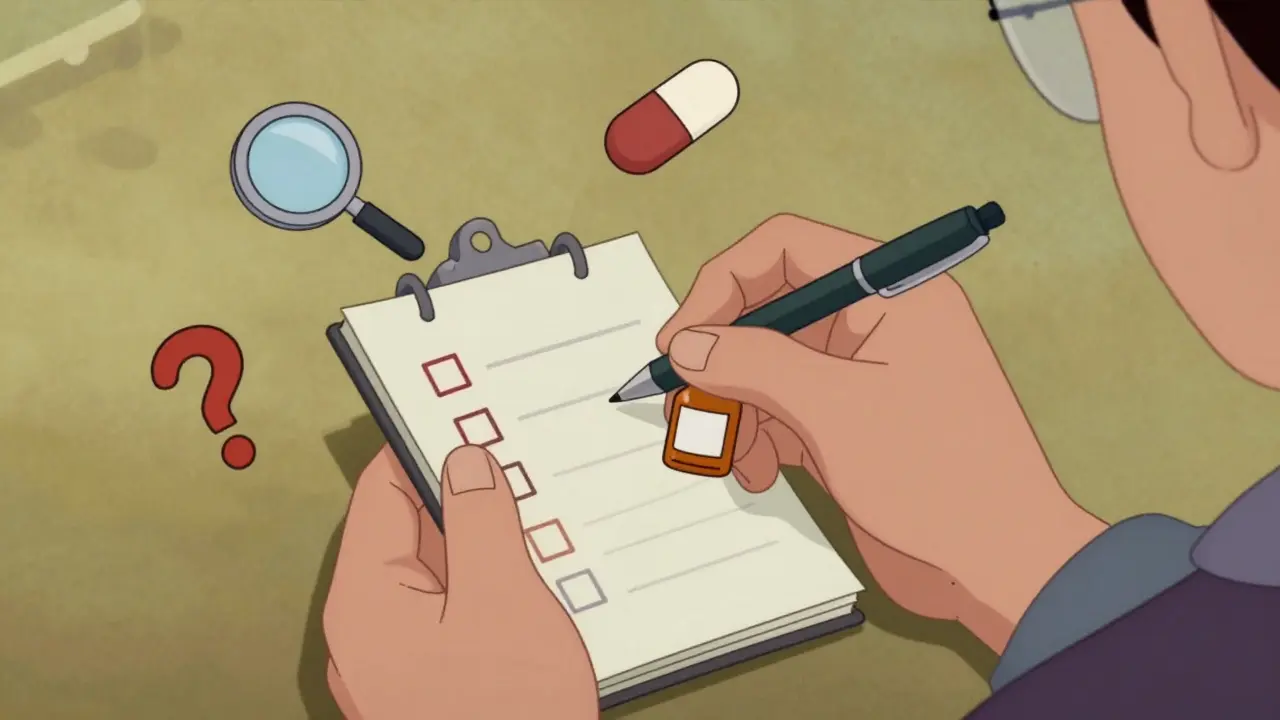
You don’t need a complex app or a printed form from a medical journal. The best checklist is one you’ll actually use. Here are the five non-negotiable steps to include in your routine every time you visit the pharmacy.
- Verify the Name: Does the label match the prescription slip or your memory of what the doctor prescribed? Read the generic name, not just the brand name. Generic names are standardized; brand names can vary by region or manufacturer.
- Check the Dosage Strength: Did the doctor prescribe 10mg or 20mg? A small difference in milligrams can change the effectiveness or safety of the drug, especially for heart medications or thyroid treatments.
- Confirm the Directions: "Take one tablet daily" is very different from "Take one tablet twice daily." Read the "Sig" (the instruction line) carefully. Does it match what was discussed?
- Inspect the Appearance: Does the pill look like what you expect? If you’re switching manufacturers, the color or shape might change, but it should still be consistent with the description provided by the pharmacist.
- Ask About Interactions: Do you have any other medications or supplements that might clash with this new one? Ask the pharmacist directly: "Does this interact with my current list?"
This process takes less than two minutes at the counter. It transforms you from a passive recipient into an active verifier.
The Critical Role of Medication Reconciliation
A major part of preventing errors is ensuring everyone-your doctor, your pharmacist, and you-is looking at the same list. This is called medication reconciliation. It’s the process of creating the most accurate list possible of all prescribed medications a patient is using, including name, dose, frequency, and route.
Why does this matter for your checklist? Because if your pharmacist doesn’t know you’re taking Warfarin (a blood thinner), they might dispense something that increases your bleeding risk. Before you even pick up the box, hand your pharmacist a current list of everything you take. Include over-the-counter drugs, vitamins, and herbal supplements. Many people forget that St. John’s Wort or high-dose Vitamin E can interfere with prescriptions.
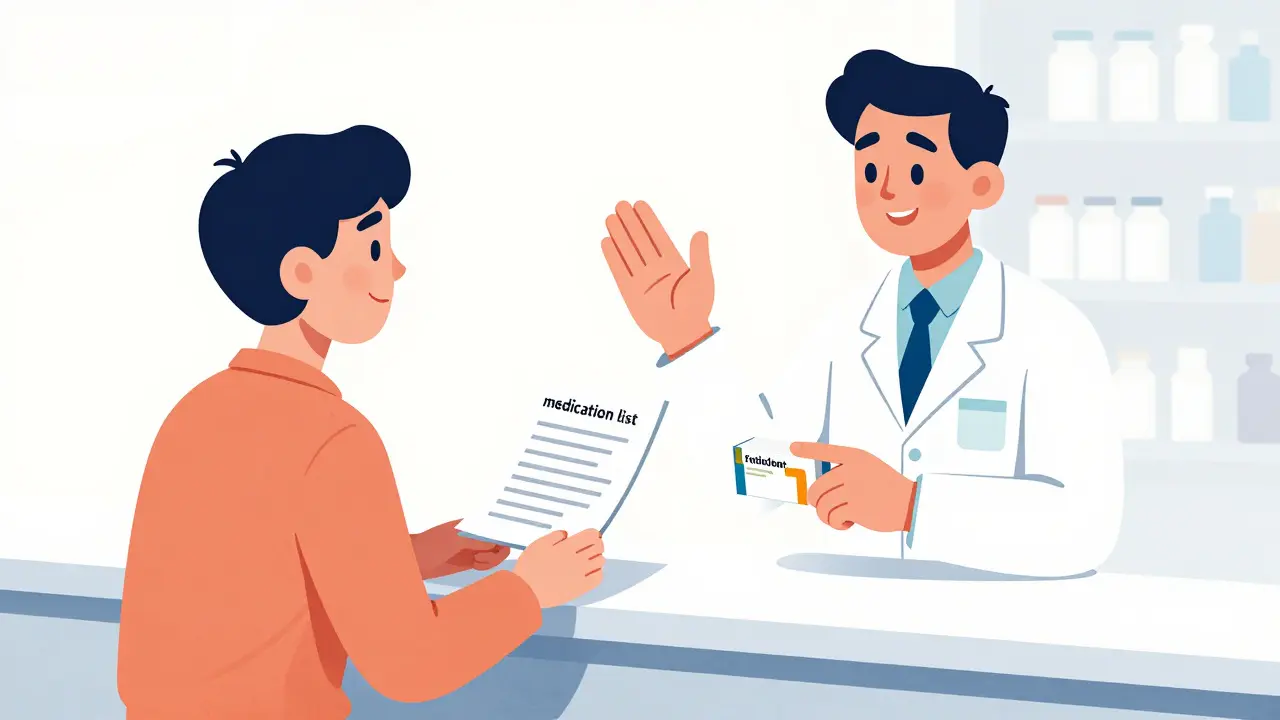
If you don’t have a written list, ask your primary care provider for one at your next visit. Keep a digital copy on your phone. When you arrive at the pharmacy, say, "Here is my current med list. Please double-check this new prescription against it." This simple phrase triggers their professional protocol for interaction screening.
Navigating the Counter: Communication Tips
Pharmacists are busy. During peak hours, they might be juggling multiple calls and patients. To make your safety checklist effective, you need to communicate clearly without causing friction. Timing matters. Try to avoid the busiest times, typically right after lunch or early evening.
When you approach the counter, wait for eye contact. Then, state your purpose clearly: "I’d like to verify my prescription details." Hand over your ID and insurance card, but keep your prescription slip visible. Don’t just nod and walk away. Stay until the transaction is complete and the bag is handed to you.
If you notice a discrepancy, stay calm. Say, "I thought my doctor prescribed X, but this says Y. Can you help me clarify?" Pharmacists appreciate patients who speak up. It gives them a chance to correct a potential error before you leave. Remember, no pharmacist is too busy to spend 30 seconds verifying a dose with you.
Special Considerations for High-Risk Medications
Some drugs carry higher risks than others. These are often called high-alert medications. They require extra vigilance in your checklist. Examples include insulin, anticoagulants (like Warfarin or Apixaban), chemotherapy agents, and opioids.
For insulin, check the type (e.g., Lispro vs. Glargine) and the concentration. For anticoagulants, confirm the dosing schedule meticulously. A missed dose or a double dose can have serious consequences. If you are prescribed a high-alert medication, consider asking for a "teach-back" session. Ask the pharmacist to explain how to use it, and then repeat it back to them. This ensures you understood the instructions correctly.
Also, be wary of controlled substances. Due to strict regulations, these often require additional identification checks. Ensure the quantity matches exactly what was authorized. If there’s a shortage and they offer a substitute, verify that the substitute is therapeutically equivalent.
| Error Type | Description | Your Checklist Action |
|---|---|---|
| Wrong Drug | Similar name or package leads to incorrect medication. | Read the generic name aloud and compare to your prescription slip. |
| Wrong Dose | Incorrect strength (e.g., 5mg instead of 10mg). | Check the milligram (mg) or microgram (mcg) amount on the label. |
| Wrong Instructions | Dosing frequency or method is incorrect. | Verify "how many" and "how often" matches your doctor's verbal instructions. |
| Patient Misidentification | Meds picked up for someone else. | Ensure your full name and date of birth are on the label. |
What to Do If You Spot an Error
Even with the best checklist, mistakes can happen. If you discover an error after leaving the pharmacy, act quickly but calmly. First, do not take the medication if you suspect it’s wrong. Second, call the pharmacy immediately. Have the prescription number ready. Explain the discrepancy clearly.
If the pharmacy is closed, contact your prescribing physician. They can advise whether to hold the dose or seek urgent care. In cases of severe adverse reactions, seek emergency medical attention. Document the incident. Take photos of the label and the pills if safe to do so. This helps the pharmacy investigate their internal processes and prevents future errors for others.
Reporting errors is crucial. You can report incidents to the ISMP or your local health authority. This feedback loop helps improve systemic safety. Your voice contributes to broader changes in how pharmacies operate.
Maintaining Long-Term Vigilance
Safety isn’t a one-time event; it’s a habit. Integrate your checklist into your routine. Update your medication list every time a prescription changes. Review your meds with your pharmacist at least once a year, even if nothing has changed. This annual review catches outdated prescriptions or unnecessary duplicates.
Use technology to your advantage. Many pharmacies offer apps that notify you when your prescription is ready. Use these reminders to prepare your questions beforehand. Write down any concerns you have while you’re at home, so you don’t forget them at the counter.
Finally, educate your family. If you manage medications for elderly parents or children, teach them this checklist. Empower them to ask questions. A culture of questioning saves lives.
Is it rude to question my pharmacist?
Not at all. Pharmacists expect and appreciate patient engagement. Asking questions shows you are involved in your health. It also protects them from liability and helps them maintain high standards of care. Frame your questions politely, such as "Can you help me understand..." rather than accusatory tones.
What should I do if I find a broken pill?
Do not take it. Broken pills may have been compromised by moisture or contamination. Return them to the pharmacy for replacement. Check the expiration date as well. If the medication is expired, do not use it.
How often should I update my medication list?
Update it immediately whenever a new prescription is started or stopped. Also, review it with your doctor and pharmacist at least once a year. This ensures that discontinued medications are removed and new ones are integrated safely.
Can I rely on online drug information?
Use reputable sources like the FDA website or official drug monographs. Avoid general forums or unverified blogs. Always cross-reference online info with your pharmacist’s advice, as individual factors like allergies and other conditions affect safety.
What if the pharmacy refuses to answer my questions?
This is rare but concerning. Politely ask to speak with the manager or another pharmacist. If the issue persists, consider finding a different pharmacy where you feel comfortable asking questions. Your safety is paramount, and communication is key.