Linezolid Tyramine Risk Calculator
Risk Assessment
Your current selection is within safe limits.
Approaching limit. Be careful with additional servings.
This combination exceeds the 100mg threshold. High risk of hypertensive crisis (stroke/heart damage). Do not consume this meal combination.
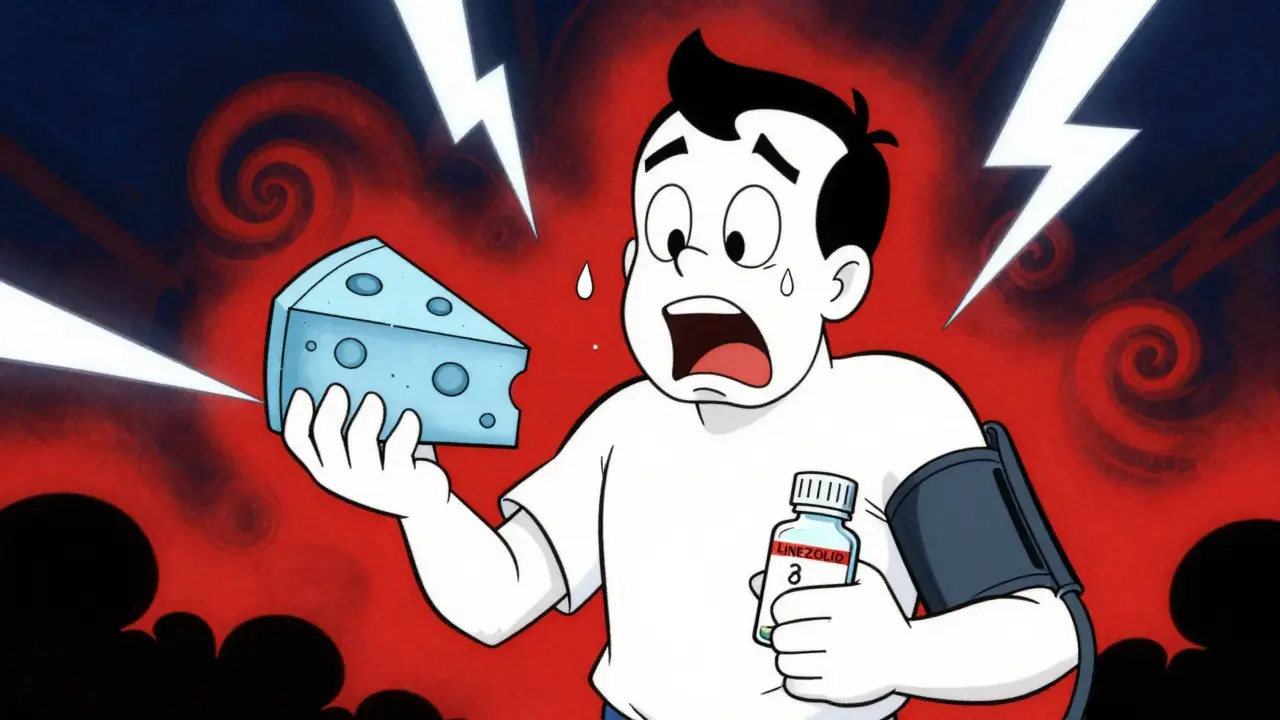
You’ve been prescribed Linezolid, a powerful antibiotic that is an oxazolidinone-class medication used to treat serious Gram-positive bacterial infections like MRSA and VRE. It’s often the last line of defense when other antibiotics fail. But here is the catch that most patients miss until it’s too late: Linezolid acts as a weak monoamine oxidase inhibitor (MAOI). This means it changes how your body processes certain foods, specifically those high in tyramine, an amino acid found in aged and fermented products.
If you eat the wrong food while taking this drug, you could trigger a hypertensive crisis, a sudden, dangerous spike in blood pressure that can lead to stroke or heart damage. The good news? You don’t have to give up all your favorite foods forever. You just need to know exactly what to avoid, for how long, and why the rules change depending on whether you are at home or in the hospital.
Why Linezolid Reacts with Tyramine
To understand the risk, you first need to look at how Linezolid works inside your body. Unlike standard antibiotics that simply kill bacteria, Linezolid has a secondary effect. It inhibits the enzyme monoamine oxidase (MAO). Normally, MAO breaks down tyramine in your gut before it enters your bloodstream. When Linezolid blocks this enzyme, tyramine builds up.
High levels of tyramine cause your nerve endings to release massive amounts of norepinephrine. Think of norepinephrine as the chemical signal that tells your blood vessels to tighten up. When too much is released at once, your blood pressure skyrockets. According to FDA prescribing information updated in January 2025, consuming more than 100 mg of tyramine while on Linezolid can raise systolic blood pressure by 30-50 mmHg within two hours. That is not a mild headache; that is a medical emergency.
It is important to note that Linezolid is a "weak" MAOI compared to older psychiatric drugs. Studies show it inhibits about 30-40% of MAO-A activity at standard doses (600 mg twice daily), whereas traditional MAOIs block 80-90%. However, "weak" still carries significant risk if you overload your system with tyramine-rich foods.
The Danger Zone: Foods High in Tyramine
Not all protein contains dangerous levels of tyramine. Fresh meat, fresh fish, and fresh vegetables are generally safe because they contain less than 2 mg of tyramine per 100g. The danger lies in how food is processed, stored, and aged. As proteins decompose over time, bacteria convert them into tyramine. Here is what you must strictly avoid:
- Aged Cheeses: Blue cheese, cheddar, gouda, parmesan, and swiss can contain between 50 and 400 mg of tyramine per 100g. Even a small wedge can push you past the safety threshold.
- Fermented Meats: Salami, pepperoni, sausages, and cured hams often hold 50-200 mg per 100g. If it looks dry or smoked, skip it.
- Alcohol: Tap beers, red wine (especially Chianti), champagne, and liqueurs are major triggers. Tap beer alone can have 8-70 mg per 100ml. Stick to decaffeinated tea, coffee, or small amounts of white wine if your doctor approves, but hard liquor and craft beers are risky bets.
- Soy Products: Soy sauce, miso paste, and tofu can vary wildly, containing 6-30 mg per 100ml. It is safer to use fresh herbs and salt instead.
- Leftovers: Meat and poultry left in the fridge for more than a day begin to develop tyramine. Cooked chicken from yesterday is riskier than freshly grilled chicken today.
One real-world example highlights this danger: A patient reported a 45 mmHg blood pressure spike after eating blue cheese during therapy. That single meal contained enough tyramine to overwhelm their inhibited MAO enzymes.
Hospital vs. Home: Why the Rules Change
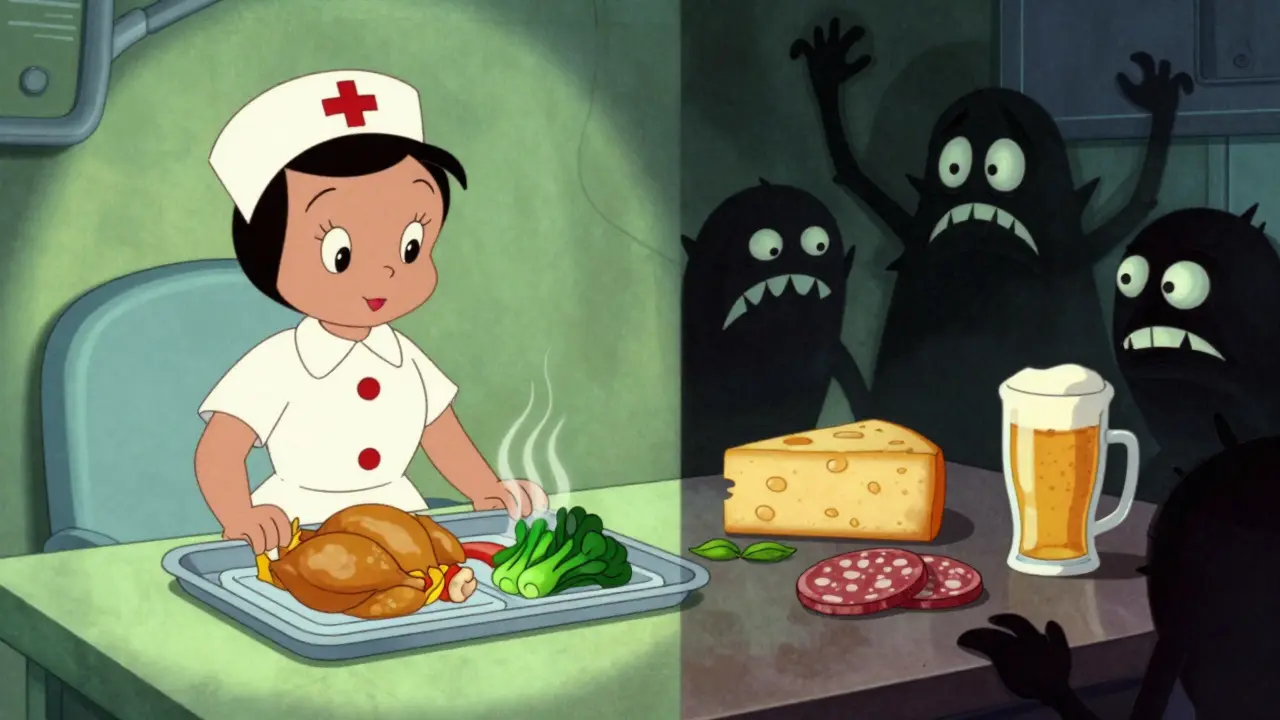
If you are reading this while admitted to a hospital, take a deep breath. The rules are different for you. A pivotal 2010 study published in Nutrition in Clinical Practice by researchers at NewYork-Presbyterian Hospital changed how hospitals handle Linezolid patients. They analyzed standard hospital menus and found that typical meals contain less than 6 mg of tyramine per serving-far below the 100 mg danger zone.
In fact, the maximum daily exposure in a hospital setting was calculated at around 42 mg. Because of this evidence, 95% of US hospitals no longer enforce strict tyramine diets for inpatients. Instead, they monitor your blood pressure. If you are at home, however, you are responsible for your own grocery shopping. You do not have a nutritionist checking every bite. Therefore, outpatient guidelines remain strict: avoid high-tyramine foods completely.
| Food Item | Tyramine Level (approx.) | Safety Status on Linezolid |
|---|---|---|
| Fresh Chicken/Fish | < 2 mg / 100g | Safe |
| Cheddar Cheese | 50-400 mg / 100g | Avoid |
| Tap Beer | 8-70 mg / 100ml | Avoid |
| Soy Sauce | 6-30 mg / 100ml | Limit/Avoid |
| Frozen Vegetables | < 2 mg / 100g | Safe |
| Salami/Sausage | 50-200 mg / 100g | Avoid |
The Critical 14-Day Window
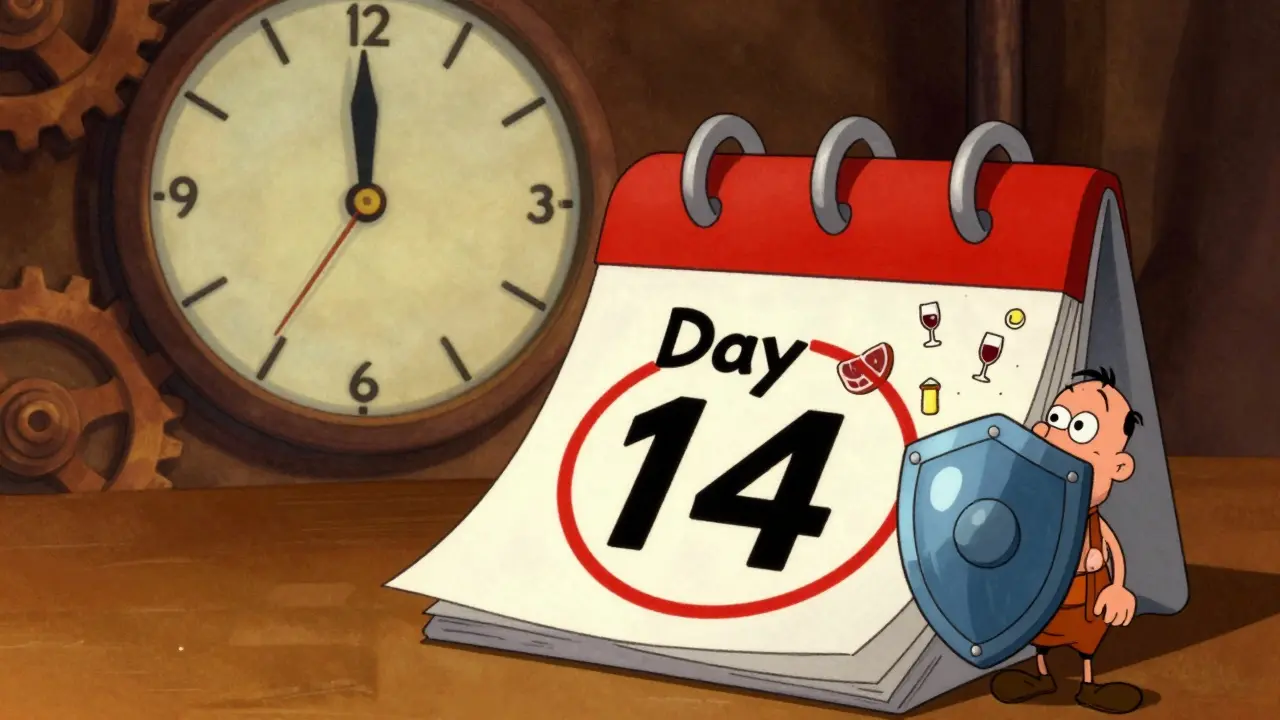
When does the danger end? Not the moment you take your last pill. This is where many people make a fatal error. Dr. Brian Staiger, a clinical pharmacist, emphasizes in his 2025 analysis that you must wait at least 14 days after finishing your Linezolid course before reintroducing high-tyramine foods.
Why two weeks? Linezolid has a short half-life of about 5 hours, meaning the drug leaves your blood quickly. However, its effect on MAO enzymes lasts much longer due to binding kinetics. It takes roughly 14 days for your body to regenerate enough functional MAO enzymes to safely process tyramine again. Resuming a normal diet too soon accounts for 78% of adverse events reported in post-treatment periods. Mark your calendar. Do not eat aged cheese or drink tap beer on day 15. Wait until day 14 is fully complete.
Recognizing the Symptoms of a Crisis
Even with careful planning, accidents happen. You might accidentally ingest a hidden source of tyramine, such as a deli sandwich with aged meat or a sauce made with soy extract. Knowing the early signs can save your life. Watch for these symptoms within 30 to 120 minutes of eating:
- Severe Headache: Often described as pounding or throbbing, usually at the back of the head.
- Stiff Neck: Muscle tension resulting from rapid blood pressure changes.
- Nausea and Vomiting: Your body’s reaction to internal stress.
- Palpitations: A racing or irregular heartbeat.
- Sweating and Flushing: Sudden hot flashes without physical exertion.
If you experience these symptoms, check your blood pressure if you have a home monitor. If your systolic pressure is significantly elevated (e.g., above 180/120 mmHg) or if you feel faint, seek emergency medical attention immediately. Do not drive yourself. Tell the ER staff you are taking Linezolid and suspect a tyramine interaction. They may administer medications like phentolamine to reverse the vasoconstriction.
Practical Tips for Managing Your Diet
Living with these restrictions for 10-14 days feels restrictive, but it is manageable. Here is how to navigate your kitchen:
- Read Labels: Look for words like "fermented," "aged," "cured," "smoked," or "extract." These are red flags.
- Cook Fresh: Buy fresh meat and cook it immediately. Freeze leftovers if you cannot eat them within 24 hours, but remember that freezing doesn't stop tyramine formation entirely if the food was already sitting out.
- Substitute Wisely: Swap soy sauce for lemon juice and garlic. Swap salami for fresh turkey breast or chicken. Swap cheddar for cream cheese or cottage cheese, which are low in tyramine.
- Communicate: If you dine out, tell the waiter clearly: "I am on an antibiotic that reacts to aged and fermented foods. Please ensure my meal contains only fresh ingredients."
Education gaps are common. A 2019 survey found that only 45% of outpatients received adequate dietary counseling. Don’t assume your doctor told you everything. Ask your pharmacist for a printed list of safe and unsafe foods. Resources like the NHS MAOI Diet Sheet provide specific, actionable lists that are easier to follow than vague advice.
Can I eat chocolate while taking Linezolid?
Yes, but in moderation. Chocolate contains small amounts of tyramine, but typically not enough to trigger a crisis unless consumed in large quantities. The NHS guidelines suggest limiting intake to small portions. Dark chocolate has slightly higher levels than milk chocolate, so stick to small squares rather than whole bars.
Is it safe to drink bottled water and soda?
Yes. Water, soda, and fruit juices (that are not fermented) are safe. Avoid kombucha or kefir, as these are fermented beverages and can contain unpredictable levels of tyramine and histamines.
What if I am in the hospital? Do I still need to avoid cheese?
Generally, no. Hospital kitchens are tightly controlled, and studies show standard hospital meals contain very low levels of tyramine (under 6 mg per meal). Unless your care team specifies otherwise, you can likely eat hospital-provided meals safely. However, do not bring outside snacks like aged cheese or salami from home.
How long does it take for my body to recover after stopping Linezolid?
It takes approximately 14 days for your monoamine oxidase enzyme activity to return to baseline levels. During this two-week window, continue to avoid high-tyramine foods to prevent a delayed hypertensive crisis.
Are there any other drugs that interact with Linezolid?
Yes. Because Linezolid is an MAOI, it interacts with other serotonergic drugs (like SSRIs and SNRIs) and sympathomimetics (like decongestants containing pseudoephedrine). Always provide your doctor with a full list of medications, including over-the-counter cold remedies, before starting Linezolid.


Comments
neal vince
July 8, 2026
The distinction between inpatient and outpatient protocols is often overlooked by general practitioners who rely on outdated textbook knowledge rather than current clinical data. The NewYork-Presbyterian study cited here is pivotal because it demonstrates that hospital-controlled diets naturally limit tyramine intake to negligible levels, rendering strict dietary restrictions unnecessary for admitted patients. However, this logic fails completely in the outpatient setting where individual autonomy over food preparation introduces significant variables. Patients must understand that 'fresh' is a relative term in modern grocery stores, and processing methods can elevate tyramine levels even in seemingly benign items like frozen vegetables if they have been stored improperly or for extended periods. The pharmacokinetics of Linezolid require a nuanced understanding of enzyme regeneration timelines, which extends well beyond the drug's half-life.
Sinead Doyle
July 10, 2026
thats all bs from big pharma trying to scare you into buying more meds. linezolid is just another tool to keep people weak and dependent on the system. they dont want you to eat real fermented foods because those are what actually heal your gut microbiome. the tyramine spike is a myth propagated by doctors who have never studied natural medicine. my cousin took linezolid and ate blue cheese every day and had no issues at all. the government controls the narrative around these drugs to suppress the truth about holistic health. trust your body not the labels.
Samuel Friday
July 12, 2026
Oh, how quaint that you believe anecdotal evidence from an uneducated relative outweighs decades of biochemical research 🙄 It is truly pathetic that individuals with such limited intellectual capacity attempt to debate pharmacology based on feelings rather than facts. Your cousin likely suffered subclinical hypertensive spikes that went undetected until permanent vascular damage occurred, but you too ignorant to recognize the signs. The mechanism of monoamine oxidase inhibition is well-documented and irrefutable; denying it does not change the physiological reality. Perhaps you should consult a neurologist before your next meal instead of posting delusions on the internet 😂
Sinead Doyle
July 14, 2026
typical elitist response. you think youre so smart because you read a few papers but you dont know anything about real life. the medical establishment is corrupt and profits from fear. i know whats best for my body. keep preaching your lies while we stay healthy naturally. the tyramine thing is just a way to control what people eat. its all part of the plan.
Kevin Burke
July 15, 2026
It is imperative that we address the fundamental misunderstanding regarding the nature of risk in pharmacological interactions. While some may dismiss the warnings as excessive caution, the statistical probability of a hypertensive crisis when combining Linezolid with high-tyramine foods is non-negligible and potentially fatal. The formal structure of medical guidelines exists precisely to mitigate these risks for the population at large, regardless of individual anecdotes. One must consider the ethical implications of spreading misinformation that could lead to severe health consequences for vulnerable patients. The clarity provided in this article serves as a necessary corrective to the prevailing culture of medical skepticism that lacks scientific basis.
Tony Malvagna
July 16, 2026
hey everyone! this is super important info and we gotta spread the word so no one gets hurt! i always tell my friends to listen to their docs but sometimes they forget. its crazy how much power our food has right? lets stay safe and healthy together! remember to check those labels folks! 💪🍎
anna arifiana
July 17, 2026
I have been taking Linezolid for three weeks now, and I must say that the dietary restrictions were incredibly difficult to manage, especially since I live alone and do not have anyone to cook fresh meals for me daily. The idea that one must avoid all aged cheeses and fermented products seems overly stringent, given that many people consume small amounts without incident. Furthermore, the instruction to wait fourteen days after stopping the medication feels arbitrary, as there is no clear explanation for why the enzyme regeneration cannot occur sooner. I found myself constantly anxious about accidental ingestion, which added unnecessary stress to an already challenging recovery period. It would be helpful if healthcare providers offered more flexible guidelines based on individual tolerance levels rather than a one-size-fits-all approach.
Arun Krishnan
July 18, 2026
Hi Anna, I hear you. It is hard to follow strict rules. But please be careful. The science says the enzymes take time to grow back. If you eat bad food too soon, you might get sick. Try to ask your doctor for help. You can cook simple fresh meals. Boiled chicken and rice is safe. Do not worry too much. Just take it one day at a time. We are here to support you.
Bobby Christiansen
July 19, 2026
OMG this is so scary!! 😱 I had no idea cheese could kill you basically! I love cheddar so much! This makes me so mad at doctors for not telling us earlier! Its totally irresponsible! Everyone needs to share this so people dont die! #StaySafe #NoCheeseForMe 😭💔
Jasmine Agito
July 20, 2026
The clinical data presented here underscores the critical importance of patient education in preventing adverse drug events. Specifically, the differentiation between inpatient and outpatient management strategies highlights a gap in standard care protocols that many institutions have yet to fully address. For outpatients, the burden of adherence falls entirely on the individual, necessitating clear, accessible resources such as the NHS MAOI Diet Sheet mentioned. It is also worth noting that the interaction with serotonergic agents adds another layer of complexity, requiring thorough medication reconciliation prior to initiation. Pharmacists play a vital role in bridging this knowledge gap and ensuring patients understand both the dietary and pharmaceutical constraints associated with Linezolid therapy.
Kyle Bonnette-Lykens
July 20, 2026
the 14 day wait is stupid. i stopped taking it and ate pizza the next day fine. why do they make it so complicated. just take the pill and move on. nobody cares about old cheese.
Marie-Gladys Darcelin
July 22, 2026
It is absolutely scandalous that individuals would disregard established medical advice with such cavalier indifference. The potential consequences of a hypertensive crisis include stroke, myocardial infarction, and death, none of which are trivial matters to be dismissed with casual remarks about pizza. Such reckless behavior not only endangers the individual but also places an undue burden on emergency healthcare systems. One must adhere strictly to the prescribed guidelines to ensure optimal health outcomes and demonstrate respect for the rigorous scientific processes that underpin modern pharmacotherapy. Ignorance is not an excuse for negligence.
Write a comment