Opioid-Induced Adrenal Insufficiency (OIAI) Risk Estimator
Calculate Your Risk Profile
Enter your current medication details below. This tool uses Morphine Milligram Equivalents (MME) and duration guidelines to estimate risk.
Symptom Checker
Check any persistent symptoms you are experiencing alongside your pain management therapy.
Ready to Analyze
Enter your dosage and duration to see if your usage falls into high-risk categories for adrenal suppression.
Understanding the Results
- Low Standard monitoring recommended.
- Moderate Discuss screening with your doctor.
- High Strong indicators for OIAI evaluation.
This tool is for educational purposes only. It does not replace professional medical advice, diagnosis, or treatment. Always seek the advice of your physician regarding potential side effects of medication.
Imagine you’ve been taking prescription painkillers for your back or knee for months. You feel stable. Your pain is manageable. But then, during a routine blood test or after a minor surgery, your body suddenly crashes. You feel exhausted, dizzy, and weak. Doctors might initially blame the stress of illness or aging. But there’s a quieter, more insidious culprit at play: Opioid-Induced Adrenal Insufficiency (OIAI), a condition where long-term opioid use suppresses your body's natural ability to produce stress hormones.
This isn't just a theoretical risk. It’s a documented, potentially life-threatening side effect that many clinicians overlook. While we often hear about addiction or constipation as opioid risks, the impact on your endocrine system-specifically the hypothalamic-pituitary-adrenal (HPA) axis-is rarely discussed in waiting rooms. If you are on chronic opioid therapy, understanding this connection could be vital for your long-term health.
How Opioids Silence Your Stress Response
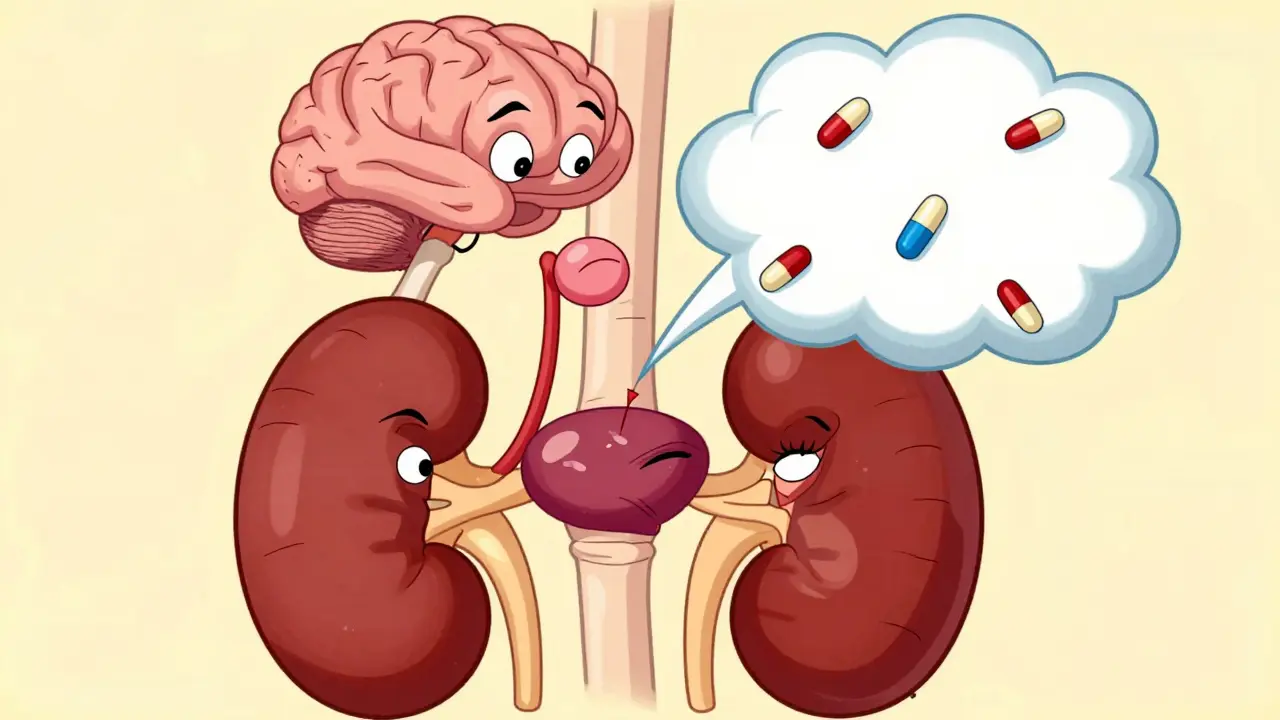
To understand why opioids cause adrenal insufficiency, we need to look at how your body handles stress. Normally, when you face physical stress-like an infection, injury, or surgery-a complex communication loop kicks in. This is called the Hypothalamic-Pituitary-Adrenal (HPA) Axis.
- The Hypothalamus: Acts as the command center, releasing corticotropin-releasing hormone (CRH).
- The Pituitary Gland: Receives the signal and releases adrenocorticotropic hormone (ACTH).
- The Adrenal Glands: Situated on top of your kidneys, these glands respond to ACTH by producing cortisol, your primary stress hormone.
Cortisol is essential. It helps regulate blood pressure, reduce inflammation, and maintain blood sugar levels. When you take opioids, particularly over long periods, they don’t just block pain signals. They bind to receptors in the brain that interfere with this entire chain of command. Specifically, opioids inhibit the release of CRH and ACTH. Without these signals, your adrenal glands go into standby mode. They aren’t damaged; they’re just not being told to work. This results in low cortisol levels, a state known as secondary or tertiary adrenal insufficiency.
Research published in Frontiers in Endocrinology highlights that this suppression is a direct pharmacological effect, not a rare anomaly. As noted by Patel et al. (2024), this mechanism has been established in medical literature for years but remains underappreciated by many practitioners who focus solely on pain relief metrics.
Who Is at Risk? Identifying the Danger Zone
Not everyone taking pain medication will develop adrenal insufficiency. However, certain factors significantly increase your risk. Understanding these variables can help you and your doctor monitor your health more effectively.
| Risk Factor | Details & Thresholds | Impact Level |
|---|---|---|
| Dosage | Morphine Milligram Equivalents (MME) > 20 per day | High |
| Duration | Chronic use exceeding 90 days | Medium-High |
| Type of Opioid | Methadone and high-dose morphine show stronger suppression | Variable |
| Concurrent Illness | Recent surgery, infection, or critical care admission | Triggers Crisis |
A key metric doctors use is Morphine Milligram Equivalents (MME). A study cited by Coluzzi et al. (2023) found that patients taking opioids for more than 90 days had a higher incidence of adrenal issues if their daily dose was significant. Specifically, those on higher MME doses were statistically more likely to fail stimulation tests compared to controls. The American Medical Association (AMA) Ed Hub suggests raising concern for OIAI in any patient receiving chronic therapy, particularly if the dose exceeds 20 MME daily.
It’s also worth noting that while opioids suppress cortisol, they generally do not affect aldosterone production in humans. Aldosterone regulates salt and water balance. This means electrolyte imbalances like low sodium might not be as prominent in OIAI as they are in primary adrenal failure (Addison’s disease), which can sometimes delay diagnosis because the classic signs are missing.
Symptoms That Mimic Other Conditions
The tricky part about OIAI is that its symptoms are vague and easily mistaken for fatigue, depression, or even the underlying condition causing your pain. Because cortisol is involved in so many bodily functions, low levels create a cascade of subtle issues.
You might experience:
- Persistent fatigue that doesn’t improve with sleep
- Muscle weakness and joint pain
- Nausea, vomiting, or loss of appetite
- Low blood pressure, leading to dizziness upon standing
- Hypoglycemia (low blood sugar), causing shakiness or confusion
- Unexplained weight loss
In a case report by Lee et al. (2015), a 25-year-old man developed severe hypercalcemia (high calcium levels) during recovery from critical illness. Initially, doctors couldn’t explain the calcium spike. Only after investigating his endocrine function did they discover he had secondary adrenal insufficiency caused by methadone treatment. Once glucocorticoid replacement was started, the hypercalcemia resolved. This case illustrates how OIAI can present with unusual complications that mask the root cause.
If you have been on opioids for a while and start feeling “washed out” despite adequate rest, it’s crucial to mention your medication history to your doctor. Don’t assume it’s just “part of getting older” or “chronic pain fatigue.”
Diagnosis: Beyond the Standard Blood Test
Diagnosing OIAI requires specific testing. A standard morning cortisol check might hint at a problem, but it’s not definitive. Cortisol levels fluctuate throughout the day and can be influenced by many factors.
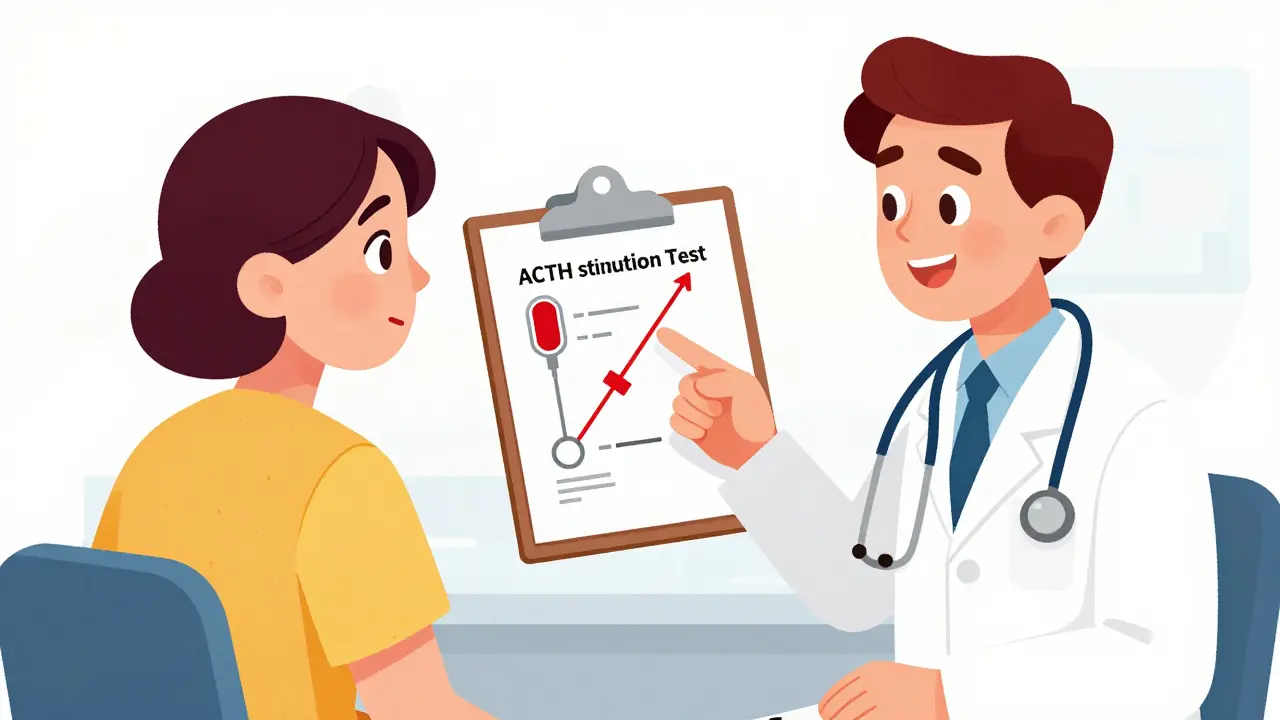
The gold standard for diagnosis involves an ACTH Stimulation Test. Here’s how it works:
- Baseline Measurement: Doctors draw blood to measure your baseline cortisol and ACTH levels.
- Stimulation: Synthetic ACTH is injected into your vein.
- Response Check: Blood is drawn again at 30 and 60 minutes to see if your adrenal glands respond by producing cortisol.
According to clinical guidelines referenced by Patel (2024), a morning cortisol level below 3 mcg/dL (100 nmol/L) is highly suggestive of adrenal insufficiency. In the stimulation test, a peak cortisol level of ≤18 mcg/dL (500 nmol/L) typically confirms the diagnosis. However, recent studies suggest these thresholds might need refinement, as some patients may have lower functional reserves without meeting strict diagnostic cutoffs.
It’s important to note that not every slight reduction in cortisol warrants a full workup. As Patel notes, a “high index of suspicion” is prudent for patients on high-dose or prolonged opioids, but unnecessary testing should be avoided. Your doctor will weigh your symptoms against your medication regimen.
Treatment and Management Strategies
The good news? Opioid-induced adrenal insufficiency is often reversible. Unlike primary adrenal failure, where the glands are destroyed, OIAI is a functional suppression. When the opioid pressure is removed, the HPA axis can often recover.
However, recovery isn’t instantaneous. Cortisol has a half-life of about 90 minutes in serum, meaning your body needs time to restart production. During this transition, you may require Glucocorticoid Replacement Therapy, such as hydrocortisone or prednisone. This mimics the cortisol your body isn’t making enough of.
Management strategies include:
- Opioid Tapering: Gradually reducing the dose under medical supervision. Abrupt cessation can trigger an Addisonian crisis, a life-threatening emergency characterized by shock and severe electrolyte imbalance.
- Stress Dosing: If you undergo surgery or suffer a major illness, you may need temporary higher doses of steroids to mimic the stress response your body can’t provide.
- Monitoring: Regular blood tests to track cortisol and ACTH levels as you taper off opioids.
In the case of the 25-year-old man mentioned earlier, his hypoadrenalism resolved completely after methadone was weaned and ceased. This reversibility offers hope, but it requires careful coordination between your pain specialist and endocrinologist.
Preventing Misdiagnosis: What Patients Can Do
Given that approximately 5% of the US population is prescribed chronic opioid therapy, the number of people at risk for OIAI is substantial. Yet, misdiagnosis remains common. Here’s how you can advocate for yourself:
- Keep a Symptom Diary: Track fatigue, dizziness, and mood changes. Note if they worsen after dose increases or during stressful events.
- Inform All Providers: Whether you see a dentist, surgeon, or general practitioner, always disclose your long-term opioid use. Ask them to consider adrenal function before prescribing procedures that cause physiological stress.
- Ask About Screening: If you’ve been on opioids for more than three months at moderate-to-high doses, ask your doctor if an ACTH stimulation test is appropriate.
- Don’t Ignore “Minor” Symptoms: Persistent nausea or unexplained weakness shouldn’t be dismissed as side effects of pain meds alone.
As de Vries et al. (2020) pointed out in their systematic review, opioid users often report worse quality of life across physical, social, and emotional domains. Some of this decline may be directly linked to untreated hormonal suppression rather than just the pain itself.
FAQ: Common Questions About Opioids and Adrenal Health
Is opioid-induced adrenal insufficiency permanent?
In most cases, no. OIAI is typically reversible once opioid therapy is discontinued or significantly reduced. The adrenal glands themselves are usually healthy but suppressed. Recovery can take weeks to months depending on the duration and dosage of opioid use. However, immediate steroid replacement is often needed during the withdrawal phase to prevent crisis.
Can short-term opioid use cause adrenal insufficiency?
Short-term use (less than a few weeks) is unlikely to cause clinically significant adrenal insufficiency in healthy individuals. The HPA axis suppression becomes more pronounced with chronic use, typically defined as daily use for more than 90 days. Acute high-dose exposure can temporarily blunt the stress response, but this usually resolves quickly once the drug clears the system.
What is an Addisonian crisis, and why is it dangerous?
An Addisonian crisis is a life-threatening acute deficiency of cortisol. It can be triggered by stress, infection, or sudden withdrawal of steroids in someone with adrenal insufficiency. Symptoms include severe vomiting, dehydration, low blood pressure, and shock. Without immediate treatment with intravenous hydrocortisone and fluids, it can be fatal. This is why undiagnosed OIAI is so risky during surgeries or illnesses.
Do all opioids suppress the adrenal glands equally?
No, the degree of suppression varies. Methadone and high-dose morphine have been shown to have stronger inhibitory effects on the HPA axis compared to some other opioids. However, individual sensitivity plays a role. Even shorter-acting opioids can cause suppression if taken in high doses continuously over long periods. The route of administration (e.g., patch vs. pill) may also influence absorption and overall hormonal impact.
Should I stop my opioids if I suspect adrenal insufficiency?
Never stop opioids abruptly without medical supervision. Sudden cessation can trigger both opioid withdrawal and an adrenal crisis if your glands are already suppressed. Instead, contact your healthcare provider immediately. They may order blood tests and potentially prescribe a short course of steroids while safely tapering your pain medication.
How does OIAI differ from Addison's disease?
Addison's disease is primary adrenal insufficiency, where the adrenal glands themselves are damaged (often by autoimmune disease). OIAI is secondary or tertiary insufficiency, where the glands are healthy but not receiving signals from the brain due to opioid suppression. A key difference is that OIAI typically does not affect aldosterone production, so skin pigmentation changes and severe salt-wasting seen in Addison's are usually absent in OIAI.