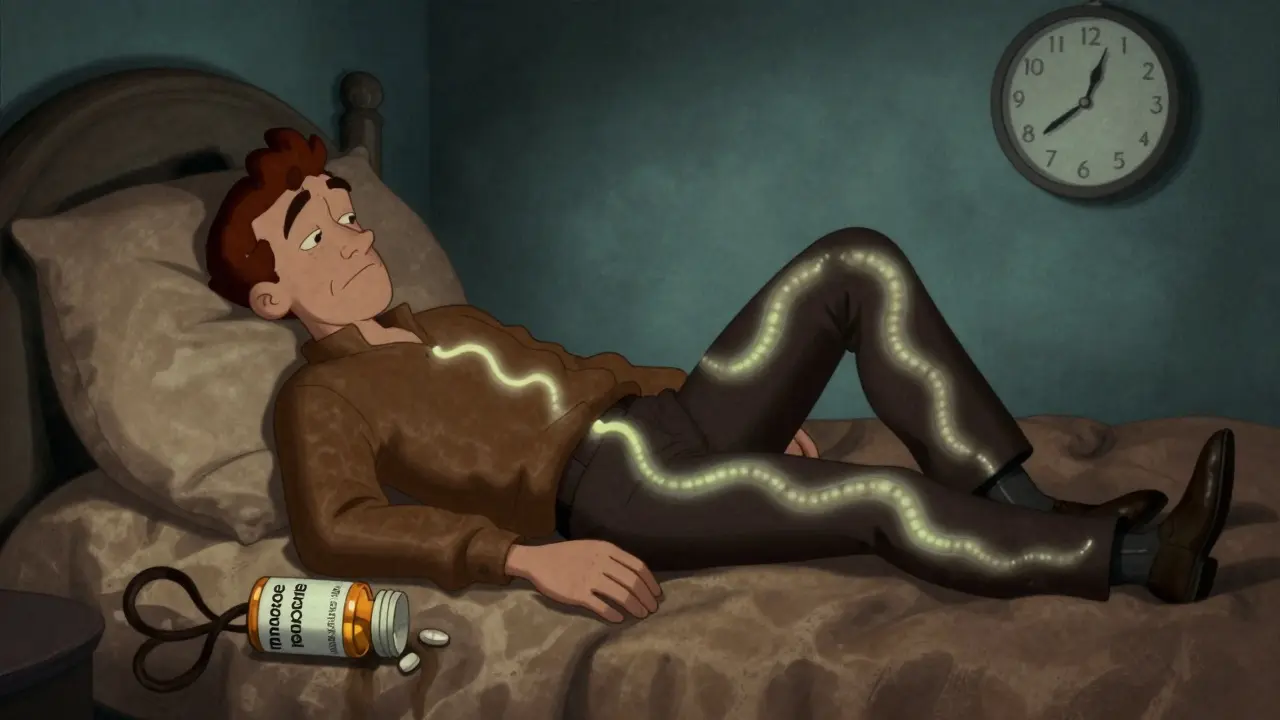
Restless Leg Syndrome (RLS) isn’t just about needing to move your legs at night. It’s a neurological condition that turns quiet moments into unbearable discomfort. You feel tingling, crawling, or aching deep in your limbs-especially when you’re lying down or sitting still. The urge to move is so strong it keeps you awake, drains your energy, and makes mornings feel like a battle you didn’t sign up for. For years, doctors reached for dopaminergic drugs like pramipexole and ropinirole as the go-to fix. But today, that approach is changing-fast.
Why Dopaminergic Medications Used to Be the Gold Standard
For decades, dopamine agonists like Mirapex (pramipexole) and Requip (ropinirole) were the first choice for RLS. They worked quickly. Take a pill at dinner, and within an hour, the creeping sensations in your legs would fade. It felt like magic. These drugs mimic dopamine, a brain chemical that helps control movement. In RLS, there’s evidence of low dopamine activity in the A11 region of the brain, which connects to the spinal cord and influences leg motion. So, replacing it seemed logical.
By 2010, over 75% of new RLS prescriptions were for dopamine agonists. They were approved by the FDA, covered by insurance, and widely promoted. But what no one talked about back then was what happened after six months-or a year-or three.
The Hidden Cost: Augmentation
Augmentation is the silent trap. It’s when the medication that was helping starts making your RLS worse. And it doesn’t sneak up on you-it hits hard.
- Symptoms start earlier in the day-sometimes by 2 to 6 hours. Instead of only bothering you at bedtime, now they’re kicking in at 3 p.m.
- The feeling spreads. What started in your legs now crawls up your arms, and sometimes even your face.
- The intensity spikes. Your IRLSSG score (a standard RLS severity scale) jumps by 5 to 10 points, meaning your discomfort goes from annoying to debilitating.
- You need more of the drug. Dose increases lead to more side effects, and more side effects lead to higher doses. It’s a cycle.
Studies show 40-60% of people on daily dopamine agonists develop augmentation within 1-3 years. That’s not rare-it’s expected. A 2022 review in Sleep Medicine Reviews found 7-12% of patients experience augmentation every year on these drugs. After five years, rates climb to nearly 80%. Dr. John Winkelman of Massachusetts General Hospital says it bluntly: “Dopamine agonists, once considered the first-line treatment, are no longer recommended because of their long-term complications.”
Other Risks You Might Not Know About
Augmentation isn’t the only danger. Dopamine agonists can trigger impulse control disorders. People start gambling compulsively, shopping uncontrollably, or even developing obsessive behaviors like binge-eating or hypersexuality. A 2019 study in Movement Disorders found 6.1% of RLS patients on these drugs developed such behaviors-compared to just 0.5% in the general population. These aren’t rare side effects. They’re common enough that the FDA added a black box warning in 2022.
And then there’s the rebound effect. When you try to stop the drug, symptoms often surge back worse than before. One patient on Reddit described it: “After two years on Mirapex, I couldn’t sit still for a single minute. Tapering off took six months. I felt like I was detoxing from a drug I didn’t know I was addicted to.”

The New First-Line Treatments
By 2024, guidelines from the American Academy of Sleep Medicine (AASM) had shifted completely. Alpha-2-delta ligands are now the recommended first-line treatment for chronic RLS. These include:
- Gabapentin enacarbil (Horizant)-approved in 2011, taken once daily at 600 mg.
- Pregabalin (Lyrica)-used off-label, typically 75-300 mg per day.
These drugs don’t touch dopamine. Instead, they calm overactive nerves by binding to calcium channels in the spinal cord. They take longer to work-days to weeks-but once they do, they hold steady. No augmentation. No spreading. No impulse disorders.
A 2023 meta-analysis in JAMA Neurology compared pramipexole (0.5 mg) and pregabalin (150 mg) over a year. At 12 weeks, both reduced symptoms by about the same amount. But at 52 weeks? Pregabalin held strong. Pramipexole’s effectiveness dropped by 35% due to augmentation. Real-world data backs this up: 65% of new RLS prescriptions in 2024 were for alpha-2-delta ligands. Dopamine agonists? Down to 20%.
What About Opioids and Iron?
For patients who don’t respond to alpha-2-delta ligands, low-dose opioids like oxycodone (5 mg) can be an option. A 2021 study in Pain Medicine showed 50-70% symptom relief with minimal misuse risk when doses stayed under 30 mg morphine equivalent daily. But this isn’t for everyone-especially not if you have a history of substance use.
Iron deficiency is another major player. About 30% of RLS patients have low ferritin (the body’s iron storage marker). If your ferritin is below 75 mcg/L, oral iron supplements (100-200 mg elemental iron daily) can reduce symptoms by 35% in 12 weeks. It’s simple, cheap, and safe-if you test first.
Non-Medication Strategies That Actually Work
Medication isn’t the whole story. Lifestyle changes can cut symptom severity by 20-30% on their own:
- Cut caffeine. 80% of RLS patients consume caffeine daily. Even afternoon coffee can worsen symptoms.
- Limit alcohol. 65% of people report worse RLS after drinking-even one glass.
- Improve sleep hygiene. Consistent bedtime, cool room, no screens before bed-these help regulate your nervous system.
- Movement during the day. Light exercise like walking or stretching helps, but intense workouts too close to bedtime can backfire.
These aren’t just “tips.” They’re evidence-backed adjustments that reduce reliance on drugs.
How Treatment Has Changed in Just a Few Years
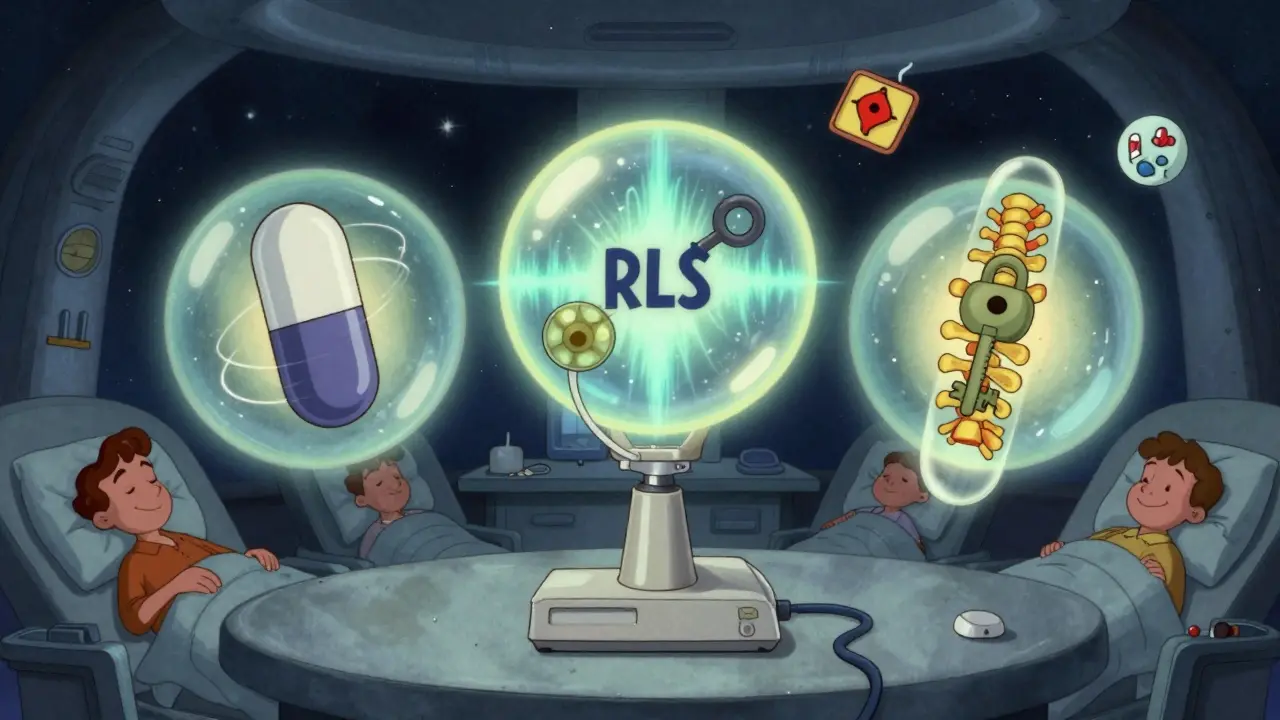
The shift has been dramatic. In 2010, dopamine agonists were the undisputed first choice. Today, 92% of neurologists and 70% of primary care doctors in the U.S. start with alpha-2-delta ligands. In Europe, that number is even higher-85%. Market data shows dopamine agonist sales for RLS will drop from $360 million in 2024 to $120 million by 2030. Alpha-2-delta ligands? They’re expected to hit $890 million in sales by then.
The reason? Real-world outcomes. Patients aren’t just surviving-they’re sleeping again. Doctors aren’t just prescribing-they’re listening.
What Should You Do If You’re on Dopamine Agonists?
If you’ve been on pramipexole, ropinirole, or rotigotine for more than six months, ask your doctor about augmentation. Look for these signs:
- Do your symptoms start earlier than they used to?
- Have they spread to your arms or other body parts?
- Do you need a higher dose just to get the same relief?
If the answer is yes, don’t stop cold turkey. Work with your doctor on a taper plan: reduce the dose by 25% every 1-2 weeks while introducing gabapentin enacarbil or pregabalin. A 2023 study in Sleep Medicine found 85% of patients successfully transitioned this way.
What’s Next for RLS Treatment?
Research is moving beyond dopamine. Three phase 3 trials are underway:
- A novel iron chelator called Fazupotide, designed to restore brain iron levels.
- A selective A11 dopamine receptor agonist that targets only the affected area-without triggering augmentation.
- Transcranial magnetic stimulation (TMS), a non-drug option that uses magnetic pulses to calm overactive nerves.
These aren’t sci-fi. They’re real, and they’re coming. But for now, the clearest path to relief is clear: step away from long-term dopamine agonists. Try alpha-2-delta ligands. Check your iron. Clean up your habits. And sleep like you used to.
Are dopamine agonists still used for Restless Leg Syndrome?
Yes-but only as a second-line option. Dopamine agonists like pramipexole and ropinirole are no longer recommended as first-line treatment due to high risk of augmentation and impulse control disorders. They may still be used short-term (under 6 months) for patients with infrequent symptoms or when other treatments fail, but only under close monitoring.
What is augmentation in RLS?
Augmentation is when RLS symptoms worsen because of the medication meant to treat them. Instead of helping only at night, symptoms begin earlier in the day, spread to other body parts (like arms), become more intense, and occur more frequently. It’s a common side effect of long-term dopamine agonist use, affecting 40-60% of patients within 1-3 years.
What are the best medications for RLS today?
Alpha-2-delta ligands like gabapentin enacarbil (Horizant) and pregabalin (Lyrica) are now the recommended first-line treatments. They reduce symptoms effectively without causing augmentation. Iron supplements are also first-line for patients with low ferritin levels (below 75 mcg/L). Opioids are reserved for severe cases that don’t respond to other treatments.
Can lifestyle changes help with RLS?
Yes. Cutting caffeine, reducing alcohol, improving sleep hygiene, and doing light daily exercise can reduce symptoms by 20-30%. These changes don’t replace medication, but they make medication more effective and reduce the need for higher doses.
How do I know if I have low iron and if it’s causing my RLS?
Ask your doctor for a serum ferritin blood test. If your level is below 75 mcg/L, iron deficiency is likely contributing to your RLS. Taking 100-200 mg of elemental iron daily for 12 weeks can improve symptoms in 35% of patients. Don’t self-supplement without testing-too much iron can be harmful.


Comments
Jonathan Rutter
February 20, 2026
Man, I’ve been on ropinirole for 4 years and I didn’t even know augmentation was a thing. I just thought I was getting worse at night. Turns out, my legs started crawling at 3 p.m. last summer-my wife thought I was losing my mind. Then I started having this weird urge to buy 17 pairs of sneakers online. Like, why? I already have 12. I didn’t even like them. Then I realized: it wasn’t me. It was the damn pill. I switched to gabapentin enacarbil last month. No more midnight shopping sprees. No more 4 p.m. leg screams. I slept for 7 hours straight last night. I’m not crying. You’re crying. 😭
Jana Eiffel
February 20, 2026
It is a profound irony that the medical establishment, having long championed dopaminergic agents as the panacea for Restless Leg Syndrome, now finds itself compelled to retract its prior endorsement. The phenomenon of augmentation, in its insidious progression, reveals not merely a pharmacological failure but a systemic overreliance on mechanistic models of neurological dysfunction, neglecting the broader, more complex bio-psycho-social dimensions of the condition. The ascendance of alpha-2-delta ligands-grounded not in dopamine mimicry but in neuromodulatory stabilization-represents not merely a therapeutic shift, but an epistemological recalibration within neurology. One must ask: how many other conditions have we mischaracterized as chemical imbalances, when the truth lies in neural hyperexcitability, in dysregulated calcium flux, in the quiet hum of a nervous system out of sync? The data is clear. The paradigm has shifted. We are, at last, beginning to listen-not to the drug, but to the patient.
aine power
February 22, 2026
Iron. It’s always iron. 😒
Robin bremer
February 23, 2026
bro i went from 0.5mg pramipexole to 1.5mg and still couldn’t sleep. then i tried gabapentin and i actually REMEMBERED WHAT IT FELT LIKE TO NOT HAVE LEGS LIKE WORMS. i’m not even mad. just impressed. also i stopped drinking wine. it’s wild how much that helped. 🤯
Ashley Paashuis
February 23, 2026
This is an incredibly thorough and well-researched breakdown. I appreciate how you’ve emphasized not just the pharmacological shift but also the importance of non-pharmacological interventions. Many patients are unaware that lifestyle adjustments can reduce symptom severity by as much as 30%. The emphasis on ferritin testing is particularly critical-iron deficiency is often overlooked, especially in women and older adults. I’ve seen patients improve significantly with oral iron alone, even without medication. Thank you for highlighting the human side of this condition-not just the drugs, but the sleep, the fatigue, the quiet desperation of lying awake while your body screams to move. You’ve given many of us a roadmap to better care.
Arshdeep Singh
February 23, 2026
lol u guys are so late to the party. i been on pregabalin since 2018. dopamine drugs? nah man. i tried em once. felt like my legs were fulla ants and my brain was on tinder. i quit caffeine too. no more espresso after noon. and guess what? i sleep. like, real sleep. not that zombie state where u stare at the ceiling like ur waiting for the apocalypse. also, ferritin test? yes. mine was 42. took iron for 3 months. now i feel like a normal human. why is this even a debate?
Jeremy Williams
February 24, 2026
There is a quiet dignity in the transition from pharmacological dependency to physiological harmony. The dopamine agonists offered a seductive illusion of control-an immediate, chemical resolution to a deeply systemic disturbance. But true relief, as evidenced by the rising adoption of alpha-2-delta ligands and the resurgence of iron repletion, lies not in substitution, but in recalibration. The body does not crave dopamine; it craves balance. The nervous system does not need to be flooded-it needs to be calmed. To prescribe dopamine agonists as first-line therapy was to treat a symptom as if it were a cause. The new paradigm acknowledges complexity. It honors the patient’s lived experience. And in doing so, it restores not just sleep, but agency.
Maddi Barnes
February 25, 2026
Okay but can we talk about how the entire medical community acted like dopamine agonists were a magic wand and then just… shrugged when 60% of people started having their symptoms spread to their arms and then their faces? 🤦♀️ I had a patient who started compulsively buying vintage typewriters because of her RLS meds. Like, 17 of them. She didn’t even know how to type. I asked her why. She said, ‘I just felt like I needed to fix them.’ I told her she didn’t need to fix the typewriters. She needed to fix her meds. She cried. We switched her to gabapentin. She hasn’t bought a typewriter since. Also, caffeine? Cut it. Alcohol? Cut it. Sleep hygiene? Do it. It’s not ‘alternative’-it’s basic neurology. And yes, I’m being sarcastic. Because this shouldn’t be a revelation. It should’ve been common sense.
Write a comment