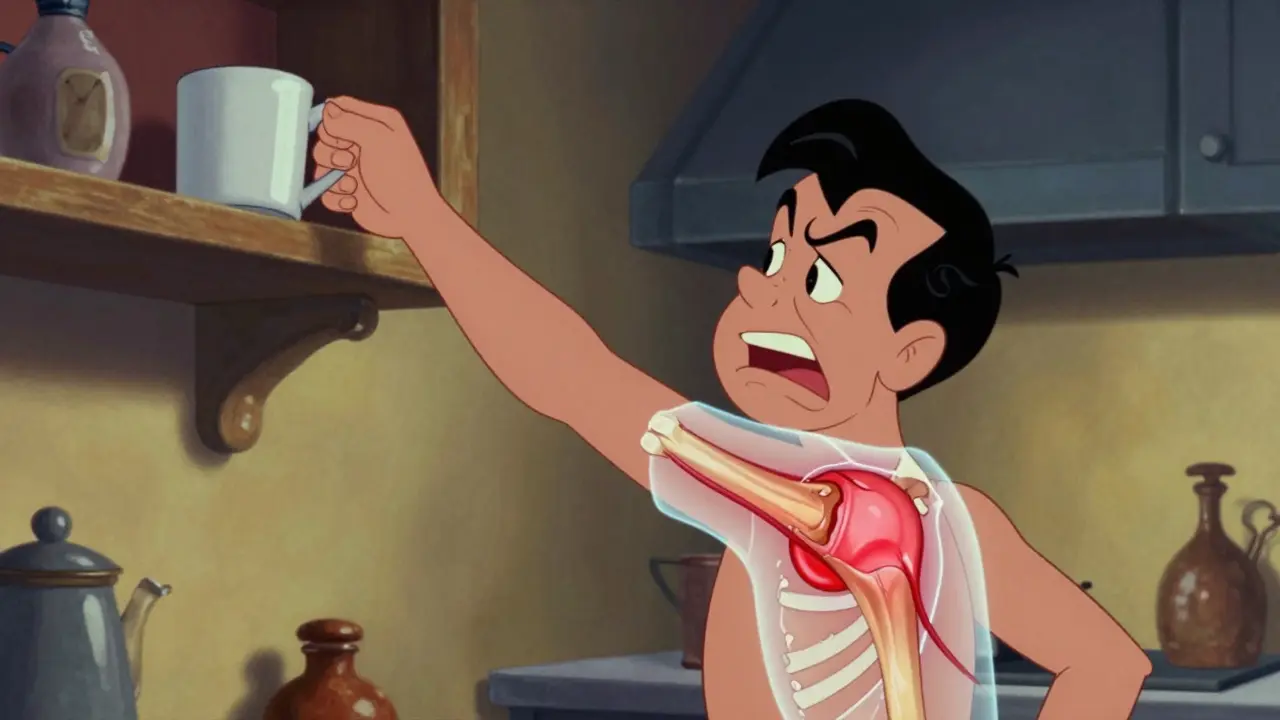
Waking up with a dull ache in your shoulder that turns into sharp pain when you reach for a coffee mug is frustrating. You might feel like your arm is stuck or that even simple tasks, like brushing your hair, have become impossible. This isn't just bad luck; it’s likely one of two common culprits: rotator cuff tendinitis or subacromial bursitis. Both conditions involve inflammation in the shoulder joint, often occurring together because they share the same tight space under the acromion bone. Understanding the difference-and more importantly, how to fix it-can save you months of unnecessary pain.
The good news? About 80% of these cases improve without surgery. But "improve" doesn't mean "ignore." It means following a specific path of rest, targeted movement, and sometimes medical intervention. Let’s break down what’s happening inside your shoulder and exactly how to get it moving again.
Understanding the Anatomy: Why Your Shoulder Hurts
To treat shoulder pain, you first need to know what’s breaking down. The shoulder is a marvel of engineering but also a design flaw waiting to happen. It relies on four small muscles known as the rotator cuff: the supraspinatus, infraspinatus, teres minor, and subscapularis. These muscles stabilize the ball-and-socket joint, allowing you to lift your arm overhead.
Sitting right above these tendons is the subacromial bursa, a fluid-filled sac about 1-2 cm thick that acts like a cushion. Its job is to reduce friction between the rotator cuff tendons and the acromion bone (the roof of your shoulder). When this system works well, you don’t notice it. When it fails, you feel every move.
Subacromial bursitis occurs when this bursa becomes inflamed and swells, sometimes tripling in size. This swelling creates a bottleneck. As you lift your arm, the swollen bursa and irritated tendons get pinched against the bone. This is called impingement syndrome. You’ll likely feel a "painful arc"-sharp pain specifically between 60° and 120° of lifting your arm. If you’ve ever winced while reaching for a high shelf, this is probably why.
Diagnosis: Is It Tendinitis, Bursitis, or a Tear?
Rotator cuff injuries exist on a spectrum. At the mild end, you have tendinitis (inflammation of the tendon). In the middle, you might have a partial tear. At the severe end, a complete tear where the muscle detaches from the bone. Bursitis often travels with tendinitis, making them hard to distinguish without imaging.
Doctors typically diagnose these issues through physical exams and imaging. An ultrasound can show if the bursa is thicker than 2 mm (which is abnormal) or if there’s fluid indicating inflammation. MRI scans provide a clearer picture of soft tissue damage, showing signal changes in the tendons. If you’re over 40, be aware that the risk jumps significantly. Studies show 20-30% of people aged 50-59 have some form of rotator cuff pathology, rising to 50-60% for those over 80. Age-related wear and tear is real, but it doesn’t mean you’re doomed to chronic pain.
Conservative Treatment: The First Line of Defense
Before considering surgery, almost all specialists recommend a period of conservative management. This isn’t just "waiting it out." It’s an active process involving three key pillars: relative rest, medication, and activity modification.
- Relative Rest: Avoid overhead activities and heavy lifting for 2-4 weeks. Don’t immobilize the arm completely, as stiffness sets in quickly. Just stop doing the things that cause sharp pain.
- Ice Therapy: Apply ice packs for 15-20 minutes, 3-4 times daily. This reduces acute inflammation in the bursa.
- NSAIDs: Nonsteroidal anti-inflammatory drugs like ibuprofen (400-600 mg) can help manage pain and swelling. Take them with food to protect your stomach.
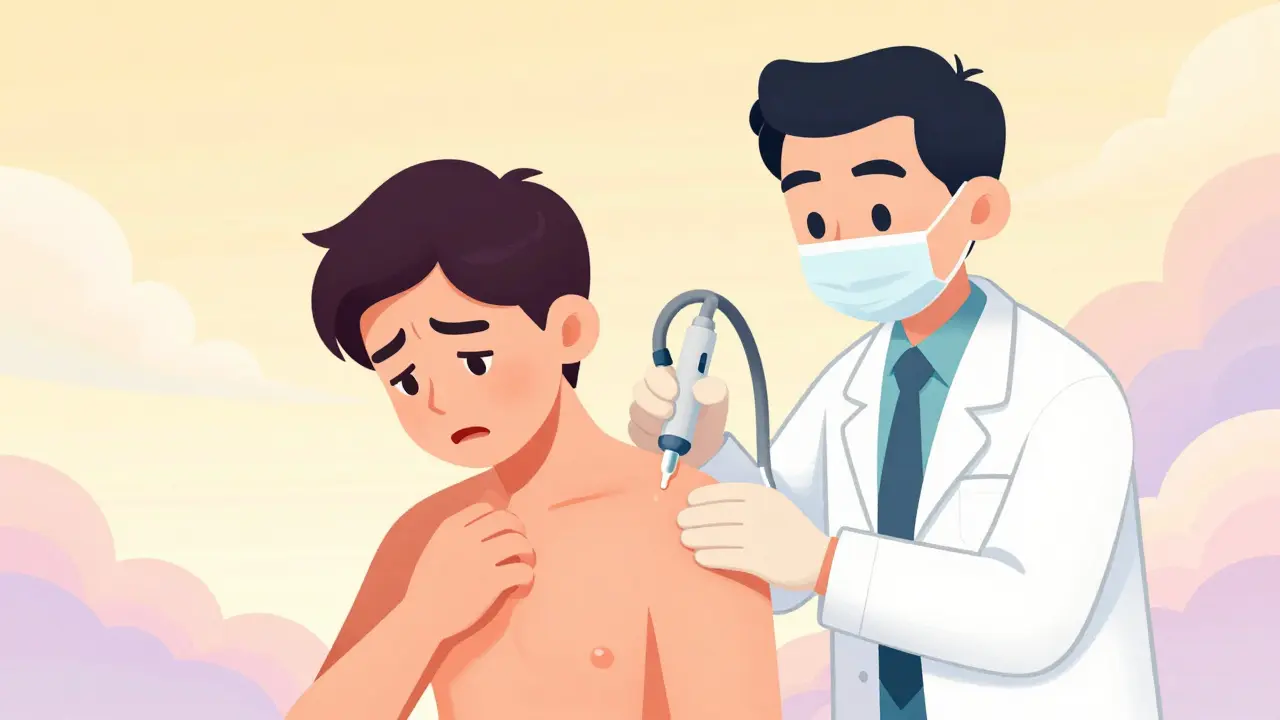
If these steps don’t bring relief after 4-6 weeks, doctors may suggest a corticosteroid injection. This involves injecting a mix of triamcinolone acetonide and lidocaine directly into the subacromial space, usually guided by ultrasound for accuracy. This provides significant pain relief for 65-75% of patients, lasting 4-12 weeks. However, limit these to 2-3 per year. Frequent injections can weaken tendons, increasing the risk of rupture.
Rehabilitation Protocols: Exercises That Actually Work
This is where most people go wrong. They wait until the pain is gone to start exercising, then jump back into full activity too soon. Rehabilitation needs to start early, gently, and consistently. Here is a proven progression based on guidelines from orthopedic experts like Dr. Scott Faucett.
- Weeks 1-2: Pendulum Exercises. Lean forward, letting your affected arm hang loose. Gently swing your arm in small circles using momentum from your body, not your shoulder muscles. Do this for 5-10 minutes, three times a day. This keeps the joint mobile without stressing the inflamed tissues.
- Weeks 3-4: Active-Assisted Range of Motion. Use your good arm to help lift the affected arm. Cross-body stretches and wall crawls are excellent here. The goal is to regain flexibility without pain.
- Weeks 4-6: Scapular Stabilization. This is crucial. Weak shoulder blades lead to poor shoulder mechanics. Perform scapular retractions (squeezing shoulder blades together) for 3 sets of 15 reps daily. Patients who focus on this see 30% faster pain resolution.
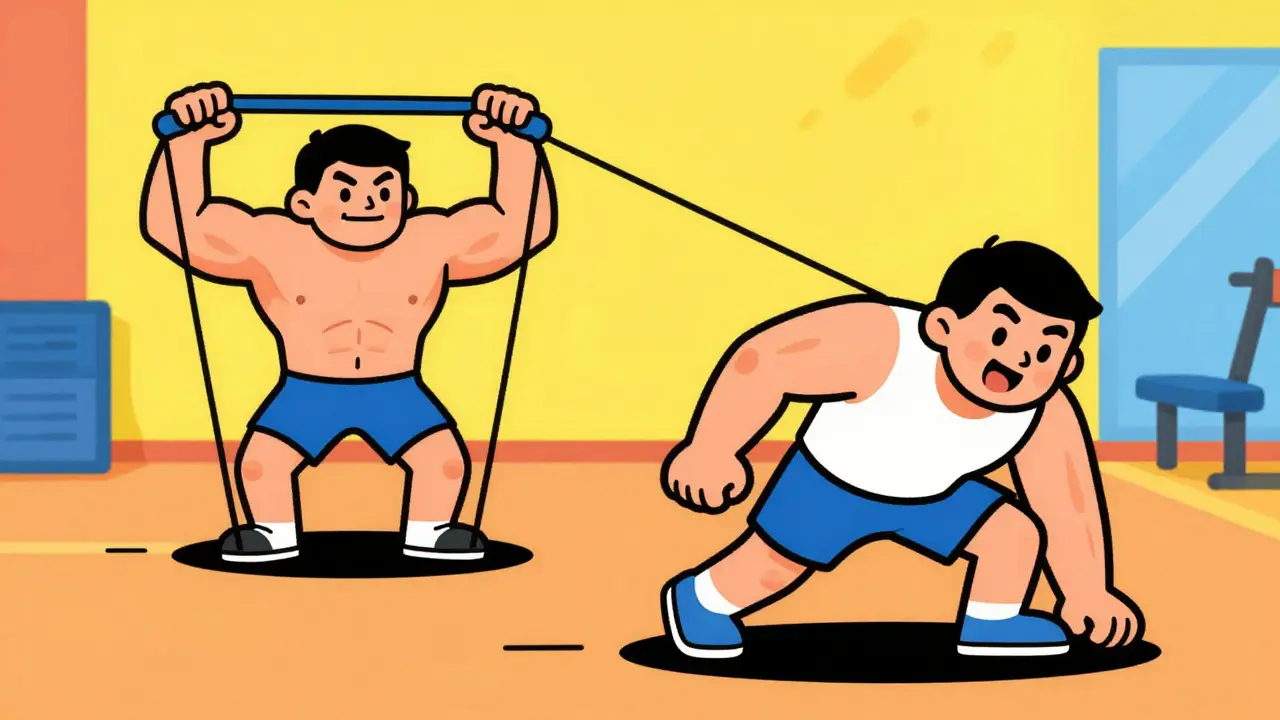
- Weeks 6+: Strengthening. Introduce resistance bands. Start light (30-50% effort). Focus on external rotation and internal rotation exercises. Aim for 15-20 reps per set. Progress slowly. If pain exceeds a 5 on a 0-10 scale during exercise, dial it back.
Consistency beats intensity. Doing 20 minutes of gentle exercises daily is far better than one hour of painful grinding once a week. Apps with reminders can boost adherence from 54% to 82%, so consider using technology to keep you on track.
When Surgery Becomes Necessary
Despite best efforts, some cases don’t respond to conservative care. If you’ve tried 3-6 months of physical therapy and injections with no improvement, surgery might be the next step. This is especially true for older patients with complete tears, who have only a 40% healing rate with non-surgical methods.
The most common procedure is arthroscopic subacromial decompression. Surgeons use tiny cameras and instruments to remove part of the acromion bone (acromioplasty) and trim the inflamed bursa (bursectomy). This creates more space for the rotator cuff tendons to move freely. The surgery takes 45-60 minutes and uses 3-4 mm portals.
However, be realistic about outcomes. Recent studies show that for isolated bursitis without major structural damage, surgery offers only modest benefits over intensive physical therapy. It’s a tool, not a magic cure. Recovery still requires 4-6 months of dedicated rehab. Surgery is generally reserved for those with significant functional loss or large tears that won’t heal on their own.
Preventing Recurrence: Long-Term Shoulder Health
Shoulder pain loves to return if you let your guard down. The "weekend warrior" phenomenon accounts for 35% of repeat visits. You recover, feel great, then play tennis or paint a ceiling on Saturday and flare up again.
To prevent this, integrate shoulder maintenance into your routine forever. Keep doing those scapular stabilization exercises twice a week. Warm up thoroughly before any overhead activity. Listen to your body-if you feel that familiar pinch, stop immediately. Don’t push through it.
Also, consider your environment. Construction workers and athletes in throwing sports have much higher incidence rates due to repetitive stress. If your job involves overhead work, take frequent micro-breaks to stretch and reset your posture. Ergonomics matter. Adjust your workstation so your mouse and keyboard are close, keeping your elbows at your sides rather than reaching forward.
How long does it take to recover from rotator cuff tendinitis?
Most patients see measurable improvement within 8-12 weeks of consistent physical therapy. Complete recovery can take 3-6 months depending on severity. Partial tears may heal faster than chronic cases, but adherence to the rehab protocol is the biggest factor in speed of recovery.
Can subacromial bursitis go away on its own?
Mild cases may resolve with relative rest and avoiding aggravating movements. However, without active rehabilitation to correct underlying biomechanical issues, bursitis often recurs. Treating the symptom (inflammation) without treating the cause (poor shoulder mechanics) leads to chronic problems.
Is surgery always required for a torn rotator cuff?
No. Many partial tears and even some complete tears in less active individuals can be managed conservatively. Surgery is typically recommended for young, active patients with acute tears, or older patients with significant weakness and failure of non-surgical treatments after 3-6 months.
What are the side effects of corticosteroid injections?
Common side effects include temporary pain flare-up for 24-48 hours, skin thinning at the injection site, and slight elevation in blood sugar for diabetics. Rarely, frequent injections can weaken tendons, increasing rupture risk. Limit to 2-3 per year with at least 3 months between doses.
How do I sleep with shoulder pain?
Avoid sleeping on the affected side. Try sleeping on your back with a pillow under the elbow of the painful arm to support it. Alternatively, sleep on the unaffected side with a pillow hugged against your chest to keep the painful shoulder from rolling forward. This reduces pressure on the inflamed bursa.