Drug shortages are no longer a rare anomaly; they have become a persistent threat to patient care. If you work in healthcare or pharmaceuticals, you know the frustration of seeing critical medications vanish from shelves just when patients need them most. The old model of lean, globally optimized supply chains-where efficiency was king and inventory was kept to an absolute minimum-has cracked under the weight of geopolitical tensions, pandemic aftershocks, and regulatory shifts. We are now in a new era where resilience matters more than pure cost savings.
The goal isn't just to react to crises but to prevent them. Building resilient pharmaceutical supply chains is the strategic ability to anticipate, prepare for, respond to, and recover from disruptions while maintaining continuous delivery of critical medicines. This shift requires moving away from single-source dependencies and embracing redundancy, technology, and regional diversification. Here is how the industry is restructuring itself to keep drugs on the shelf.
Understanding the Vulnerability: Why Shortages Happen
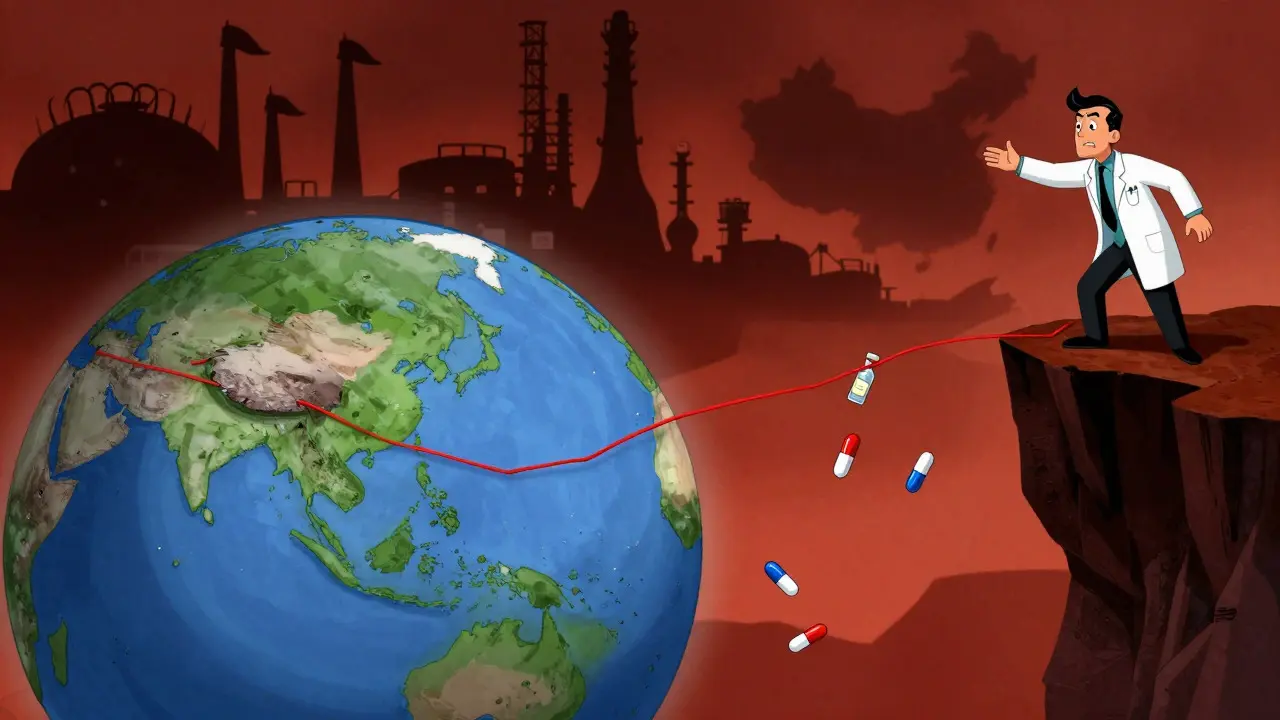
To fix the problem, we first have to look at why it exists. For decades, the pharmaceutical industry relied heavily on overseas manufacturing for Active Pharmaceutical Ingredients (APIs). According to the FDA, approximately 80% of APIs and 40% of finished drug products consumed in the United States are manufactured abroad. China and India account for roughly 68% of global API production. This concentration creates a single point of failure.
When a disruption hits-a port strike, a natural disaster, or a trade policy change-the ripple effects are immediate. The U.S. Department of Defense has identified these vulnerabilities as "critical national security risks." The 2023 Mathematica Inc. report commissioned by the U.S. Department of Health and Human Services defined supply chain resilience not as a nice-to-have feature, but as a core operational capability. It involves three phases: preparedness (anticipating issues), response (functioning during the crisis), and recovery (returning to normal). Without this framework, companies are essentially flying blind.
| Metric | Value / Status | Implication |
|---|---|---|
| Overseas API Manufacturing (US) | ~80% | High dependency on foreign sources |
| China & India Share of API Production | 68% | Concentration risk in two regions |
| Domestic US Essential Medicine API Production | 28% | Significant gap in local capacity |
| Sterile Injectables Domestic Production | 12% | Critical vulnerability for hospital care |
Strategic Diversification: Beyond Just One Supplier
The most effective preventive measure is diversification. Relying on a single supplier for a critical component is a gamble that rarely pays off. Leading pharmaceutical companies are now mapping their supply chains across 12 to 15 tiers of suppliers. This deep visibility allows them to identify weak links before they break.
Diversification doesn't mean buying from everyone everywhere. It means creating a balanced network. A common strategy is dual-sourcing for 70-80% of critical components. If your primary supplier in Asia faces a lockdown, your secondary supplier in Europe or North America can step up. However, this comes with a cost. Dr. Robert Chen of the National Academies of Sciences warns that overemphasizing domestic manufacturing without proper planning could increase costs by 20-30%. The key is balance: accepting 10-15% higher operational costs in exchange for a 50-70% reduction in disruption risk.
Geopolitical tensions have accelerated this trend. North American pharmaceutical companies reduced their reliance on China-sourced APIs from 38% in 2022 to 29% in 2025. Meanwhile, domestic production in the U.S. rose from 22% to 28% during the same period. This shift is driven by both market forces and government policy, including executive orders aimed at filling Strategic Active Pharmaceutical Ingredient Reserves.
Technological Levers: AI and Continuous Manufacturing
Technology is the engine that makes resilience scalable. Two major innovations are reshaping the landscape: artificial intelligence (AI) and continuous manufacturing.
AI-enabled process optimization tools are changing how we predict and manage supply chains. These systems can forecast disruption risks with 85-90% accuracy, giving companies a 60-90 day warning window. That lead time is invaluable. It allows procurement teams to secure alternative materials, adjust production schedules, and notify distributors before a shortage becomes public knowledge. Early pilot programs using blockchain-enabled traceability have also shown a 70-75% reduction in counterfeit drug incidents, adding another layer of security.
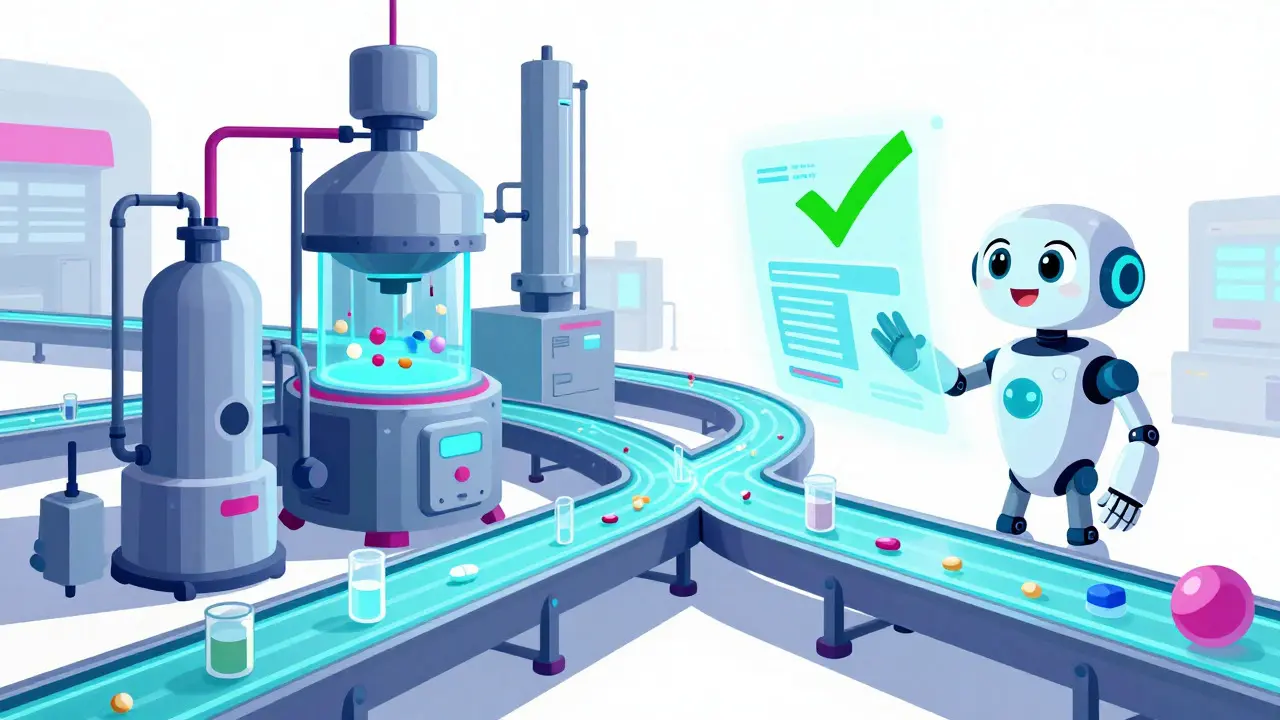
On the production side, continuous manufacturing is gaining traction. Unlike traditional batch processes, which make large quantities at once, continuous manufacturing runs non-stop, mixing and processing ingredients in a streamlined flow. According to the Center for Strategic and International Studies (CSIS), this method reduces facility footprint by 30-40%, cuts energy consumption by 20-25%, and lowers material waste by 15-20%. More importantly, it offers flexibility. You can ramp production up or down quickly based on demand, rather than being locked into long batch cycles.
However, adoption is slow. As of Q2 2025, the FDA had granted only 12 continuous manufacturing approvals compared to over 10,000 for batch processes. Regulatory hurdles remain significant, though the FDA’s 2025 guidance aims to cut approval timelines from 24-36 months to 12-18 months for qualified facilities. Industry analysts project that by 2027, nearly half of all new pharmaceutical manufacturing capacity will use continuous technologies.
Financial Realities and Investment Priorities
Building resilience costs money. Companies implementing comprehensive resilience strategies allocate 5-7% of their annual supply chain budgets to these initiatives, with top performers investing 8-10%. While this sounds steep, the return on investment is clear. ZS Associates found that resilient companies experienced 23% higher operational continuity during disruptions, avoiding approximately $14.7 million in revenue losses per major event for large firms.
The challenge lies in execution. Organizational silos are the biggest enemy. Seventy-eight percent of surveyed companies reported internal barriers that slowed decision-making. Successful implementations require cross-functional alignment. When engineering, procurement, and quality assurance teams work together, decision-making time during disruptions drops by 40-60%.
Investment priorities should focus on:
- Vulnerability Assessment: Spend 3-6 months mapping your entire supply network.
- Strategic Scenario Planning: Dedicate 2-4 months to simulating different crisis scenarios.
- Data Integration: Invest in platforms that reduce vulnerability identification time from 45 days to just 7 days.
- Buffer Stocks: Maintain 60-90 days of inventory for essential medicines, particularly those with no therapeutic alternatives.
Regulatory Landscape and Government Support
Government action is playing a larger role than ever. The U.S. government has committed $1.2 billion through the CHIPS and Science Act for pharmaceutical manufacturing infrastructure, with an additional $800 million proposed in the 2025 budget. Executive orders issued in August 2025 targeted the creation of a strategic reserve for critical medications, aiming for 90-day supply coverage for 150 essential medicines by 2027.
However, experts caution against relying solely on tariffs or mandates. The CSIS 2025 report notes that deploying tariffs to onshore all aspects of the pharmaceutical supply chain is infeasible given current global interdependencies. A balanced approach that leverages global networks while building strategic domestic capacity for critical products is the most sustainable path forward.
Implementation Checklist for Leaders
If you are responsible for supply chain strategy, here is a practical checklist to start building resilience today:
- Map Your Tiers: Go beyond Tier 1 suppliers. Identify who supplies your suppliers.
- Dual-Source Critical Items: Ensure at least one alternative supplier for every high-risk ingredient.
- Adopt Predictive Analytics: Implement AI tools that monitor geopolitical and logistical risks in real-time.
- Review Inventory Policies: Move from "just-in-time" to "just-in-case" for essential medicines.
- Engage Regulators Early: If exploring continuous manufacturing, start discussions with the FDA early to navigate approval pathways.
- Train Cross-Functional Teams: Conduct scenario-based training to improve response effectiveness by 35-45%.
Future Outlook: What Comes Next?
The next few years will define the modern pharmaceutical supply chain. By 2030, McKinsey forecasts that regional manufacturing networks will supply 65-70% of U.S. pharmaceutical needs, up from 55% in 2023. Workforce shortages remain a concern, with a projected 250,000 skilled manufacturing positions unfilled by 2027. Addressing this talent gap is as crucial as upgrading technology.
Resilience is no longer optional. It is the baseline requirement for operating in a volatile world. Companies that act now will not only avoid shortages but will gain a competitive advantage through reliability and trust.
What is the definition of pharmaceutical supply chain resilience?
Supply chain resilience is defined as the ability of medical product supply chains to anticipate, prepare for, respond to, and recover from disruptions while maintaining continuous delivery of critical products. This includes preparedness, response, and recovery capabilities.
Why are drug shortages becoming more frequent?
Drug shortages are increasing due to heavy reliance on overseas manufacturing for APIs (80% in the US), geopolitical tensions, and the fragility of lean, single-source supply chains. Disruptions in key regions like China and India have immediate global impacts.
How does continuous manufacturing improve supply chain resilience?
Continuous manufacturing reduces facility footprint by 30-40%, lowers energy use, and allows for faster scaling of production. It provides greater flexibility to adjust output based on demand, reducing the risk of bottlenecks associated with traditional batch processes.
What is the cost of implementing supply chain resilience?
Resilience investments typically add 8-12% to the cost of goods sold. However, leading companies allocate 5-7% of their supply chain budgets to these initiatives, achieving a 1.8x return on investment within 36 months through avoided disruption costs.
What role does AI play in preventing drug shortages?
AI-powered predictive analytics can forecast disruption risks with 85-90% accuracy, providing a 60-90 day warning window. This allows companies to proactively secure alternative materials and adjust logistics before a shortage occurs.