Buprenorphine Dosing & Safety Simulator
Adjust the slider to see how increasing Buprenorphine doses affect efficacy and safety compared to Full Agonists (like Methadone or Oxycodone). Notice how risks plateau while benefits continue.
Respiratory Depression Risk
Unlike full opioids, risk plateaus here. Breathing remains relatively stable above this point.
Opioid Receptor Blockade
Higher doses occupy more receptors, preventing other opioids from binding effectively.
Analgesia (Pain Relief)
Unlike respiratory risk, pain relief may continue to improve with higher doses, even past the safety ceiling.
Optimal Therapeutic Range
At 8 mg, you are likely experiencing significant craving reduction and stability with a manageable side effect profile. This is a common maintenance dose for many patients.
Caution: High Dosage
Doses above 24 mg are typically reserved for severe cases involving chronic pain or extreme tolerance. Ensure regular liver function monitoring and avoid all CNS depressants (alcohol, benzos).
Critical Safety Warning
This tool is for educational purposes only. Buprenorphine can be fatal if mixed with benzodiazepines (Xanax, Valium), alcohol, or sleep aids. These substances bypass the "ceiling effect" and cause additive respiratory depression. Always consult your healthcare provider before changing your dosage.
If you are taking buprenorphine or considering it for opioid use disorder (OUD) treatment, you have likely heard about its "ceiling effect." This term sounds technical, but it is actually the reason this medication is considered one of the safest options available today. Unlike full opioids like heroin or oxycodone, where taking more always leads to a stronger high and a higher risk of stopping your breathing, buprenorphine hits a limit. Once you reach that limit, taking more drug does not significantly increase the dangerous respiratory depression. This unique biological trait makes it a cornerstone of modern addiction medicine.
However, "safer" does not mean "side-effect-free." Buprenorphine interacts with your body in complex ways. It binds tightly to receptors, blocks other opioids, and can cause withdrawal if started at the wrong time. Understanding exactly how this drug works, what the ceiling effect really means for your daily life, and what risks still exist is crucial for staying safe and effective in your recovery.
How Buprenorphine Works: The Partial Agonist Advantage
To understand the side effects, you first need to understand the mechanism. Most people know opioids as drugs that bind to mu-opioid receptors in the brain to produce pain relief and euphoria. Full agonists like morphine or fentanyl lock into these receptors completely, like a key fitting perfectly into a lock. They turn the receptor on to 100% capacity. If you take more, you get more effect-until you overdose.
Buprenorphine is different. It is a partial mu-opioid receptor agonist. Imagine a dimmer switch instead of an on/off switch. When buprenorphine binds to the mu-opioid receptor, it only activates it partially, typically achieving about 40-60% of the maximal effect compared to a full agonist. But here is the kicker: it has a much higher affinity for the receptor than morphine. Studies show it binds approximately 25 to 50 times more tightly than morphine.
This high affinity means once buprenorphine is attached, it stays there. It is very hard to dislodge. This creates two major clinical benefits:
- Stability: Because it sticks so well, it provides long-lasting relief from cravings and withdrawal symptoms, often lasting 24 hours or more with a single dose.
- Blockade: Since the receptors are occupied by buprenorphine, other full opioids cannot bind effectively. If someone tries to use heroin while on buprenorphine, they will feel little to no euphoric effect because the "lock" is already taken by the "partial key.")
This mechanism explains why buprenorphine is so effective for OUD. It satisfies the body’s need for opioid activity enough to stop withdrawal and cravings, but it caps out before reaching the levels that cause severe respiratory depression or intense euphoria.
The Ceiling Effect Explained: Safety vs. Efficacy
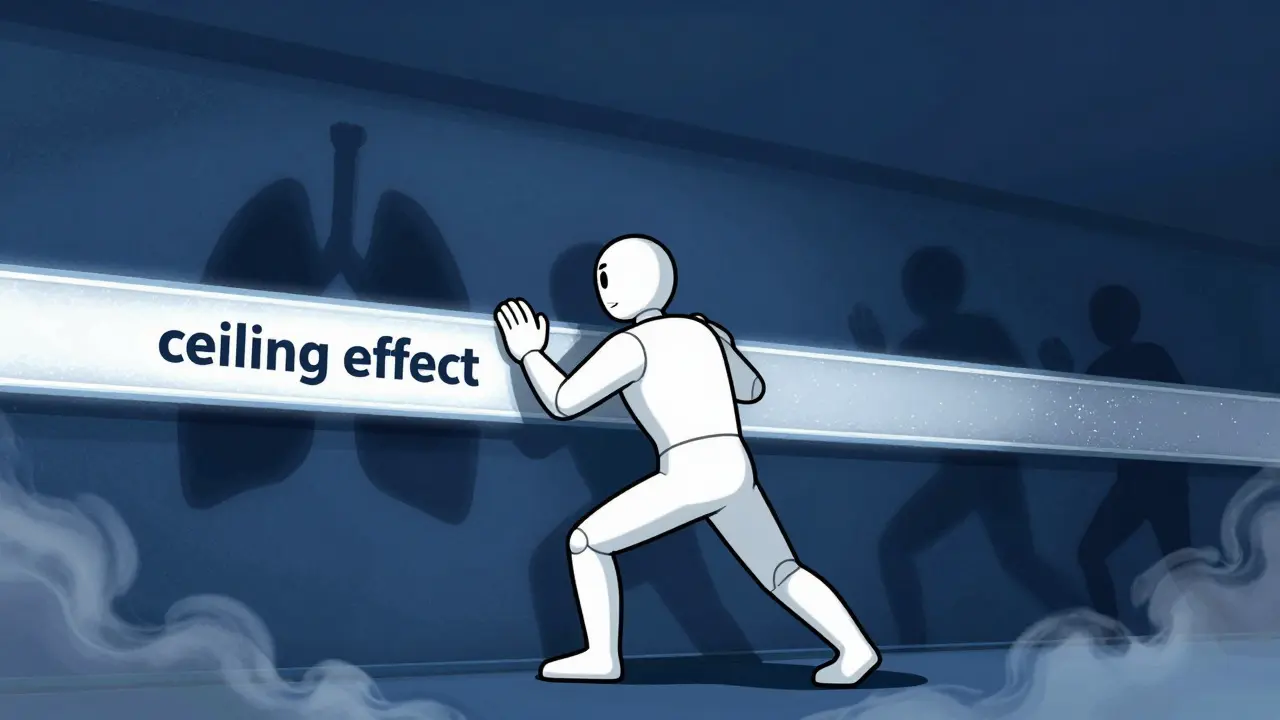
The "ceiling effect" is the most discussed feature of buprenorphine. In pharmacology, a ceiling effect occurs when increasing the dose of a drug no longer produces a proportional increase in its effect. For buprenorphine, this ceiling applies primarily to respiratory depression.
Clinical data indicates that the ceiling for respiratory depression occurs at doses around 24 mg per day. According to SAMHSA guidelines, increasing the dose above 24 mg does not significantly increase the suppression of breathing or cardiovascular function. This is a massive safety advantage. With methadone or oxycodone, doubling the dose roughly doubles the risk of fatal overdose. With buprenorphine, you hit a safety wall.
However, there is a nuance that many patients miss. The ceiling effect is endpoint-specific. While respiratory depression has a clear ceiling, analgesia (pain relief) may not follow the same strict pattern. Some studies suggest that pain relief can continue to increase with higher doses, even after the respiratory risk plateaus. Additionally, the blockade of other opioids is dose-dependent. A higher dose (like 16 mg) provides a stronger blockade against illicit opioids than a lower dose (like 8 mg).
Dr. Walter Ling, a prominent addiction specialist, emphasizes that the ceiling effect should not be confused with "partial efficacy." Just because the drug stops getting "stronger" in terms of respiratory risk doesn't mean it stops working. For many patients, the ability to function without sedation is the real benefit. As one patient noted in community forums, "I can take my 16mg and go to work without feeling like I'm on something, which methadone never allowed."
Common Side Effects and What to Expect
While the ceiling effect reduces overdose risk, buprenorphine still affects the central nervous system. Most side effects are mild to moderate and tend to improve as your body adjusts over the first few weeks of treatment. However, some persist.
| Side Effect | Frequency | Management Tip |
|---|---|---|
| Headache | ~18% of patients | Stay hydrated; usually resolves within days. |
| Constipation | ~12% of patients | Increase fiber and water intake; consider stool softeners. |
| Nausea | Variable | Take with food if possible; anti-nausea meds may help initially. |
| Sedation/Drowsiness | Mild to Moderate | Avoid driving until you know how it affects you; improves with tolerance. |
| Sweating | Common during induction | Dress in layers; keep cool. |
One specific issue is precipitated withdrawal. This is not a typical side effect but a reaction to improper initiation. If you start buprenorphine while full opioids are still active in your system, buprenorphine’s high affinity will rip those opioids off the receptors. Because buprenorphine is only a partial agonist, it leaves the receptors less activated than before, triggering sudden, intense withdrawal symptoms. This happens in about 25% of improper inductions. To avoid this, doctors wait until you are in mild-to-moderate withdrawal before giving the first dose.
Safety Profile: Risks You Cannot Ignore
The biggest misconception about buprenorphine is that it is impossible to overdose on. This is false. While the ceiling effect protects against respiratory depression from buprenorphine alone, it does not protect you from other substances.
The primary danger comes from combining buprenorphine with other central nervous system (CNS) depressants, particularly benzodiazepines (like Xanax, Valium, or Ativan), alcohol, or sleep aids. These drugs suppress breathing through different mechanisms than opioids. When combined, their effects add up. A 2022 study in the *Journal of Addiction Medicine* documented 18 fatal buprenorphine overdoses in the U.S. between 2019 and 2021. In every single case, the overdose involved a combination with benzodiazepines or other CNS depressants.
Furthermore, while rare, high-dose buprenorphine alone can still cause significant respiratory issues, especially in individuals who are not opioid-tolerant or who have underlying lung conditions. The ceiling is not an absolute shield; it is a risk reducer.
Another safety consideration is liver health. Buprenorphine is metabolized by the liver. While it is generally safer for the liver than methadone, patients with pre-existing liver disease (such as hepatitis C, common among those with OUD) need regular monitoring. High doses may require caution in severe liver impairment.
Buprenorphine vs. Methadone: Choosing the Right Path
When treating OUD, the two main medications are buprenorphine and methadone. Both are effective, but they serve different needs and lifestyles.
- Dosing Flexibility: Buprenorphine can be prescribed in office-based settings. You pick up prescriptions and take them at home. Methadone for OUD must typically be taken daily at specialized clinics, though take-home privileges can be earned over time.
- Overdose Risk: Buprenorphine has a significantly lower risk of fatal overdose due to the ceiling effect. Methadone carries a higher risk, especially in the early stages of treatment.
- Efficacy for Severe Dependence: Some patients with very high tolerance find that buprenorphine’s ceiling limits its ability to fully suppress cravings. They may require higher doses (up to 24 mg) or switch to methadone, which has no ceiling and can be titrated to any level needed.
- Pain Management: Patients with co-occurring chronic pain often do well on buprenorphine because it provides analgesia without the intense sedation of methadone. However, they may need higher doses to manage both pain and cravings.
There is no "best" drug, only the best drug for your specific situation. If you value privacy and flexibility, buprenorphine is often preferred. If you have struggled with stability on other treatments or have extremely high tolerance, methadone might be more effective.

New Formulations: Weekly Injections and Beyond
Treatment adherence is a major challenge in OUD recovery. Missing daily doses can lead to relapse. To address this, new formulations have emerged. In 2023, the FDA approved Sublocade, a weekly subcutaneous injection of buprenorphine.
Clinical trials showed that 49% of patients on Sublocade achieved 26 weeks of continuous abstinence, compared to 35% on daily sublingual tablets. The injection maintains stable blood levels, eliminating the peaks and valleys associated with daily dosing. This can reduce cravings further and remove the temptation to divert or misuse the medication. For patients who struggle with daily routines, this option offers a significant advantage.
Practical Tips for Managing Treatment
To get the most out of buprenorphine and minimize side effects, consider these practical steps:
- Be Patient During Induction: The first week is often the hardest. Stick to the schedule. Do not skip doses.
- Communicate with Your Doctor: If you feel too sedated, ask about lowering the dose. If you still crave opioids, ask about raising it. The therapeutic window is wide (8-24 mg), and finding your sweet spot takes trial and error.
- Avoid Alcohol and Benzos: This is non-negotiable for safety. The combination is deadly.
- Manage Constipation Proactively: Don’t wait for it to become painful. Start a bowel regimen immediately with fiber, water, and possibly a stool softener.
- Engage in Psychosocial Support: Medication is powerful, but it is not a cure-all. ASAM guidelines emphasize that buprenorphine works best when combined with counseling or therapy. It stabilizes your biology so you can work on your psychology.
What is the maximum safe dose of buprenorphine?
The standard maximum recommended dose is 24 mg per day. Beyond this dose, the "ceiling effect" means there is no significant additional benefit for respiratory depression or euphoria blockade, though some patients may require slightly higher doses for pain management under strict medical supervision. Increasing beyond 24 mg does not linearly increase safety or efficacy for most OUD patients.
Can you overdose on buprenorphine alone?
It is very difficult to fatally overdose on buprenorphine alone due to its ceiling effect on respiratory depression. However, it is not impossible, especially in non-tolerant individuals or those with compromised lung function. The greatest risk arises when buprenorphine is mixed with other CNS depressants like alcohol or benzodiazepines, which can bypass the opioid ceiling and cause fatal respiratory failure.
Why did I feel worse when I started buprenorphine?
You may have experienced precipitated withdrawal. This happens if buprenorphine is taken while other full opioids are still in your system. Its high affinity displaces the full opioids, leaving your receptors under-stimulated. To prevent this, ensure you are in mild-to-moderate withdrawal (using a Clinical Opiate Withdrawal Scale score) before taking your first dose, as directed by your healthcare provider.
Does buprenorphine work for pain?
Yes, buprenorphine has analgesic properties and is used for pain management. Interestingly, while its respiratory depression has a ceiling, its pain-relieving effects may continue to increase with higher doses. Many patients with OUD and chronic pain find that buprenorphine manages both conditions simultaneously, often requiring higher doses (16-24 mg) to adequately control pain.
How long does buprenorphine stay in your system?
Buprenorphine has a long half-life, ranging from 24 to 42 hours. It binds tightly to receptors and dissociates slowly. This allows for once-daily dosing for most patients. Detectable levels can remain in urine for up to 7-10 days after the last dose, depending on metabolism and dosage.